
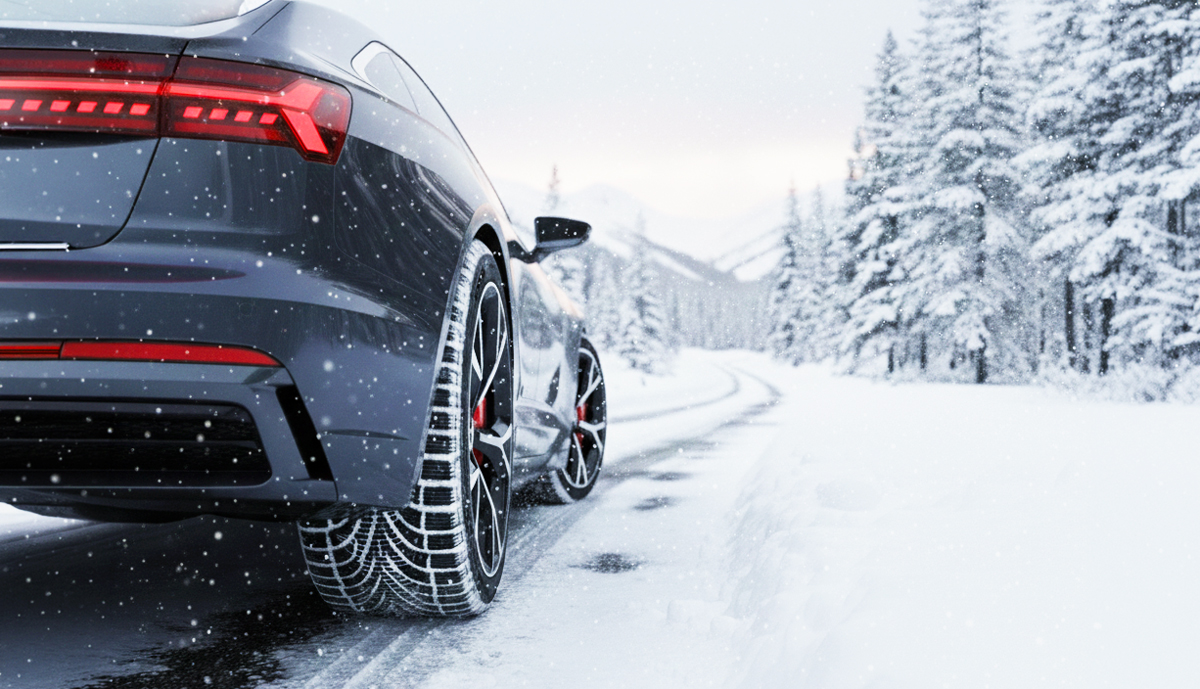
When temperatures fall below 7°C (45°F), tire compounds harden, braking distances increase, and grip drops dramatically. Winter driving isn’t about horsepower or drivetrain badges — it’s about contact patch chemistry. The right tire, paired with the right vehicle settings, transforms cold-weather driving from reactive to controlled.
Studless Winter Tires
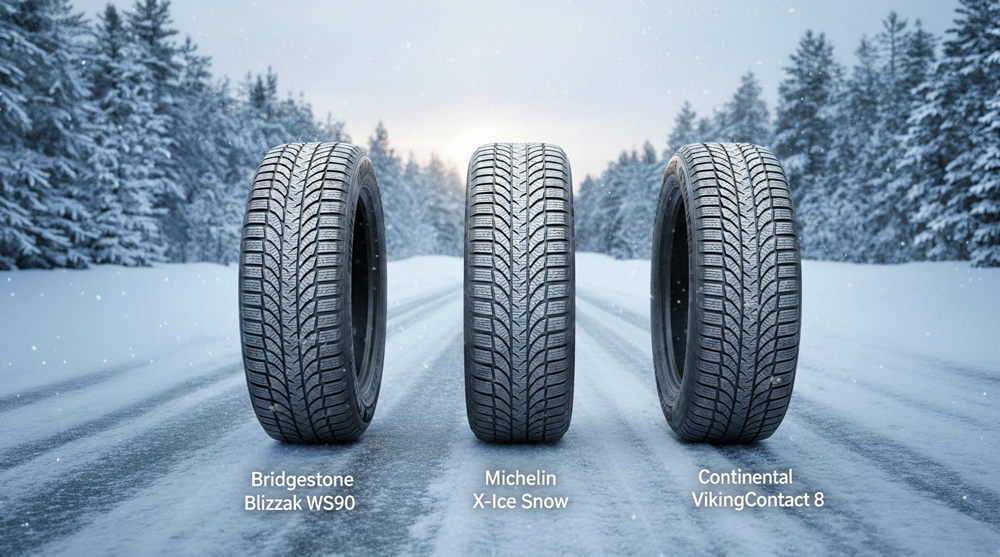
Best for ice, packed snow, and daily cold-weather commuting
These are the go-to option for most drivers in serious winter climates. Their soft compounds remain flexible in sub-zero temperatures, and dense siping creates thousands of biting edges.
Top-Selling
- Bridgestone Blizzak WS90
Highest-Rated
- Michelin X-Ice Snow
- Continental VikingContact 8
Why they matter: Outstanding braking and lateral grip on ice without the noise and road wear of studs. Ideal for urban winter, highway commutes, and mixed snow/ice conditions.
Studded Winter Tires
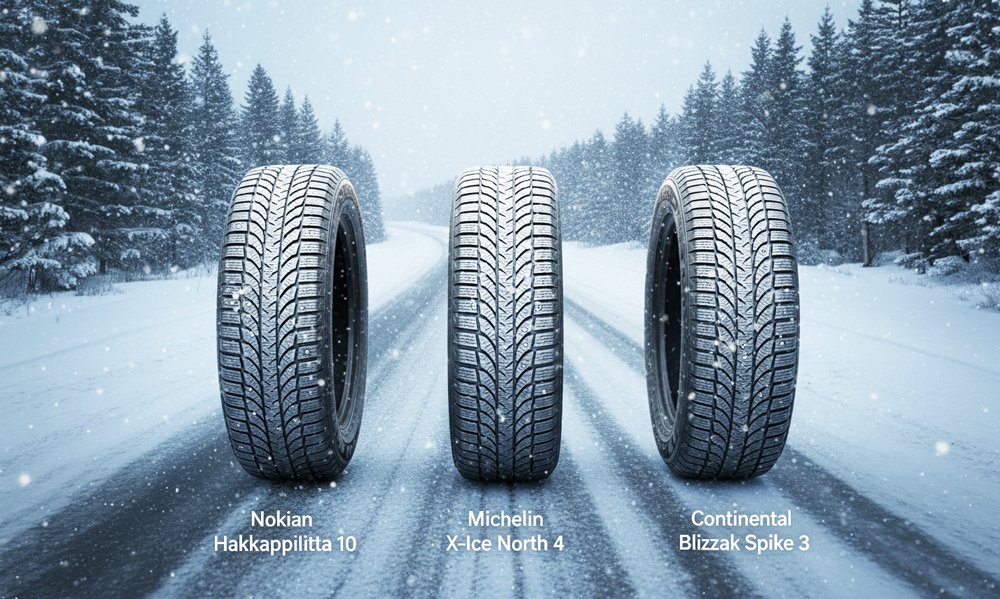
Best for prolonged, severe ice conditions
Studded tires embed metal pins into the tread, physically biting into ice. They are highly effective but regulated in some regions.
Highest-Rated
- Nokian Hakkapeliitta 10 (studded)
Consistently Top Performers
- Michelin X-Ice North 4
- Bridgestone Blizzak Spike 3
Why they matter: Maximum grip on glazed, rural, or untreated roads where black ice is common. Less refined on dry pavement.
Performance Winter Tires
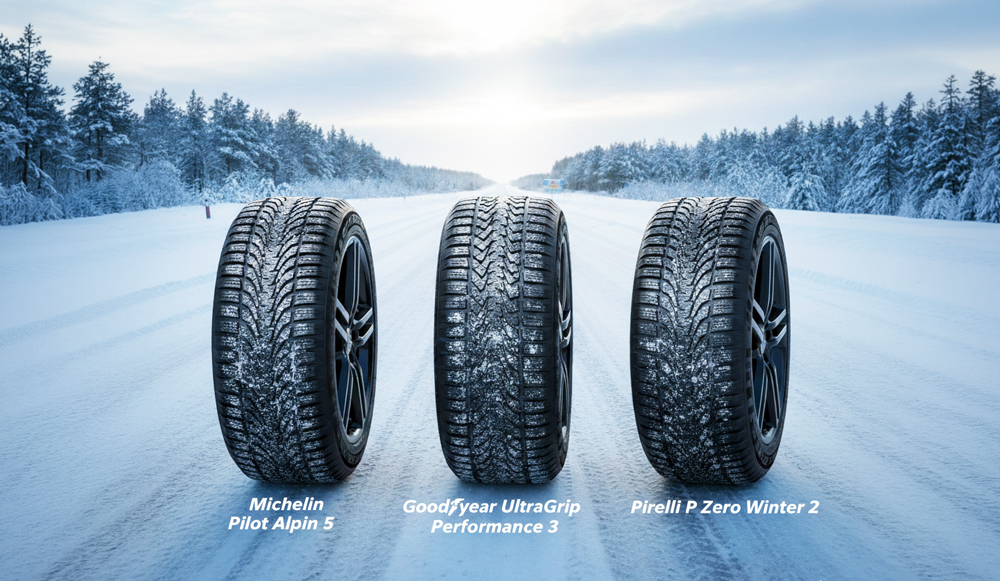
For sport sedans and performance cars that still see snow
These tires balance winter traction with sharper steering response and high-speed stability on cold, clear pavement.
Top-Selling
- Michelin Pilot Alpin 5
Highest-Rated
- Goodyear UltraGrip Performance 3
- Pirelli P Zero Winter 2
Why they matter: Maintains driving engagement while providing meaningful snow and cold-weather capability.
All-Weather Tires
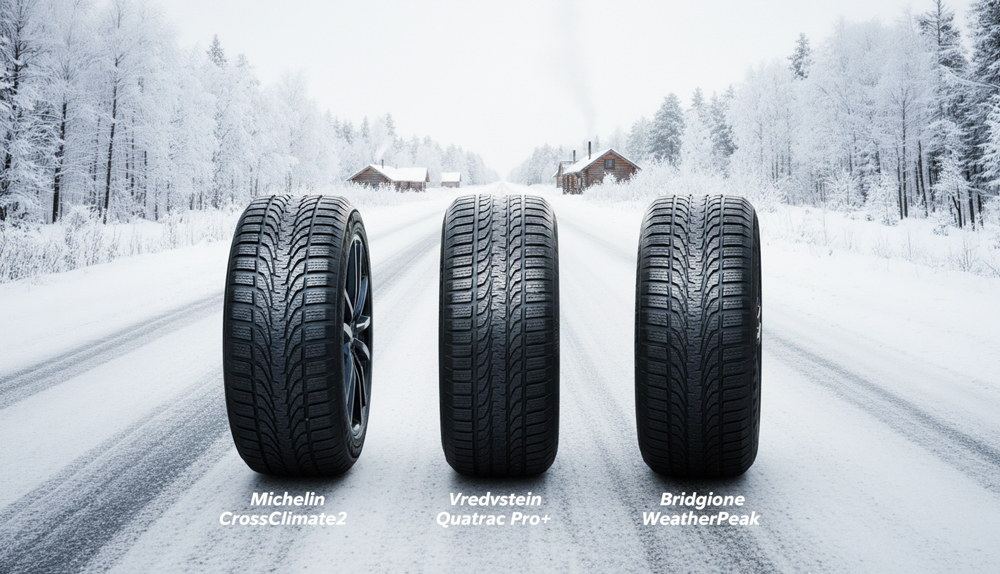
The one-set solution for milder winters
Not to be confused with standard all-season tires, true all-weather tires carry the three-peak mountain snowflake rating and are designed for year-round use.
Top-Selling
- Michelin CrossClimate2
Highest-Rated
- Vredestein Quatrac Pro+
- Bridgestone WeatherPeak
Why they matter: Excellent choice for regions with occasional snow but consistent cold and wet conditions.
Winter Settings That Actually Help
Tires are step one. Vehicle setup completes the equation. Smooth throttle inputs and progressive braking matter more than drivetrain badges.

- Traction & Stability Control: Keep them on. They reduce wheel spin and help maintain directional control.
- AWD / 4WD: Improves acceleration in snow but does not improve braking — tires do that.
- Tire Pressure: Cold air reduces PSI. Check weekly in winter. Underinflation compromises grip.
- ABS: Leave active. It preserves steering control during emergency braking.
What to Avoid
Preparation beats reaction every time. Winter driving punishes overconfidence. Most cold-weather incidents come from delayed preparation or misplaced trust in hardware that cannot overcome physics.
- Relying on standard all-season tires in sustained sub-zero climates
- Disabling stability systems in slippery conditions
- Waiting until after the first snowstorm to install winter tires
MaxTake – Winter performance starts at ground level. The best-selling and highest-rated winter tires earn their reputation through measurable gains in braking, traction, and control. Choose based on your climate, not marketing. Grip is confidence — and in winter, confidence is everything.