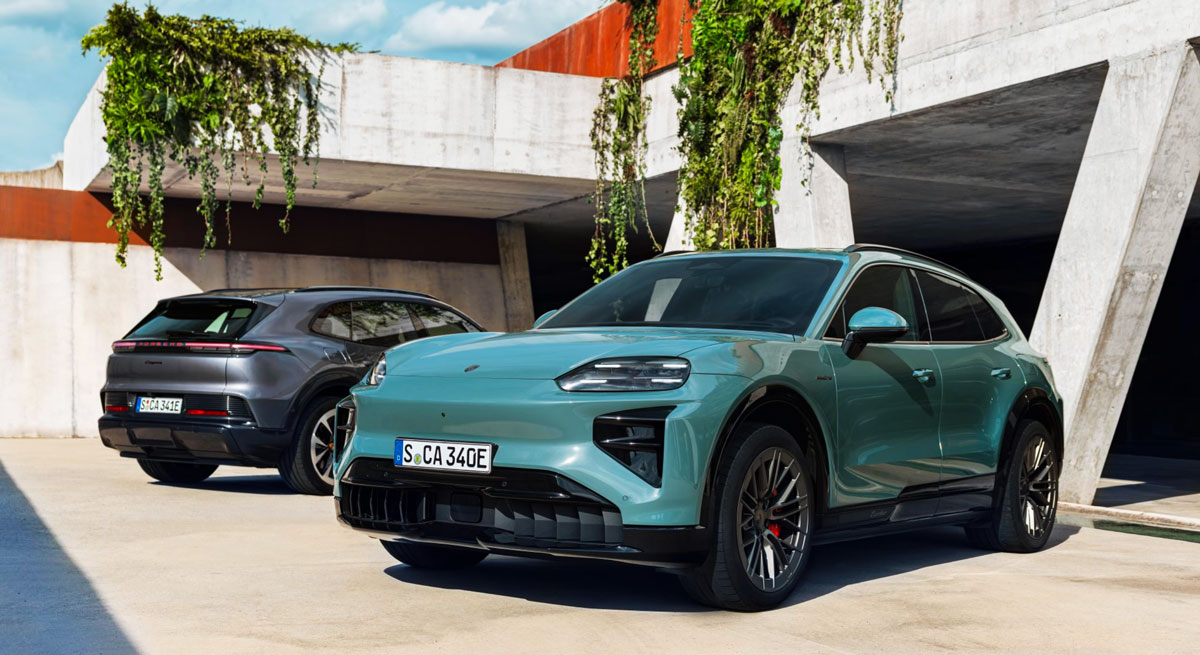
Electric wasn’t meant to dilute Porsche—it was meant to sharpen it. The 2026 Porsche Cayenne Electric arrives not as a quiet evolution, but as a recalibration of what a performance SUV can be. Built on a dedicated electric platform and engineered alongside Porsche’s next-generation EV lineup, it represents a decisive shift—not just in powertrain, but in philosophy. Bigger, heavier, and fully electric—yet somehow quicker, tighter, and more aggressive than anything that came before it.
This isn’t Porsche adapting to the future. It’s Porsche accelerating into it, using electrification to push performance boundaries further than combustion ever allowed.
Power That Redefines the Segment
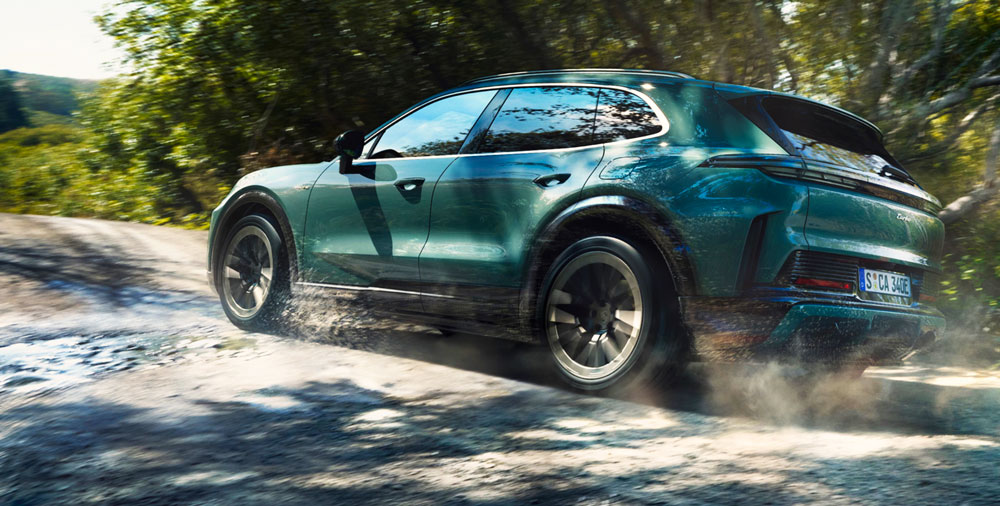
The numbers alone are enough to shift expectations, placing the Cayenne Electric in a category that didn’t previously exist—one where SUVs overlap with hyper-performance machines.
- Base: ~435 hp
- Cayenne S Electric: up to ~657 hp
- Cayenne Turbo Electric: over 1,100 hp
- 0–60 mph: as low as ~2.3 seconds
That last figure places it firmly in supercar territory—except this one carries five people, real cargo, and everyday usability. It’s a dramatic expansion of what performance means in a practical vehicle.
But the real story isn’t just output. It’s delivery. Instant torque, precise all-wheel-drive control, and relentless traction turn acceleration into something more immediate, more physical. There’s no buildup—just motion, right now. The sensation is less about speed climbing and more about speed arriving all at once.
Heavy? Yes. Slow? Not even close.
Built for the Real World, Not Just the Spec Sheet
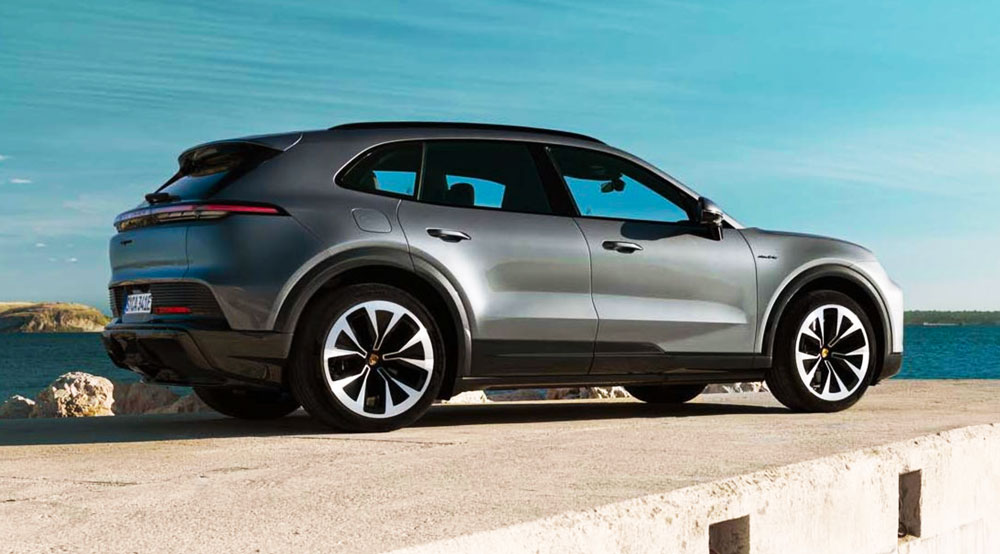
Performance is one side of the story. Usability is the other—and Porsche doesn’t compromise here. The Cayenne Electric is engineered to function as a daily vehicle first, not a weekend novelty.
- Battery: ~110 kWh
- Estimated range: ~320–400 miles
- Charging: up to ~400 kW DC fast charging
- 10–80%: roughly 15–20 minutes
- Towing capacity: up to ~7,700 lbs
These figures translate into something more important than numbers: confidence. Long-distance capability without constant planning, fast charging that fits into real travel rhythms, and the ability to tow, haul, and handle varied conditions without hesitation.
This isn’t an EV that asks you to adjust your life around it. It keeps pace—long distances, fast top-ups, real utility. And crucially, it retains the Cayenne’s identity as a do-everything SUV, equally comfortable on highways, in harsh climates, or off the beaten path.
Still Feels Like a Porsche
Electric SUVs are fast. Few are engaging. This is where the Cayenne Electric separates itself, translating Porsche’s decades of chassis engineering into a new, electrified context.
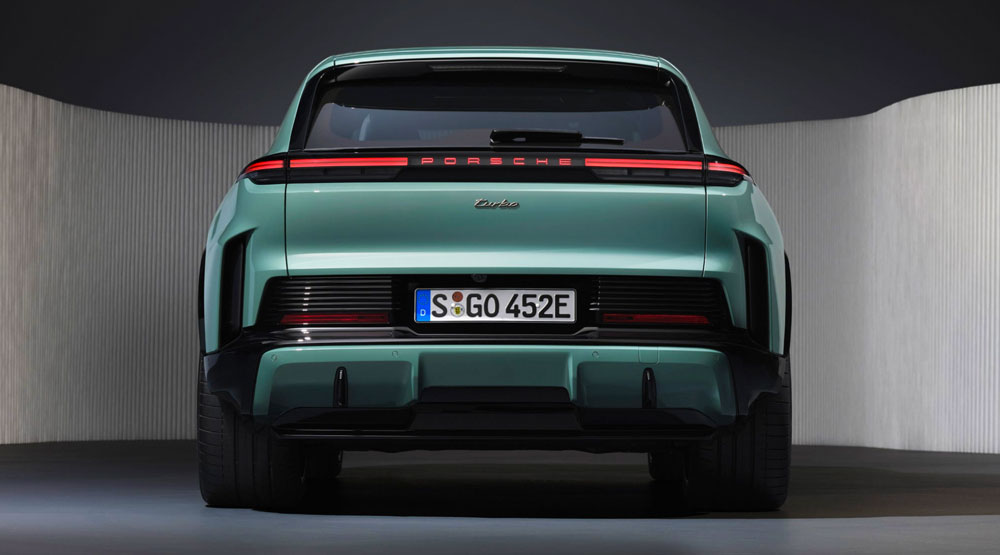
- Adaptive air suspension comes standard
- Rear-axle steering sharpens turn-in
- Porsche Active Ride (on higher trims) keeps the body nearly flat through corners
The result is control that feels engineered, not simulated. There’s weight, but also precision. Grip, but also balance. Body movements are controlled to the point where the vehicle feels smaller than it is, shrinking around the driver rather than overwhelming them.
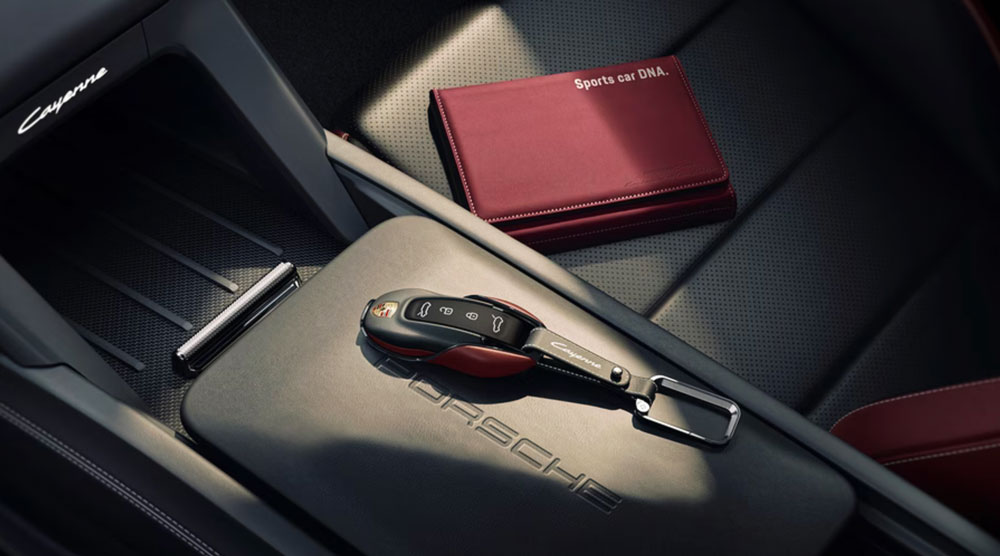
It won’t replace a 911—but it doesn’t try to. Instead, it redefines what a large performance vehicle can feel like, bringing composure and responsiveness into a segment that traditionally prioritizes comfort over connection.
Interior: Digital Precision, Driver First
Inside, Porsche leans further into a digital-first layout—without losing its driver focus. The cabin reflects a broader shift across the brand, blending high-end materials with an increasingly sophisticated digital interface.
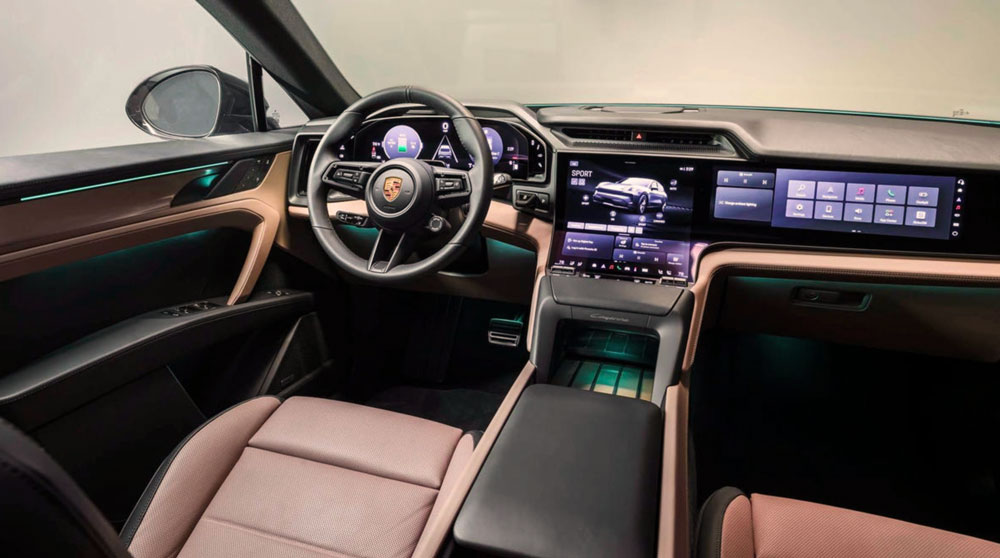
- Curved OLED display dominating the dash
- Fully digital instrument cluster
- Optional passenger-side screen
- Elevated material quality across trims
The layout remains purposeful. Controls are where they should be. Screens enhance the experience rather than replace it, maintaining a balance between modern technology and intuitive usability.
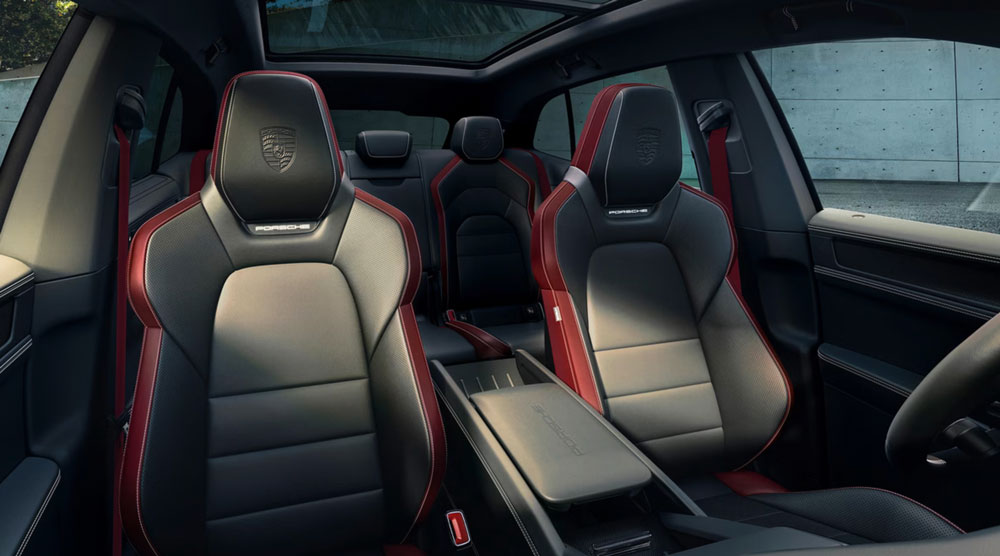
Space improves over previous generations, offering better comfort for both front and rear passengers, while cargo practicality remains competitive. Still, the Cayenne stays true to its format—a two-row performance SUV, not a family hauler chasing maximum capacity.
Where It Sits—and Why It Matters
The luxury EV SUV segment is evolving quickly, with competitors focusing heavily on range, interior space, or autonomous features. Porsche takes a different route—one centered on driving experience above all else.
- Not the largest
- Not the most practical
- Not the most understated
But arguably:
- The fastest
- The most engaging to drive
- The clearest signal of where performance SUVs are heading
This positioning is intentional. The Cayenne Electric isn’t designed to appeal to everyone—it’s built for drivers who still care about how a vehicle feels, even as the industry moves toward electrification.
Pricing reflects that intent, starting in the low six figures and climbing quickly into flagship territory, placing it firmly within the high-performance luxury segment.
MaxTake
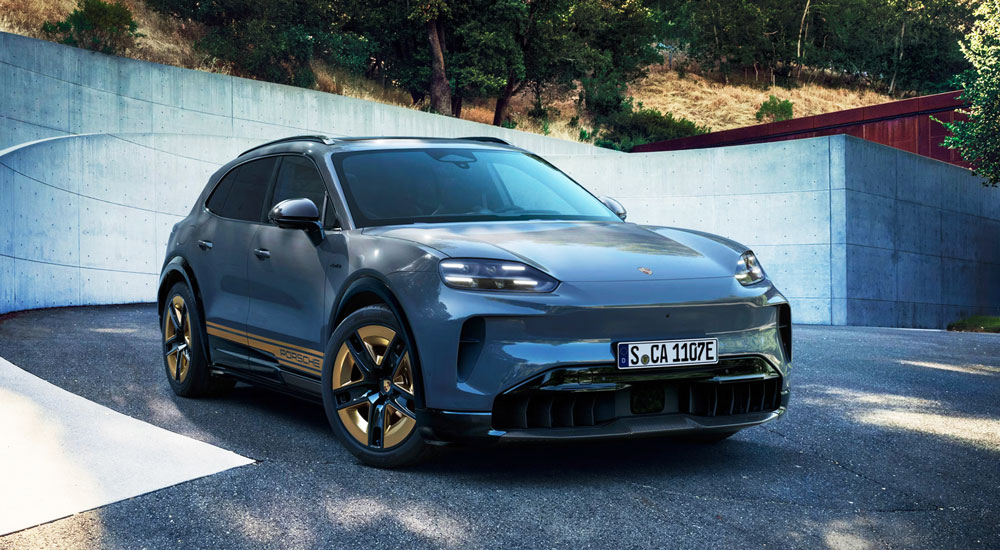
The 2026 Porsche Cayenne Electric doesn’t ease into electrification—it charges straight through it. It proves that performance isn’t tied to combustion, and that weight doesn’t have to dull character. More importantly, it shows that Porsche isn’t following the EV transition—it’s shaping it. This isn’t a compromise. It’s an escalation—and for the segment, a warning shot.