
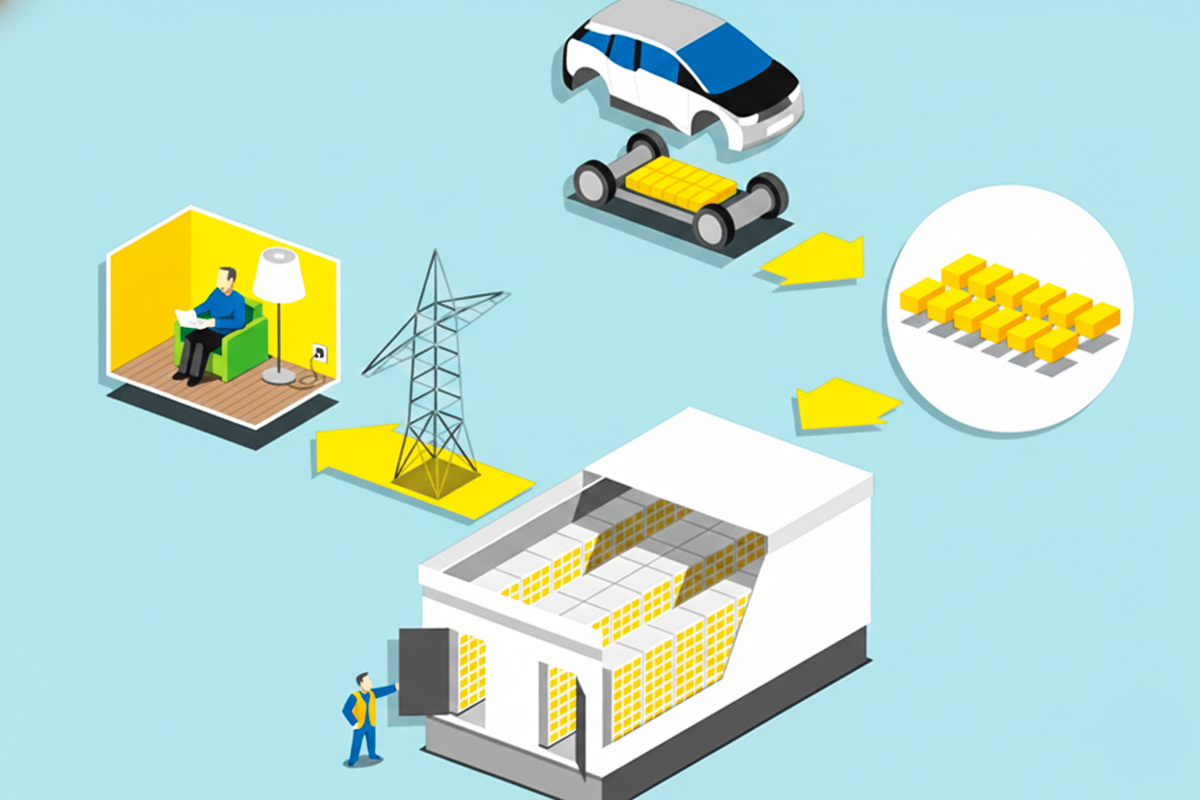
An EV battery doesn’t retire when the car does. Most packs leave vehicle duty once they fall to roughly 70–80% of their original capacity—no longer ideal for maximum driving range, but far from useless. That remaining capacity is turning into one of the most important next chapters in the EV economy.
The industry’s approach is increasingly clear: reuse where possible, repurpose when practical, recycle when necessary.
From Highway Miles to Grid Power
True “reuse” in another vehicle remains limited due to compatibility, warranties, and diagnostics. The real growth story is repurposing—retired EV batteries redeployed as stationary energy storage. These second-life systems support commercial buildings, renewable energy sites, microgrids, and backup power installations.
For applications that demand steady output rather than high-performance bursts, a partially degraded battery can still deliver meaningful value. Lower upfront cost becomes the advantage, especially in peak shaving and solar integration scenarios.
Why It’s Not Plug-and-Play
Second life isn’t automatic. Two identical battery packs can age very differently depending on charging habits, heat exposure, and overall usage history. Careful testing and health assessment determine whether a pack qualifies for repurposing—or heads straight to recycling.
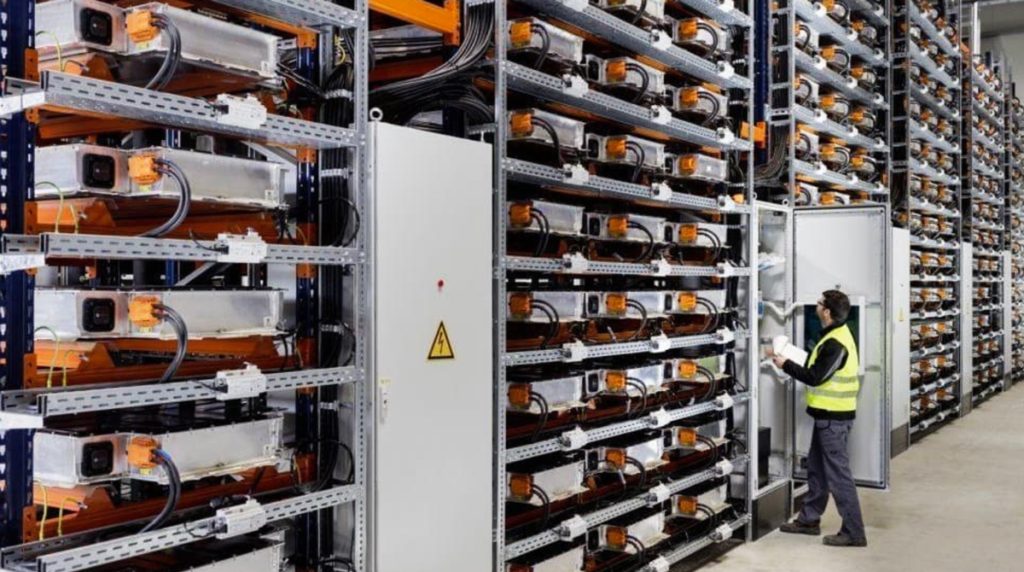
Safety is equally critical. Stationary systems must meet rigorous fire, certification, and monitoring standards. Second-life storage is engineered infrastructure, not a garage experiment.
The Traceability Era
Regulation is tightening, particularly in Europe, where lifecycle transparency and digital battery tracking are becoming mandatory. That shift signals something bigger: second life is moving from niche pilot programs to structured, scalable markets.
Clear documentation of battery chemistry, health, and ownership history will define which packs get reused—and which are efficiently recycled back into new battery production.
The Bigger Picture
Second-life batteries won’t replace purpose-built energy storage, but they can bridge the gap as global EV adoption accelerates. Instead of becoming waste, aging packs can stabilize grids, support renewables, and extend the economic value of every kilowatt-hour produced.
MaxTake – The future of EVs isn’t just about faster charging and longer range. It’s about what happens after the driveway. The brands and energy companies that win this phase won’t just build better batteries—they’ll build better lifecycles.