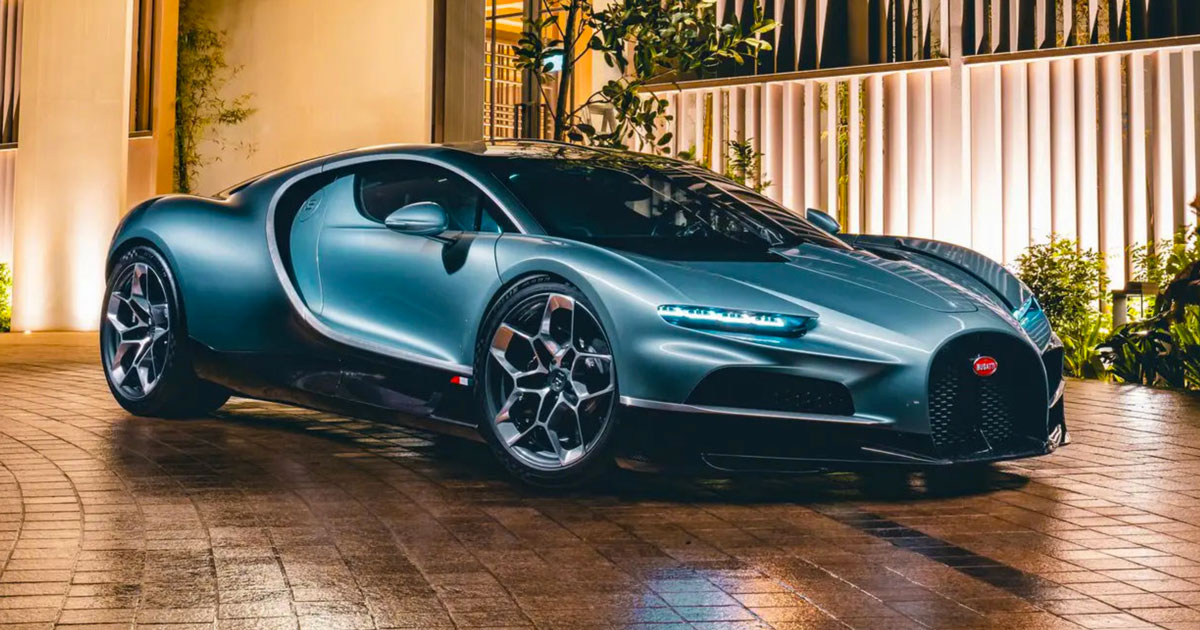
The 2026 Bugatti Tourbillon is not simply the successor to the Chiron. It is Bugatti’s answer to a difficult question: how does a brand built on combustion excess move into the hybrid era without becoming just another battery-powered science project? The answer, apparently, is to build an all-new naturally aspirated V16, pair it with three electric motors, wrap it in a new carbon structure, and give it an interior that feels closer to haute horlogerie than infotainment trend-chasing.
This is Bugatti doing what Bugatti does best: making the unreasonable feel inevitable.
A New Era After the W16
For two decades, Bugatti’s identity was tied to the quad-turbo W16. The Veyron created the modern hypercar template, and the Chiron refined it into something faster, stronger, and more polished. Replacing that engine was always going to be dangerous territory.
Instead of downsizing, Bugatti went theatrical. The Tourbillon uses an all-new 8.3-liter naturally aspirated V16, developed with Cosworth, producing 1,000 horsepower on its own. It revs to 9,000 rpm, which is not just a number for the brochure; it changes the personality of the car. Where the Chiron was about turbine-like force, the Tourbillon is designed to feel more mechanical, more vocal, and more emotionally connected.
Then comes the hybrid system. Two electric motors sit at the front axle, with a third at the rear. Together, the electric side contributes 800 horsepower, bringing total output to 1,800 horsepower. That makes the Tourbillon the most powerful Bugatti road car yet, but more importantly, it gives the car a completely different performance profile: instant electric response down low, a screaming V16 up high, and all-wheel-drive traction tying it together.
Performance With Theatre Built In
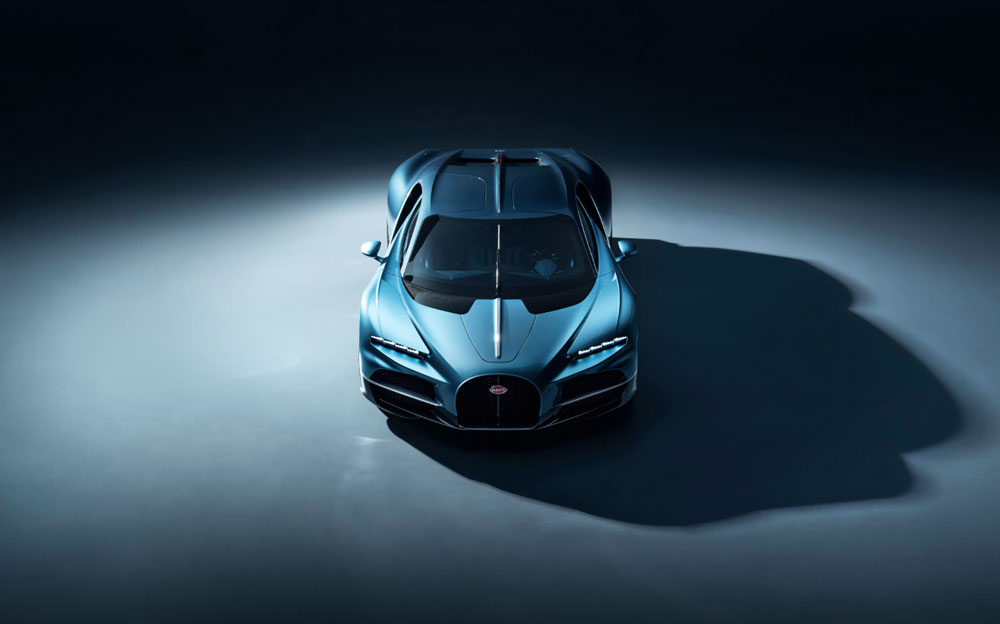
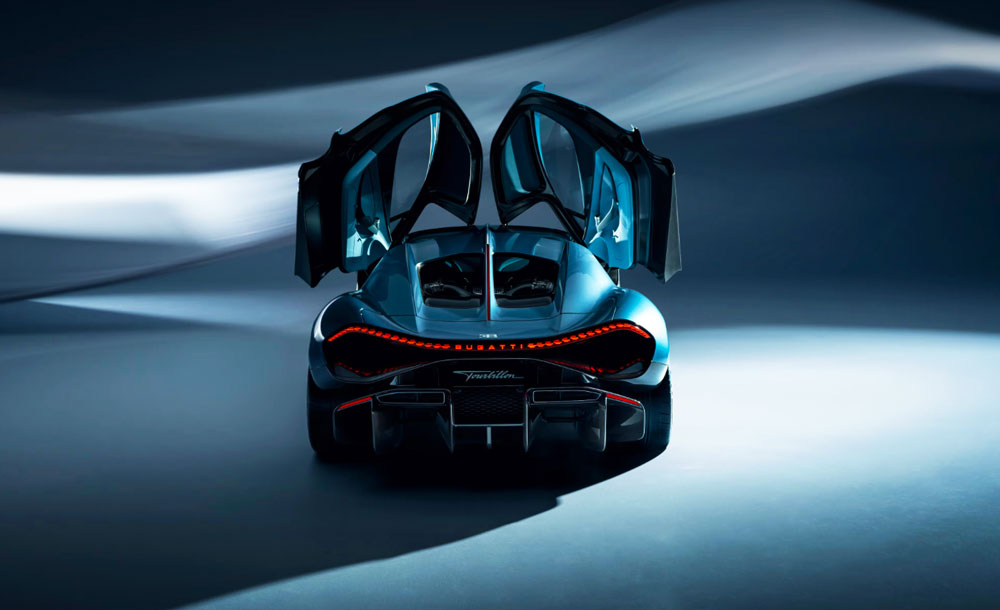
The Tourbillon is not chasing electrification for quiet virtue points. This is hybrid technology used as a performance weapon. The 25 kWh oil-cooled 800V battery is housed through the central tunnel and behind the occupants, helping with packaging and structure. Bugatti also claims more than 60 km, or 37 miles, of electric-only range, which is useful in cities, hotel arrivals, and the occasional guilt-free glide through Monaco before unleashing the mechanical thunderstorm.
Expected performance is suitably ridiculous:
- Power: 1,800 hp combined
- Engine: 8.3-liter naturally aspirated V16
- Electric motors: three total
- Battery: 25 kWh, 800V architecture
- Electric range: more than 60 km / 37 miles
- Production: 250 examples
- Starting price: €3.8 million net
- Assembly: Bugatti Atelier, Molsheim, France
The numbers matter, but the bigger story is how Bugatti has resisted the easy answer. It could have gone fully electric. It could have reworked the W16. Instead, it created a new combustion engine for an era when most manufacturers are trying to explain why four cylinders and a screen count as “emotion.” Tiny violin? No. Massive V16.
Design: Familiar, Lower, Sharper
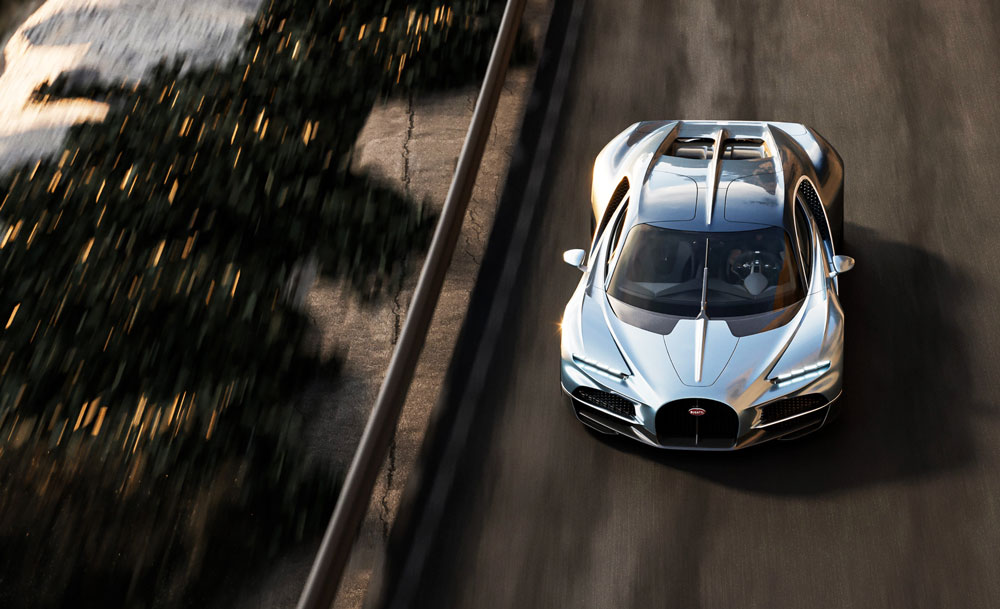
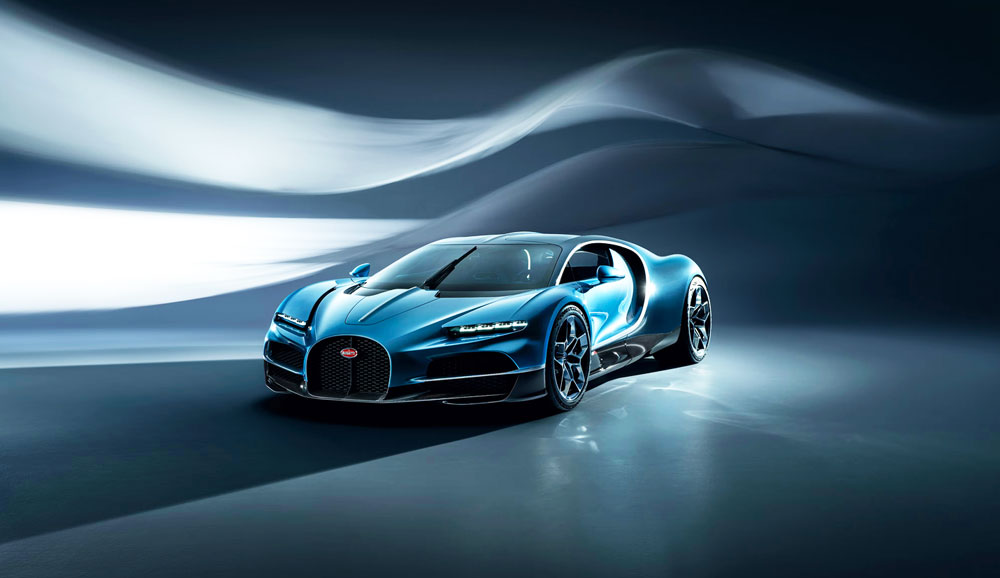
Visually, the Tourbillon keeps Bugatti’s core signatures: the horseshoe grille, central spine, C-shaped Bugatti line, and wide, planted stance. But the proportions feel more athletic than the Chiron. The roofline is lower, the cabin appears more tucked into the body, and the rear is cleaner and more technical.
The aerodynamics are not just decoration. Bugatti designed the body to manage the cooling demands of a V16 engine, electric motors, and battery system while remaining stable at more than 400 km/h. The rear wing can remain hidden during high-speed running, with the diffuser doing much of the heavy aerodynamic work. That gives the car a cleaner silhouette while still allowing for serious performance stability.
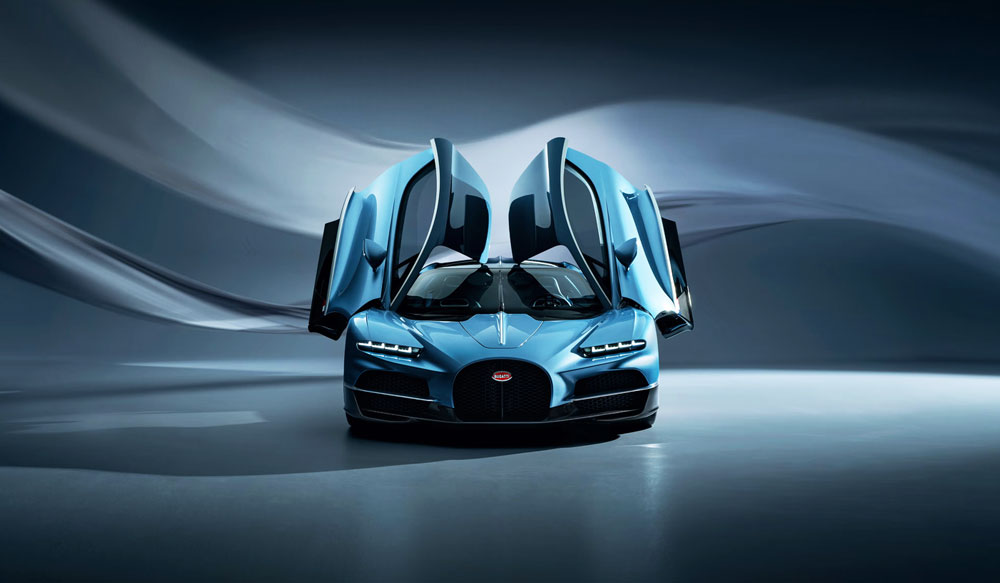
The dihedral doors add theatre, but not in a gimmicky way. On a car this expensive, drama is part of the contract. Arriving quietly would almost be rude.
Interior: The Anti-iPad Hypercar
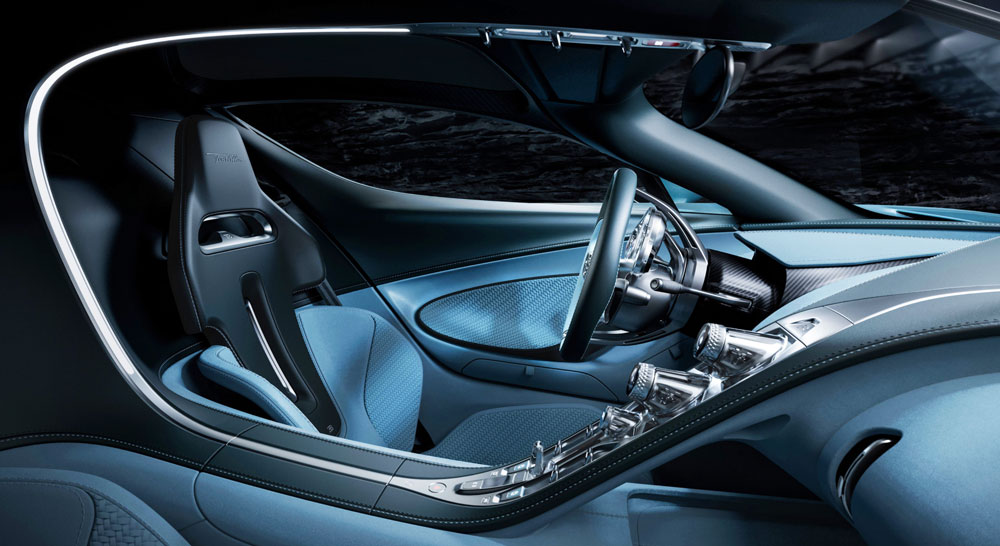
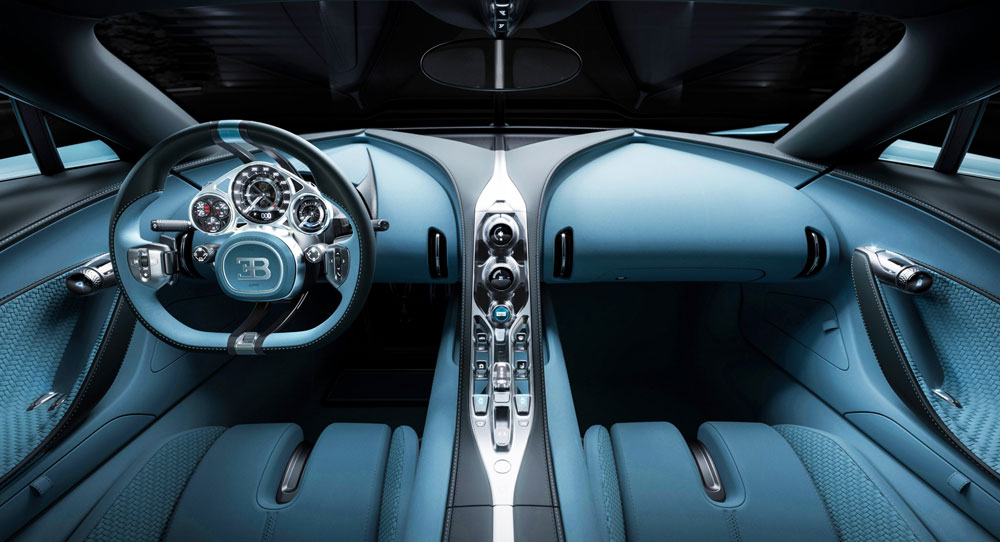
The cabin may be the Tourbillon’s most interesting move. Bugatti has clearly decided that huge screens age badly, and it is not wrong. The Tourbillon’s interior is built around permanence: machined metal, crystal glass, visible mechanisms, and a fixed central instrument cluster created with the feel of Swiss watchmaking.
The steering wheel rotates around the fixed instrument display, allowing the gauges to remain visible regardless of steering angle. The center console uses crystal glass and aluminum, showing the mechanical workings beneath. Even the start process is physical: a pull to start, a push to stop. That may sound small, but in an era where too many cars feel like software with seats, it matters.
There is still a digital screen, but it is hidden until needed. It deploys for functions like the reversing camera and connectivity, then disappears. That decision alone gives the Tourbillon a clearer identity than most modern luxury interiors. It is not anti-technology. It is anti-disposable technology.
Engineering Without the Easy Button
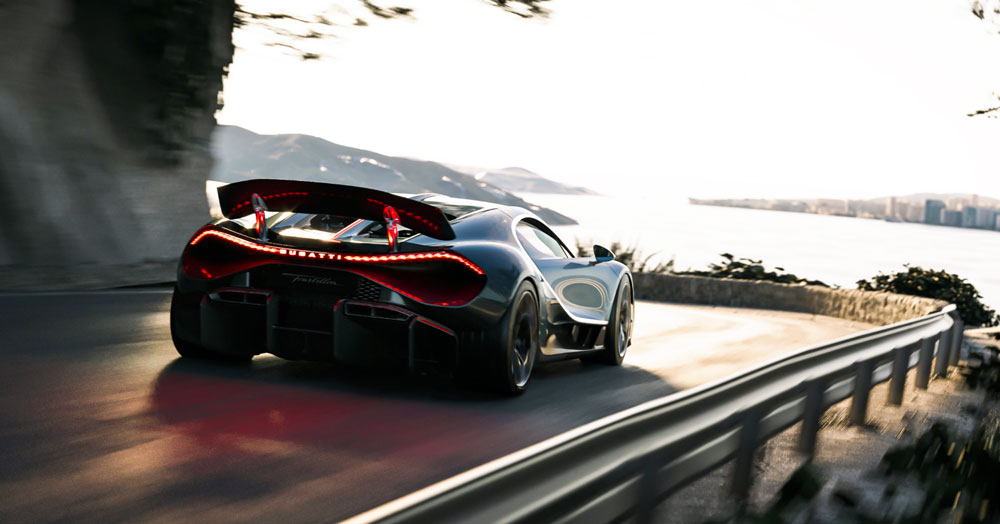
The Tourbillon rides on a completely new chassis and body structure using next-generation T800 carbon composite. The battery is integrated as a structural element, and the car uses advanced 3D-printed aluminum suspension components. Bugatti says the new suspension design saves significant weight compared with the Chiron’s setup.
That matters because hybrid systems usually add weight. The clever part is that Bugatti and Rimac Technology have packaged the electric hardware so tightly that the Tourbillon is claimed to weigh less than the Chiron, despite adding a battery, electric motors, inverters, and new hybrid control systems.
Rimac Technology’s role is central here. The company engineered and integrated the battery system, e-axles, and electronic control units. That partnership gives the Tourbillon the benefit of Rimac’s electric performance expertise without turning the car into a Rimac wearing a Bugatti suit. The V16 remains the soul; the electric system is the muscle and reflexes.
What It Means for Bugatti
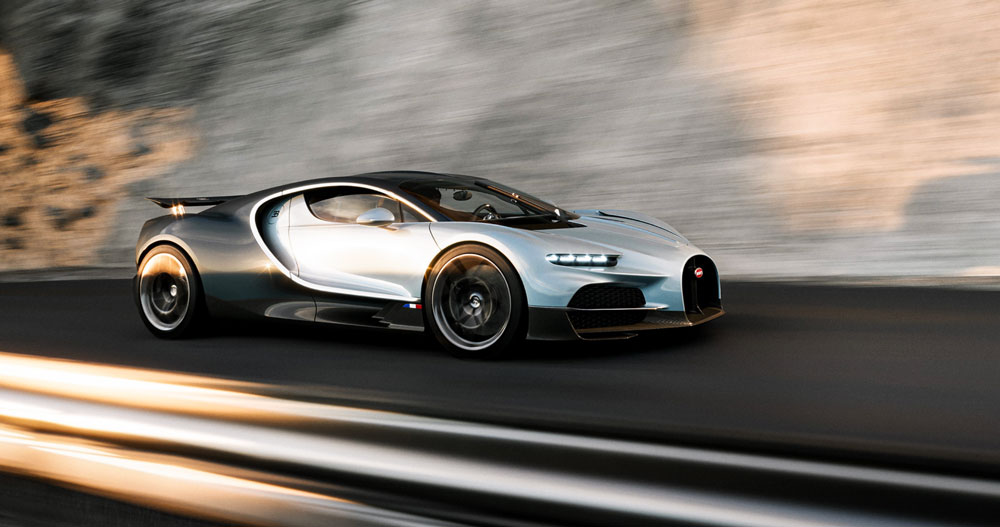
The Tourbillon arrives at a critical moment. The W16 era is ending with cars like the Bolide and W16 Mistral, while the next chapter begins with a hybrid V16 that looks backward and forward at the same time.
For North America and Europe, the Tourbillon reinforces Bugatti’s role as the most theatrical brand in the hypercar class. For the UAE and Saudi Arabia, where hypercar culture, private collections, and ultra-luxury personalization remain especially strong, it is exactly the kind of machine that will become both a status object and a collector’s centerpiece.
Only 250 examples will be built, which means the Tourbillon is not really competing for buyers in the normal sense. It is competing for legacy. These cars will live in private garages, concours fields, climate-controlled collections, and very occasionally, on roads where the rest of traffic will look like it is moving in slow motion.
MaxTake
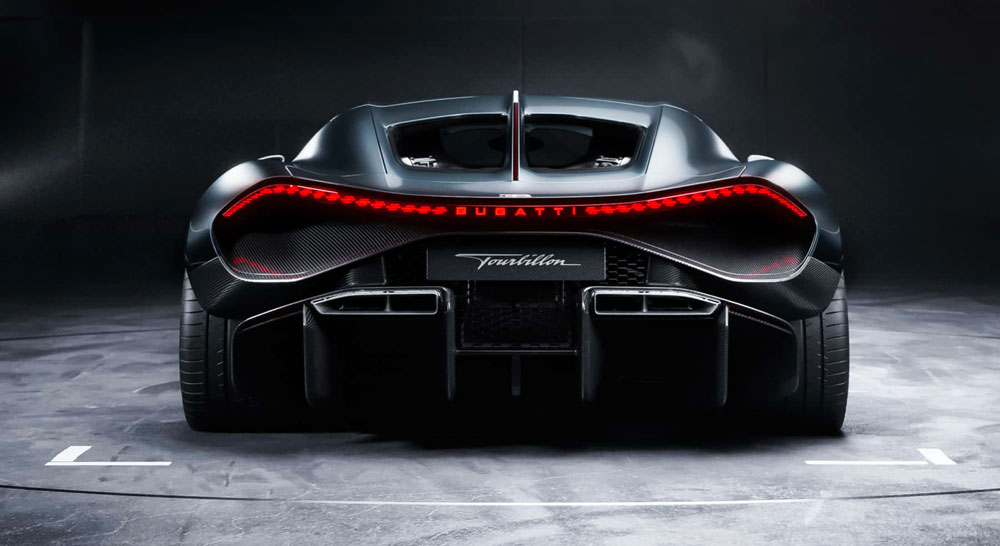
The Bugatti Tourbillon proves that the hybrid era does not have to be sterile. With 1,800 horsepower, a naturally aspirated V16, Rimac-engineered electric hardware, and an interior built like a mechanical timepiece, it is less a replacement for the Chiron than a full reset of what a Bugatti can be. The Tourbillon is not the cautious future of the hypercar. It is the extravagant one. It accepts electrification but refuses to let batteries erase mechanical drama.The future may be electric, but in Molsheim, it still knows how to roar. That is what makes it compelling, it is not trying to be sensible. It is trying to be permanent.