The original Spectre proved that electrification did not require Rolls-Royce to reinvent itself. Battery power simply gave the marque a cleaner, quieter and more immediate way to express qualities it had pursued for more than a century. With Spectre Series II, that philosophy becomes more convincing, adding greater range, stronger performance and deeper personalization without disturbing the grand electric coupé’s carefully measured character.
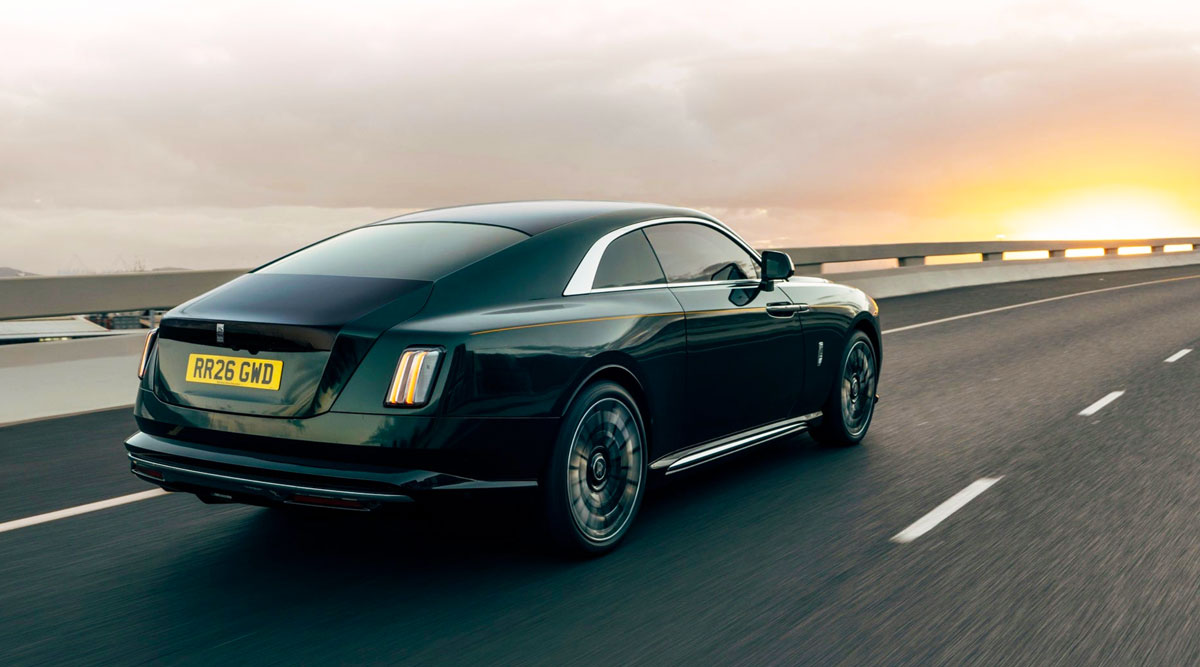
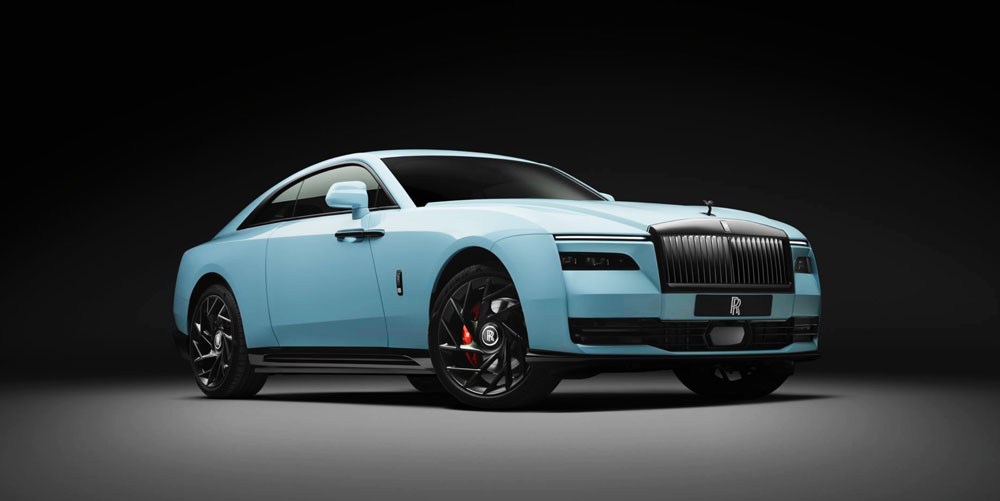
This is not a dramatic redesign created to make the previous Spectre suddenly appear old. Rolls-Royce has retained the sweeping fastback profile, monumental proportions and split-headlamp face that gave its first production electric car such presence. Instead, Series II concentrates on the details that matter after the novelty of electrification has faded: how far it can travel, how quickly it can recharge and how completely it can disappear beneath the experience of luxury.
Silence Becomes the Powertrain
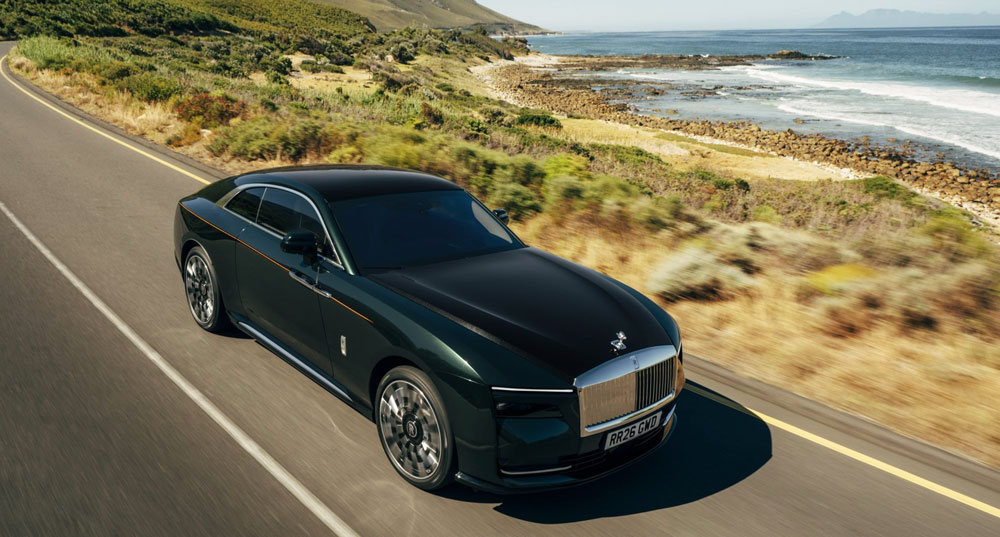
Electric propulsion has always made unusual sense for Rolls-Royce. The absence of combustion noise, vibration and gear changes supports the brand’s traditional promise of effortless movement better than any oversized engine ever could.
Spectre Series II develops up to 442 kW of power and 1,015 Nm of torque, giving the substantial two-door immediate but controlled acceleration. Its strength is not intended to arrive as a theatrical burst. The response is calibrated to feel smooth, continuous and almost inevitable, allowing the car to gather speed without disturbing the atmosphere inside.
That restraint is central to the Spectre’s appeal. Many performance EVs use acceleration as their headline feature. Rolls-Royce treats it as background infrastructure—a vast reserve of power that is always available but never needs to raise its voice.
More Range, Less Interruption
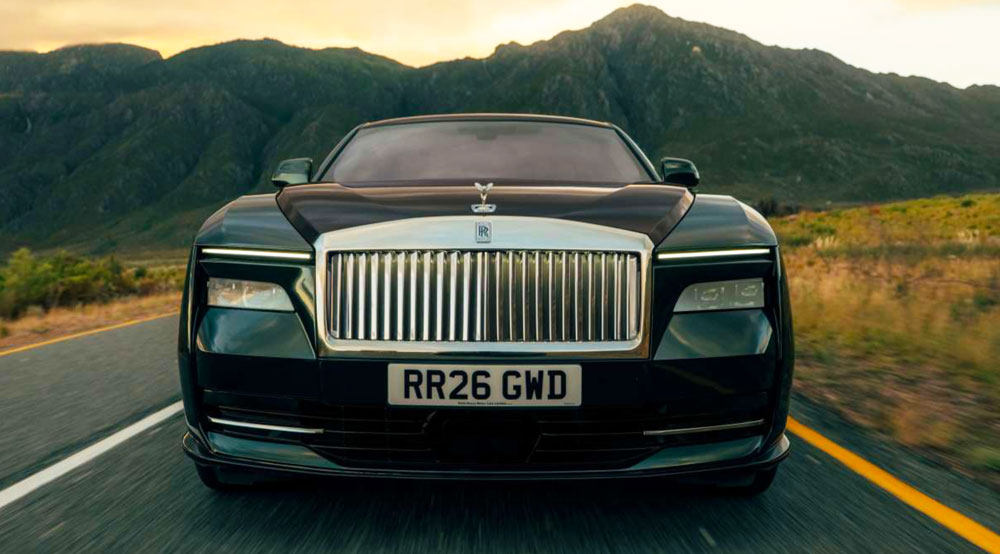
The most meaningful Series II improvement is its upgraded battery technology. Rolls-Royce claims a maximum driving range of up to 390 miles, or 628 kilometres, under the WLTP testing cycle. That represents an improvement of as much as 18 percent over the previous model.
Charging times have also been reduced by up to 14 percent. Those numbers matter because true luxury is not merely having enough range to complete a journey. It is being able to travel without reorganizing the journey around the vehicle.
Real-world range will still depend on temperature, speed, driving style and wheel configuration. Even so, the additional capacity gives the Spectre greater credibility beyond city centres and private estates. In Europe, it becomes better suited to long continental drives. In North America, it reduces the anxiety created by wider distances. For owners in Saudi Arabia and the UAE, the greater reserve should also provide more flexibility when climate control and extreme heat increase energy consumption.
A Design That Refuses to Chase Fashion
Spectre Series II remains visually close to the original, and that is precisely the point. Rolls-Royce has resisted the industry habit of using a mid-cycle update to add unnecessary vents, sharper graphics or oversized trim pieces.
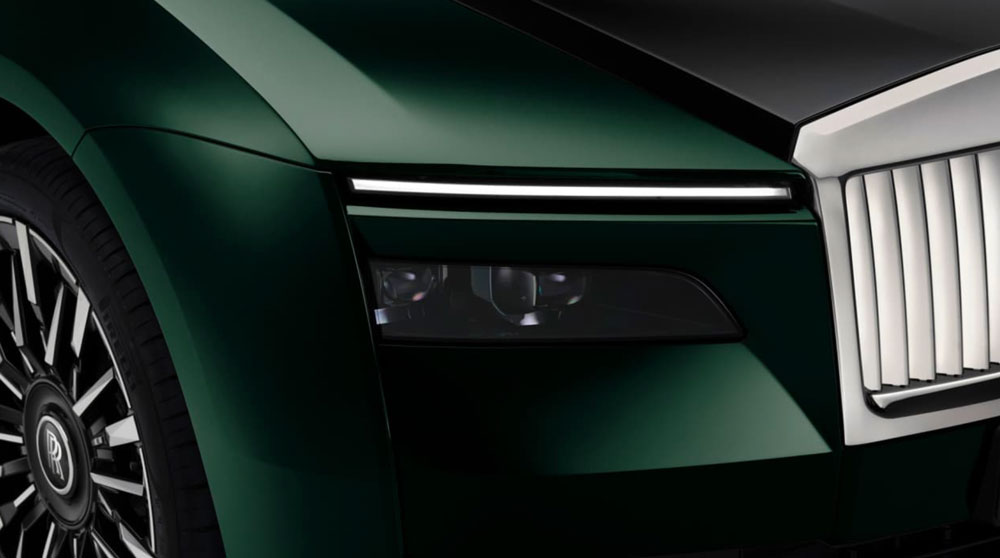
The illuminated Pantheon grille, low-mounted Spirit of Ecstasy and split lighting signature remain defining elements. The long bonnet, pillarless doors and tapering roofline continue to give the car the proportions of a traditional grand tourer rather than an aerodynamic technology experiment.
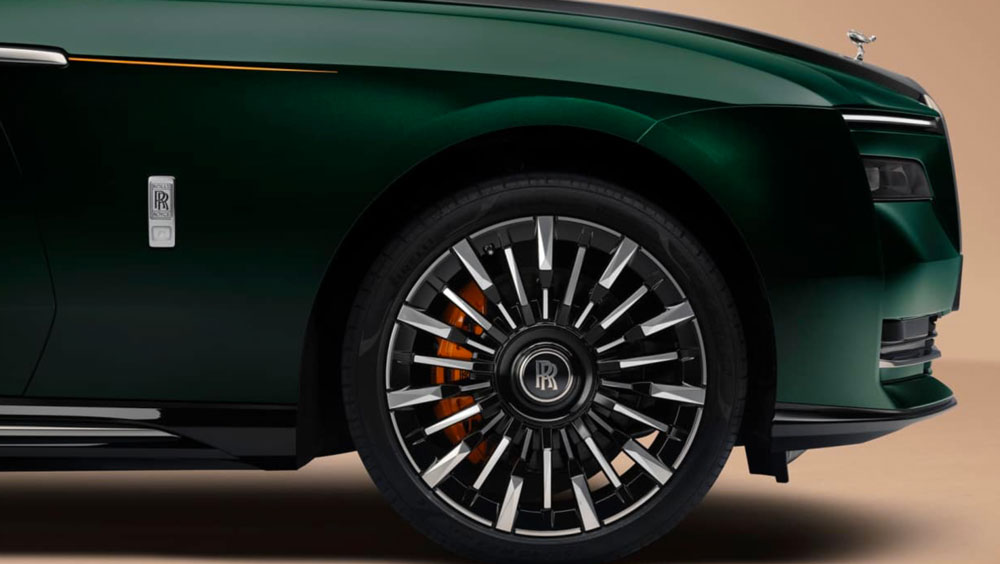
A new Ethereal Blue exterior colour adds a cool maritime tone, while newly designed 23-inch forged wheels introduce a more intricate, faceted appearance. Each wheel can require up to six hours of hand-finishing, which is an appropriately extravagant amount of labour for something most owners will never touch.
The changes are subtle enough that casual observers may struggle to distinguish Series II from the earlier Spectre. For Rolls-Royce clients, that continuity is more valuable than an obvious facelift. A motor car intended to remain desirable for decades should not need to advertise the date of its latest software update.
The Interior Becomes More Personal
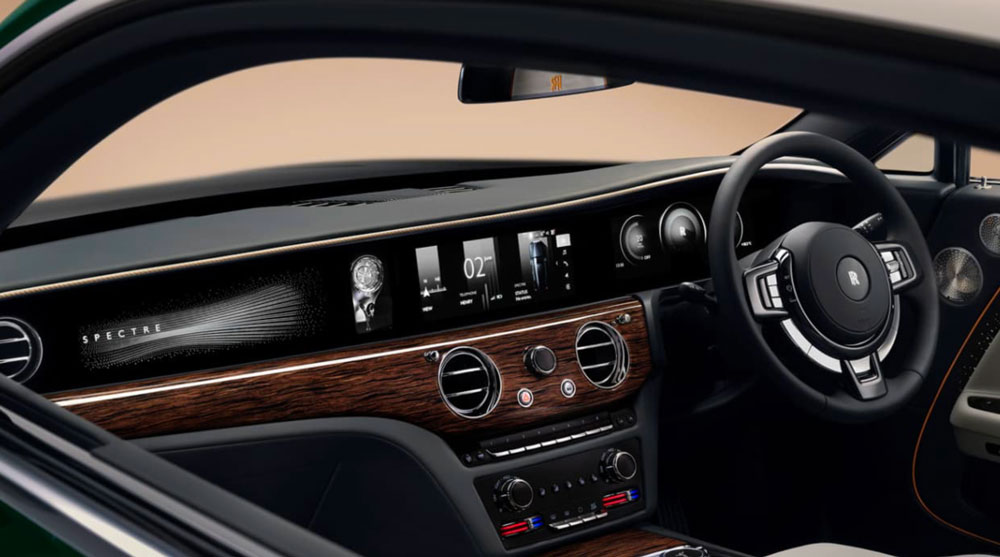
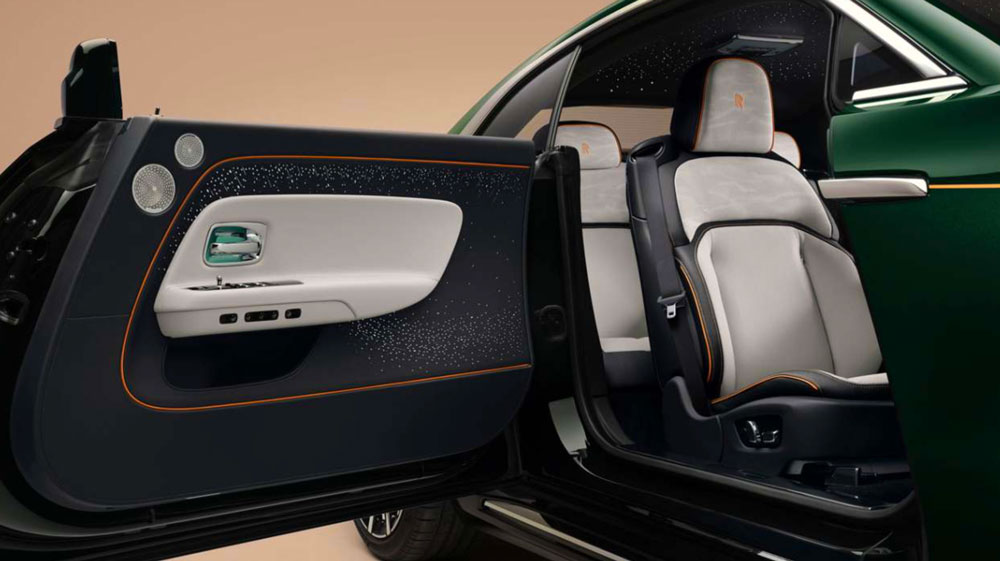
Inside, Spectre Series II expands the possibilities available through the Rolls-Royce Bespoke programme. The cabin remains architectural and formal, but clients now have an even broader selection of materials, illuminated surfaces and handcrafted treatments.
One of the most distinctive additions is Duality Twill, a rayon textile made using bamboo. Its embroidered pattern references the interlocking initials of the company’s founders and can extend across the seats and inner door panels. A complete treatment can contain millions of individual stitches and several kilometres of thread.
New perforation techniques can also create intricate patterns within leather upholstery, transforming surfaces that would normally be considered background trim into commissioned artwork. These details are not included merely to increase the specification sheet. They reflect how Spectre buyers increasingly treat the car as a personal design project rather than a standard luxury product with optional colours.
Spectre has become one of Rolls-Royce’s most heavily personalized models, reportedly surpassed only by Phantom in demand for Bespoke commissions. Electrification may have changed what powers the car, but craftsmanship remains what sells it.
Technology Without the Theatre
Spectre Series II contains the digital systems expected of a modern flagship, yet it avoids presenting the cabin as an electronics showroom. Screens are integrated into the traditional dashboard architecture rather than dominating it, while physical controls remain available for frequently used functions.
The approach feels increasingly distinctive as competitors move toward larger displays, fewer buttons and software-heavy interiors. Rolls-Royce recognizes that advanced technology becomes more luxurious when occupants do not have to think about it.
The same principle applies to the chassis. Suspension, steering, power delivery and regenerative braking are coordinated to disguise the Spectre’s considerable size and weight. The objective is not to imitate a lightweight sports car, but to make mass feel composed rather than cumbersome.
Black Badge Turns Up the Voltage
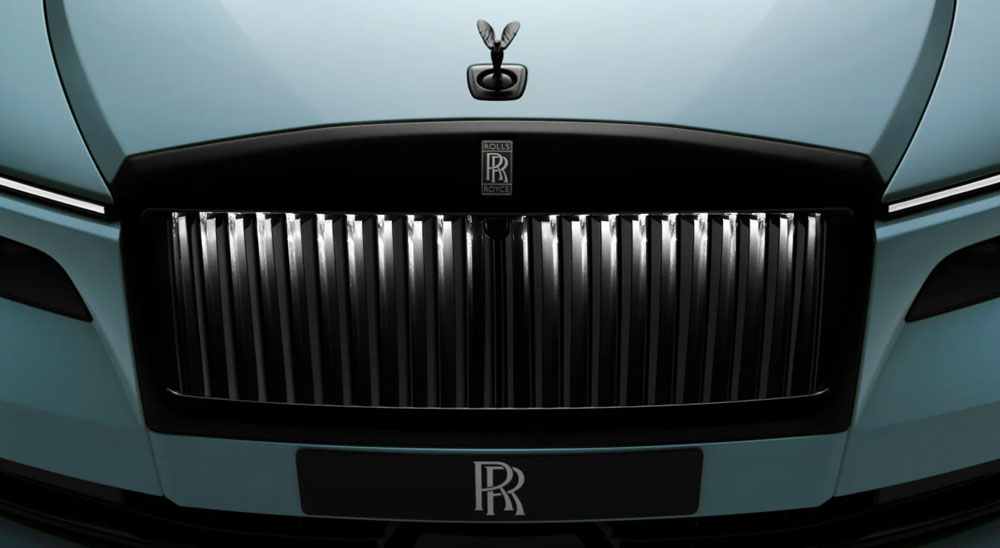
For owners who prefer their silence with more menace, Black Badge Spectre Series II pushes the electric drivetrain further. Infinity Mode unlocks up to 500 kW, while Spirited Mode raises torque to as much as 1,100 Nm.
That makes it the most powerful Rolls-Royce production model yet, but the Black Badge version is more than a faster specification. Darkened exterior treatments, more assertive wheels and bolder interior combinations give it a deliberately less formal identity.
The contrast between the two versions is revealing. The standard Spectre Series II presents electricity as serenity. Black Badge presents it as controlled force. Both demonstrate how adaptable an electric platform can be when performance is shaped around character rather than used as the character itself.
The New Definition of a Rolls-Royce
Spectre Series II arrives at a moment when the premium EV market is becoming more crowded but not necessarily more luxurious. Faster acceleration and larger screens have become easy to reproduce. Isolation, craftsmanship, visual permanence and a genuine sense of occasion remain much harder.
That is where the Spectre separates itself. Its technology supports the experience instead of becoming the experience. Additional range makes it more useful, faster charging makes it less demanding and stronger performance gives it greater authority. None of those improvements require the car to abandon the quiet confidence that defined the original.
Rolls-Royce once used large engines to create effortless movement. It can now accomplish the same goal with fewer mechanical interruptions and almost no sound at all. The result does not feel like a traditional luxury car forced into the electric era. It feels like the electric era finally producing a powertrain worthy of traditional luxury.
MaxTake
Spectre Series II does not treat electrification as a revolution to be celebrated with noise, gimmicks or visual excess. It treats electricity as the natural next step in the pursuit of silence. With longer range, quicker charging, greater power and richer Bespoke possibilities, Rolls-Royce has made its electric coupé more capable without making it less timeless. In this corner of the market, the future does not roar. It closes the door, settles the cabin and quietly moves away.