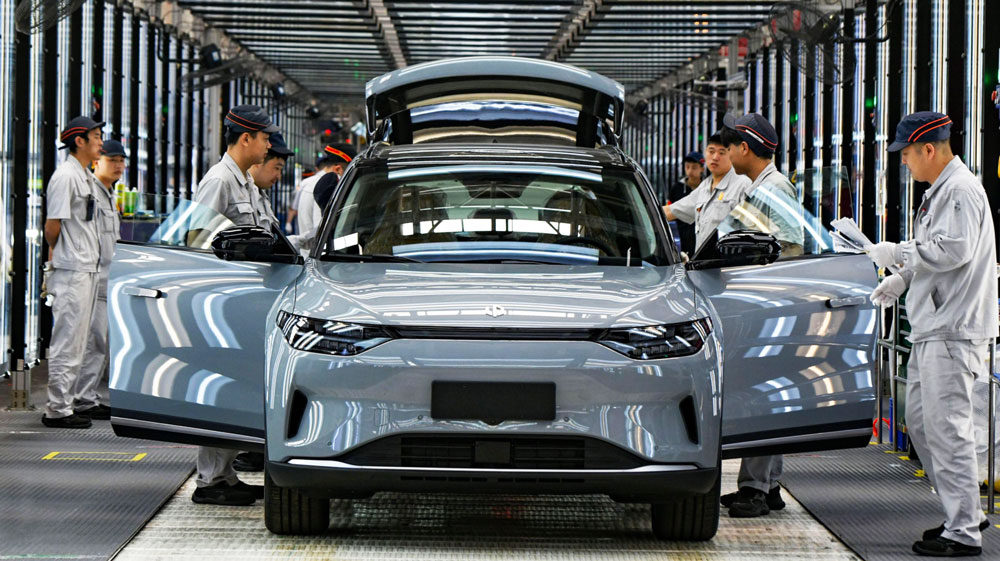
The global auto industry is no longer being reshaped from Detroit, Wolfsburg, Tokyo, or Seoul alone. The new pressure point is China — not simply as the world’s largest car market, but as the most aggressive production, battery, software, and export engine in modern automotive history.
For decades, China was the market global automakers wanted to win. Today, it is the competitor they have to answer. Chinese brands have moved from low-cost domestic players to global challengers with electric vehicles, plug-in hybrids, advanced cabin tech, fast product cycles, and pricing that makes legacy automakers look suddenly slow. The result is the industry’s biggest power shift since Japanese brands rewired the global market in the 1970s and 1980s. Only this time, the shift is faster, more digital, and far more political.
The Export Machine Has Arrived
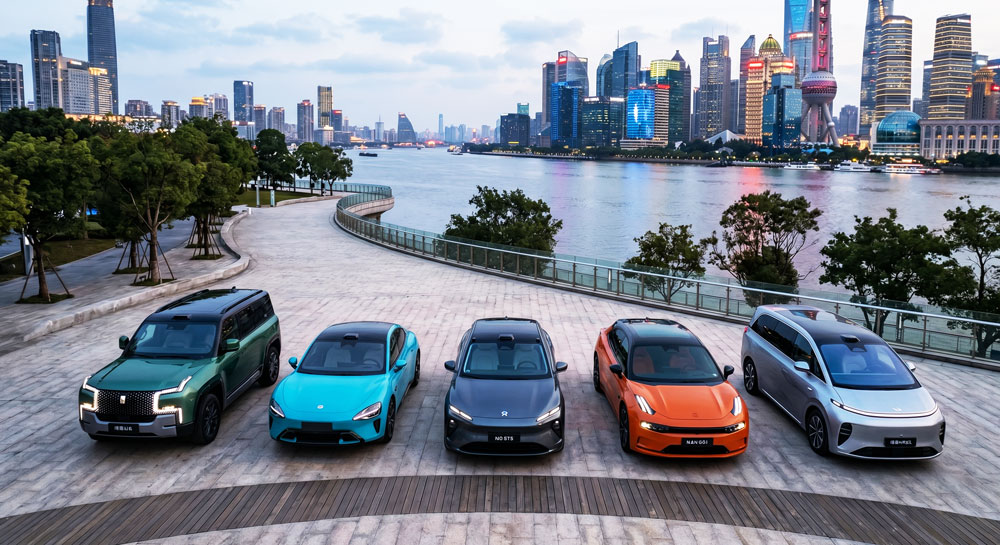
China’s rise is not just about electric vehicles. It is about scale. Chinese automakers have built a full-stack advantage: batteries, components, software, manufacturing, supplier networks, and domestic competition fierce enough to sharpen products before they ever leave home.
That kind of home-market scale gives Chinese automakers a launchpad no other region can easily match. BYD, Geely, SAIC, Chery, Great Wall, Nio, Xpeng, Leapmotor, and others are no longer just fighting for Chinese buyers. They are fighting for Europe, Latin America, Southeast Asia, Australia, the Middle East, and eventually any market where pricing, range, technology, and availability can break old brand loyalties.
Legacy Automakers Are Being Forced to Move Faster
For traditional automakers, China has become both a warning and a workshop. Volkswagen, Toyota, General Motors, Ford, Stellantis, Hyundai, and others spent years treating China as a growth market. Now many are trying to learn from Chinese speed.
The product cadence is different. Chinese brands iterate quickly, refresh interiors aggressively, pack vehicles with screens and driver-assistance features, and compete hard on price. A model that feels new today can feel old within two years. In China, that pressure has already changed the behavior of global brands, with several legacy manufacturers increasing local partnerships and local development to avoid being outpaced by domestic rivals.
The old formula — global platform, long lifecycle, conservative update schedule — is being tested. In the China-led EV era, speed is a feature.
The Price War Is the Earthquake Underneath
China’s auto market is brutal because competition is brutal. EV and plug-in hybrid price cuts have squeezed margins, pressured suppliers, and forced even major brands to defend volume. That environment is uncomfortable, but it has also made Chinese automakers battle-tested.
For consumers outside China, the result can look attractive: more technology for less money. For established automakers, it is a nightmare dressed up as a touchscreen.
Europe has already felt the pressure, with Chinese brands gaining ground in a mature market where every point of share matters. The numbers may still look modest compared with Europe’s legacy names, but the direction is clear: Chinese automakers are no longer fringe players. They are becoming credible alternatives.
Tariffs Are Slowing the Shift, Not Stopping It
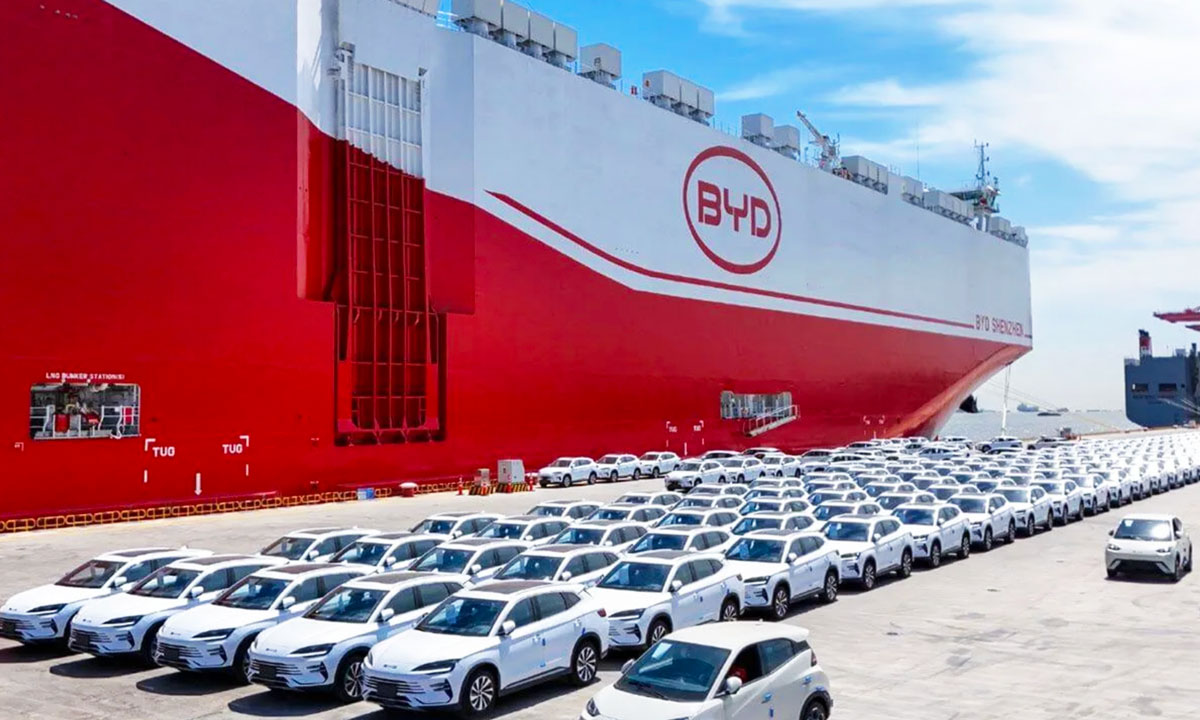
The global response has been predictable: tariffs, investigations, trade barriers, and local-production pressure. The European Union has imposed duties on Chinese-made EVs, while the United States remains heavily protected against Chinese car imports. But tariffs do not erase competitiveness. They simply change the route.
Chinese automakers are now looking at overseas assembly, partnerships, local factories, and region-specific models. That matters because global success will not come from price alone. It will come from making cars that feel right for local roads, tastes, service networks, and regulations.
Europe may become the clearest test. If Chinese brands can localize production, soften tariff exposure, and build trust around service and resale value, the market opens wider. If they cannot, growth could remain strong but uneven.
Software Is Becoming the New Horsepower
The China-versus-the-world story is not only about batteries. It is also about software.
Chinese buyers have pushed automakers toward digital cabins, app ecosystems, advanced driver-assistance features, over-the-air updates, voice control, and integrated infotainment. In many cases, Chinese EV interiors now feel more like connected devices than traditional cars. That pressure has exposed a weakness among legacy brands: many still build excellent mechanical products but struggle with seamless software.
This is where the power shift becomes deeper than sales charts. The old auto world rewarded engine refinement, dealer loyalty, and brand heritage. The new one rewards battery efficiency, user interface, charging access, data integration, and fast updates. Heritage still matters, but it no longer gets a free pass. A badge can open the door. The software has to keep the buyer inside.
China’s Strength Is Not Perfect
The rise of China’s auto industry is not a straight-line takeover. There are challenges.
Brand trust outside China still varies. Service networks take years to build. Safety ratings, parts availability, resale values, data rules, and political scrutiny all matter. Some markets remain deeply skeptical of Chinese vehicles, especially where national security concerns and trade tensions are high. At home, Chinese automakers are also dealing with heavy price pressure, subsidy changes, crowded competition, and the risk that not every fast-growing brand will survive.
Even BYD, the symbol of China’s EV surge, faces a more complicated picture than simple dominance. Legacy automakers are not finished; they are being forced to fight differently. Some are leaning into hybrids, others are accelerating EV development, and many are restructuring how quickly they design, approve, and launch new models.
That may be the real story. China has not ended the global auto race. It has changed the rules.
What This Means for Buyers
For buyers, the shift could be positive. More competition usually means better pricing, more features, faster innovation, and wider EV choice. Chinese brands are pushing the industry to make affordable electrification feel less like a compromise. They are also forcing premium brands to justify premium prices with more than leather, lighting, and legacy.
But buyers will need to look beyond the spec sheet. The big questions will be practical:
- Is the service network strong enough?
- Will parts be easy to get?
- How will resale values hold up?
- Does the software stay supported?
- Is the brand committed to the market long term?
The next decade will not simply reward the cheapest EV. It will reward the automaker that can combine pricing, trust, reliability, design, charging, software, and support into one convincing package.
The New Global Auto Map
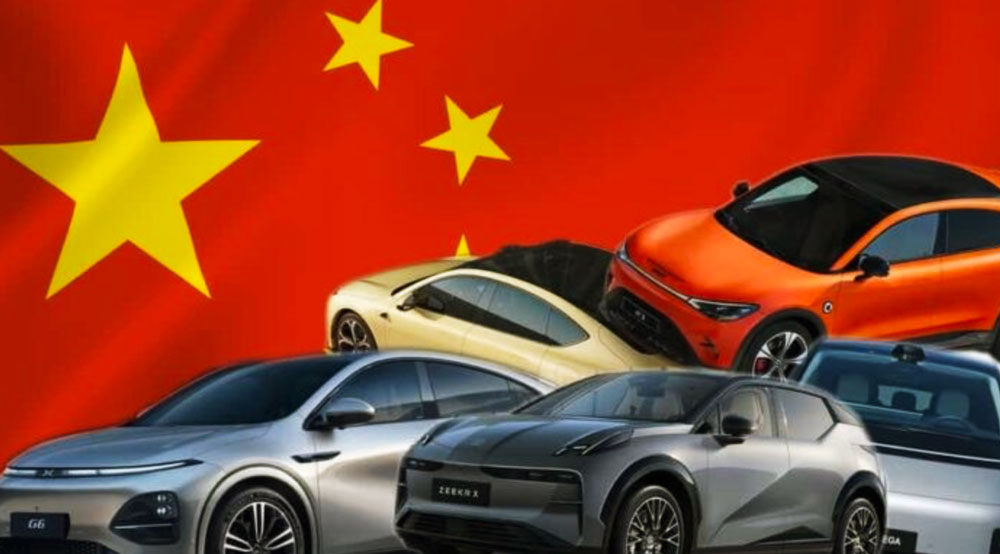
The world’s auto map is being redrawn. Japan changed quality expectations. Germany defined premium engineering. America scaled mass-market mobility and pickup culture. Korea proved how quickly a national auto industry could climb the global ladder.
China is now doing something different: compressing manufacturing scale, battery dominance, software speed, and export ambition into one movement.
That does not mean every Chinese automaker will win. It does mean every global automaker has to respond. The next great automotive rivalry is not just China versus Europe, America, Japan, or Korea. It is fast-cycle, software-heavy, battery-led manufacturing versus the slower, legacy-driven model that dominated the last century.
The industry is not shifting because China arrived. It is shifting because China arrived with volume, pricing, technology, and urgency at the same time.
MaxTake
China’s rise is the auto industry’s wake-up call with the alarm volume stuck on maximum. The old giants still have brand power, engineering depth, dealer networks, and decades of trust, but they no longer control the pace of change. China has turned the global car business into a faster, cheaper, more software-driven contest — and every automaker now has to prove it can keep up.