
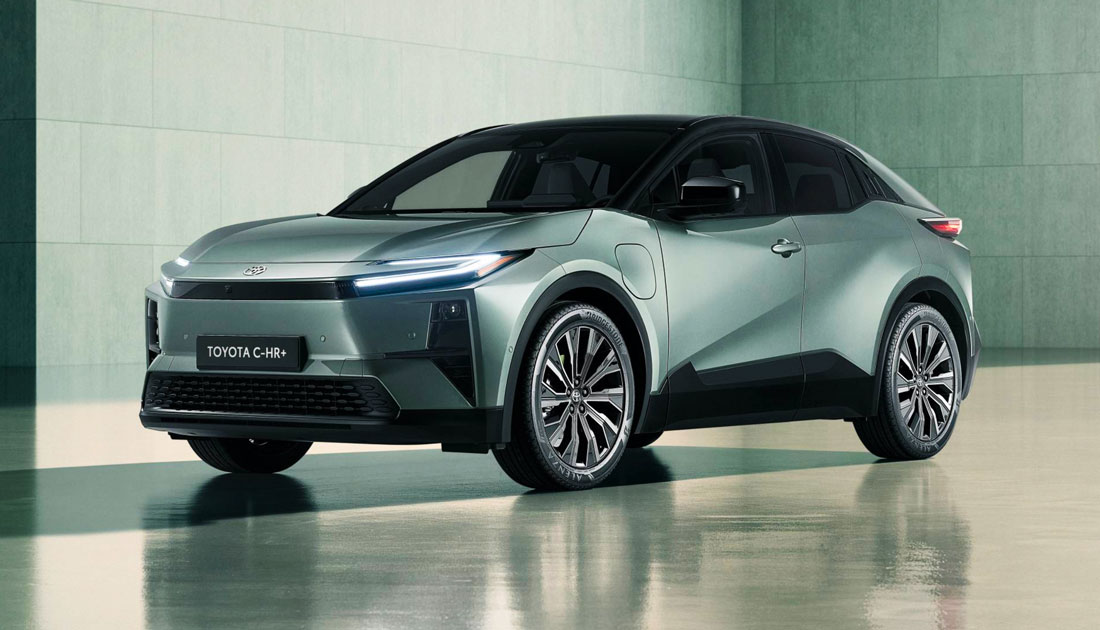
The Toyota C-HR has returned with a very different personality. The small gasoline crossover once known for adventurous styling is now a fully electric compact SUV with coupe-like proportions, serious performance and enough range to serve as more than a fashionable urban runabout.
Built on Toyota’s dedicated e-TNGA electric platform, the 2027 C-HR sits below the bZ in the brand’s expanding battery-electric lineup. Its lower roofline, wide stance and driver-focused character give it a sportier purpose, while available all-wheel drive delivers acceleration that would have seemed wildly unlikely from the previous C-HR.
This is not simply an existing Toyota converted to electric power. The new C-HR has been designed around its battery, giving Toyota greater freedom to sharpen its proportions, lower its centre of gravity and create a more responsive driving experience.
A Familiar Name with a Sharper Shape
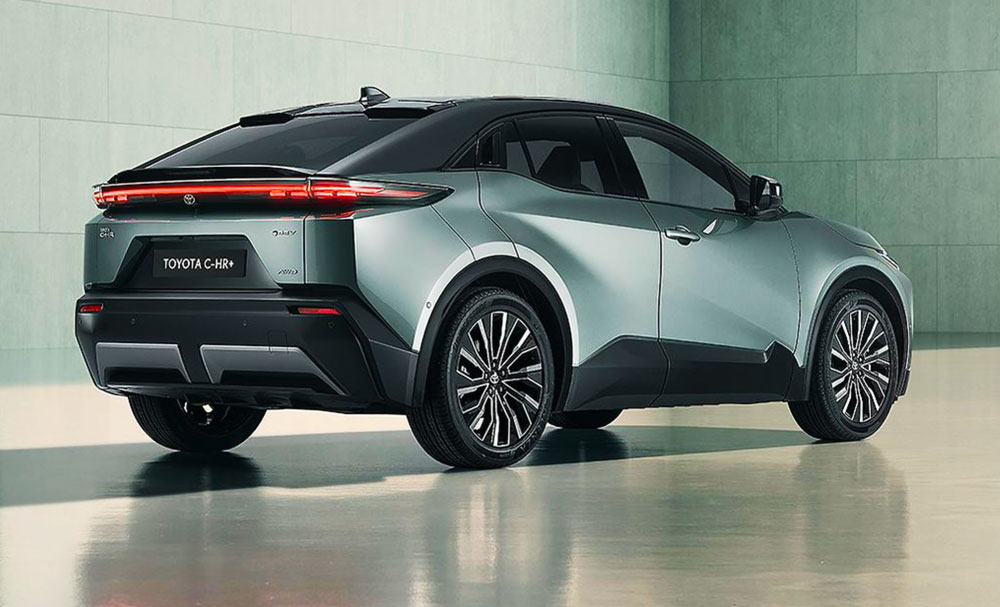
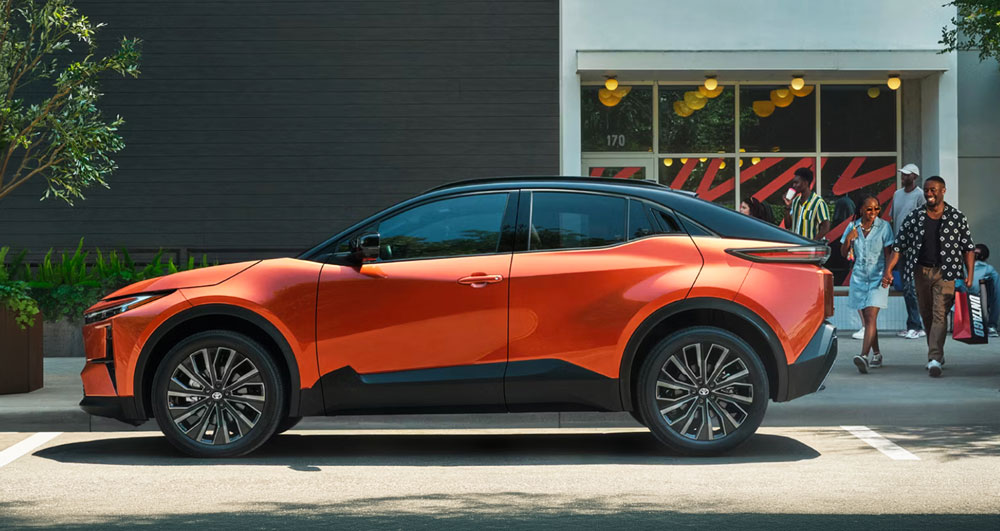
Toyota has preserved the visual boldness associated with the C-HR but has given it cleaner surfaces and a more athletic silhouette. The brand’s hammerhead front-end treatment flows into slim lighting, sculpted bodywork and a compact cabin that tapers toward an angular rear.
The result sits somewhere between a small SUV and a raised electric hatchback. A sporty rear diffuser, hidden rear door handles, pronounced wheel arches and available 20-inch wheels reinforce the C-HR’s performance-oriented appearance. Canadian buyers can also select two-tone exterior finishes on the XSE Premium, adding even more contrast to an already distinctive design.
It is less conventionally practical-looking than the Toyota bZ, but that is precisely the point. The C-HR is intended to be the more expressive choice—an EV for drivers who want something compact without disappearing into the crossover crowd.
Electric Performance with Real Punch
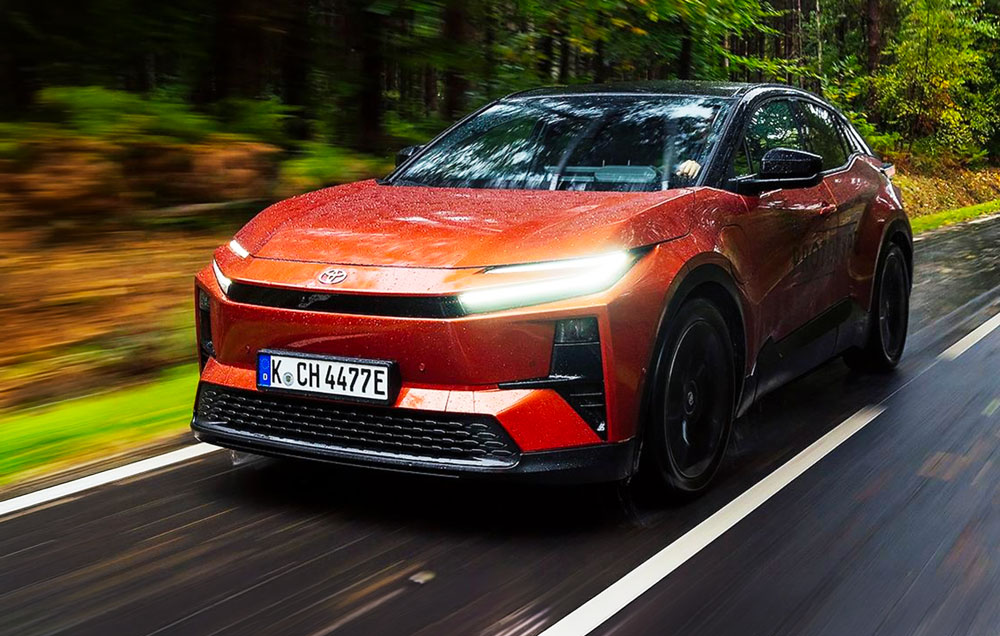
In Canada, the C-HR is offered with two electric powertrains. The front-wheel-drive SE produces 221 system horsepower and prioritizes range, while the XSE and XSE Premium use front and rear motors to provide electronic all-wheel drive and 338 system horsepower.
The AWD version can accelerate from zero to 100 km/h in 5.2 seconds. In the United States, where every C-HR receives the dual-motor AWD system, Toyota estimates a zero-to-60-mph time of 4.9 seconds.
That output gives the C-HR genuine performance credibility. It is considerably quicker than the average compact crossover and powerful enough to make its aggressive styling feel earned rather than decorative.
The battery is positioned low within the e-TNGA platform, helping reduce the centre of gravity. Toyota has also tuned the springs, dampers and anti-roll bars specifically for the C-HR. Adjustable regenerative braking is controlled through steering-wheel-mounted paddles, allowing drivers to choose how strongly the vehicle slows when the accelerator is released.
Range That Favours the Sensible Wheels
Canadian models use a 77-kWh battery. The front-wheel-drive SE, fitted with 18-inch wheels, carries an NRCan-estimated range of up to 496 kilometres. The AWD XSE can travel up to 452 kilometres, while the XSE Premium’s larger 20-inch wheels reduce that figure to 438 kilometres.
The American lineup uses a 74.7-kWh battery specification and standard AWD. The SE is EPA-rated for 287 miles, while the 20-inch-wheel XSE is rated for 273 miles.
Those numbers make the C-HR viable for commuting, regional travel and the occasional longer road trip. They also demonstrate the familiar EV trade-off between appearance and efficiency: the larger wheels look better, but the smaller 18-inch setup delivers the strongest range.
More Ways to Charge
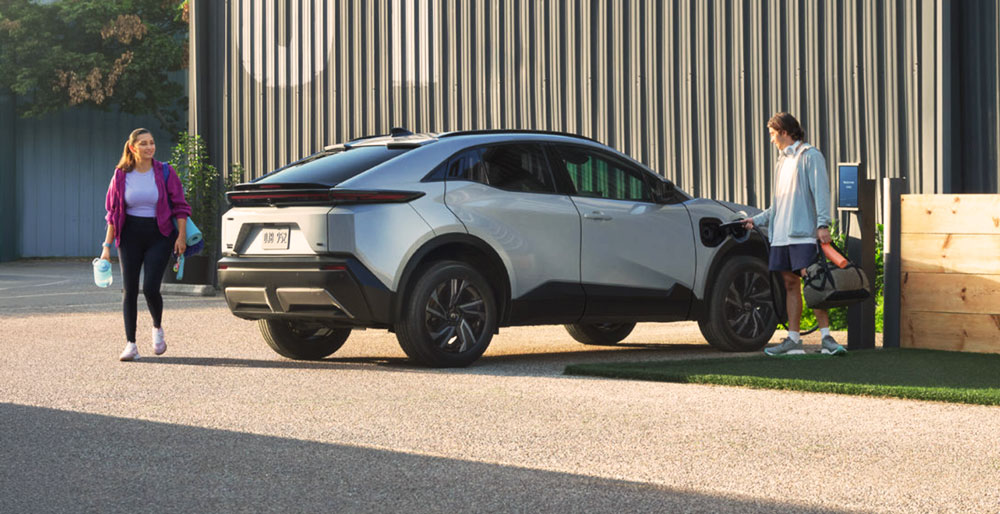
Every C-HR includes a North American Charging System port, providing compatibility with a broad network of Level 2 and DC fast-charging stations, including compatible Tesla Superchargers. Toyota also supplies J1772 and CCS1 adapters, making the vehicle usable with older public and home-charging equipment.
Under ideal conditions, DC fast charging can take the battery from 10 to 80 percent in approximately 30 minutes. An 11-kW onboard AC charger can complete a 10-to-100-percent Level 2 session in roughly seven hours under suitable conditions.
Battery preconditioning is particularly useful in Canada, where cold temperatures can significantly reduce fast-charging performance. When activated before arriving at a charger, the system warms the battery closer to its ideal operating temperature. Plug & Charge support can also simplify compatible public-charging sessions by handling vehicle identification and billing automatically once configured.
A Cabin That Feels Properly Modern
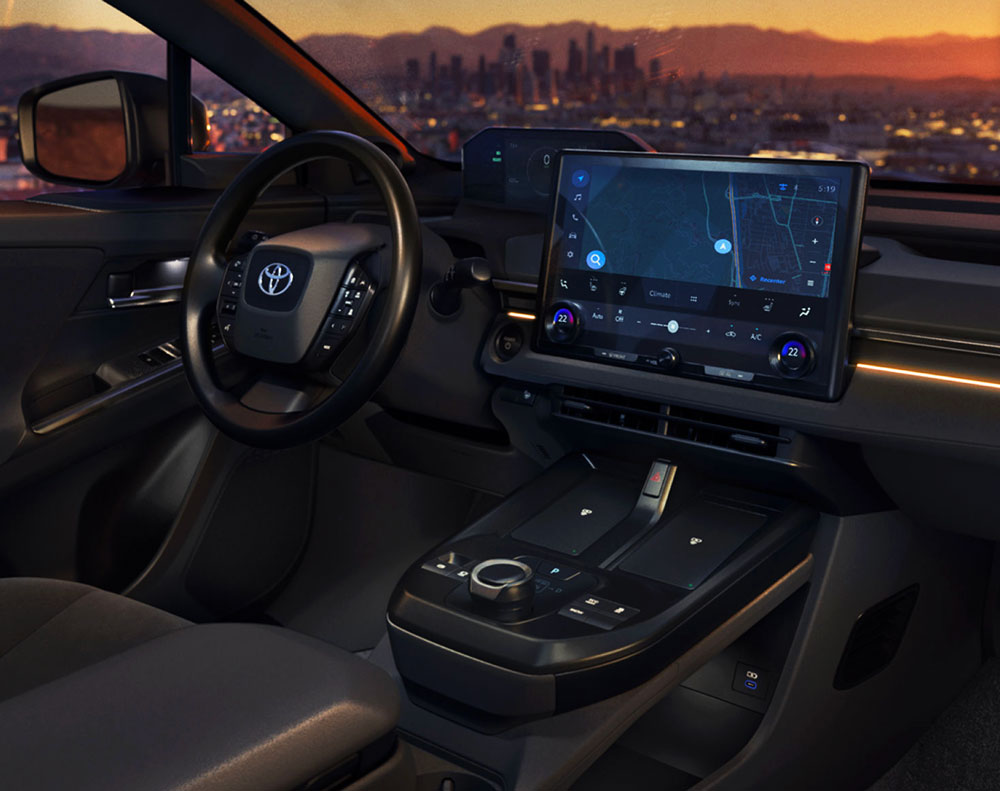
The interior is more restrained than the exterior, but it does not feel basic. Every Canadian model receives a 14-inch Toyota Multimedia touchscreen, wireless Apple CarPlay and Android Auto, dual wireless smartphone chargers and a digital instrument display.
Standard comfort equipment includes heated front seats, a heated steering wheel, dual-zone automatic climate control and 64-colour ambient lighting. SofTex-accented upholstery gives the cabin a more polished finish, while the XSE upgrades to synthetic suede and SofTex materials.
The XSE Premium adds heated rear seats, a fixed panoramic moonroof and a nine-speaker JBL audio system. Toyota has also retained useful physical steering-wheel controls, keeping essential functions accessible without turning every interaction into a touchscreen treasure hunt.
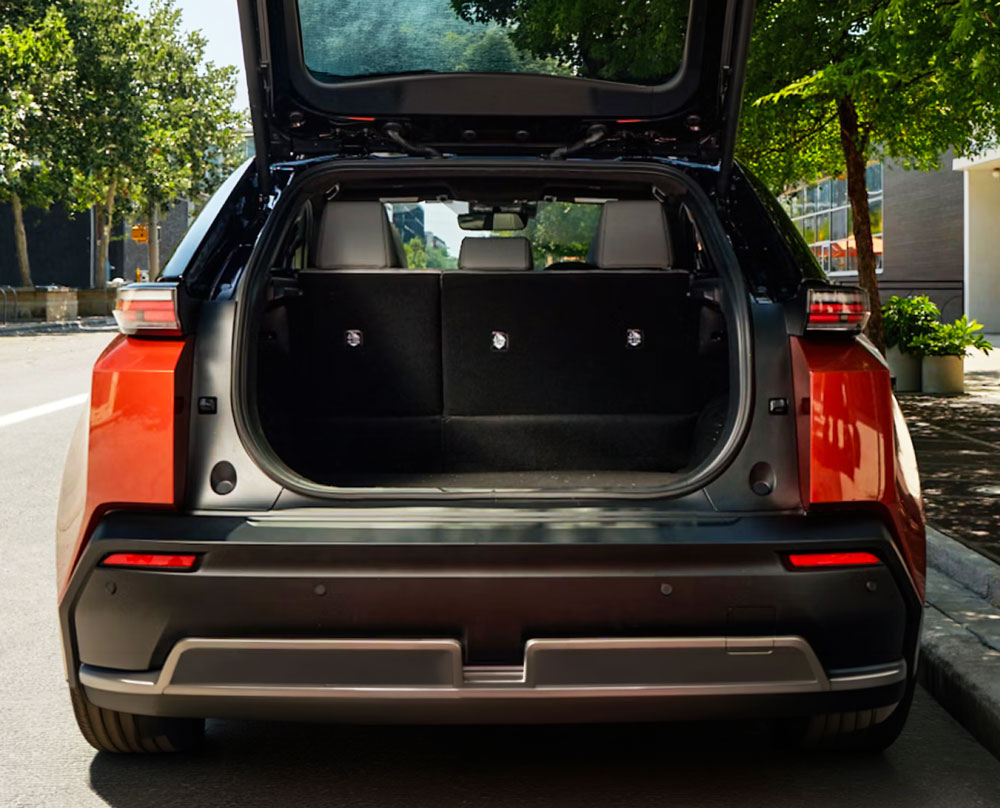
Despite its sloping profile, the C-HR provides up to 720 litres of cargo capacity behind the rear seats. Folding the 60/40-split rear seatbacks increases that figure to 1,685 litres, giving the compact EV enough flexibility for luggage, shopping or larger weekend gear.
Safety Comes Standard
Toyota Safety Sense 3.0 is included across the Canadian range. The C-HR also receives blind-spot monitoring, rear cross-traffic alert, Safe Exit Assist, eight airbags and a backup camera.
Higher grades add technologies including Traffic Jam Assist, Lane Change Assist, Front Cross Traffic Alert, a panoramic-view camera and a driver-monitoring camera. These additions make the XSE particularly well suited to congested urban driving, where the C-HR’s compact footprint is already an advantage.
Trims and Pricing
The Canadian lineup begins with the front-wheel-drive C-HR SE at a starting MSRP of $44,895 before freight, fees and taxes. The XSE AWD starts at $49,945, while the XSE Premium AWD begins at $54,395.
The SE is the range leader and the most rational choice. The XSE provides the strongest balance of performance, traction and equipment, while the XSE Premium adds the visual drama of 20-inch wheels and the cabin appeal of its panoramic roof and JBL audio system.
In the United States, the AWD-only C-HR begins at a base MSRP of $37,080 before destination and other charges. American buyers choose between SE and XSE grades, both using the 338-horsepower dual-motor powertrain.
MaxTake
The 2027 Toyota C-HR gives Toyota something its electric lineup needed: a compact EV led by personality rather than pure practicality. Its dramatic shape attracts the initial attention, but the available 338 horsepower, competitive range, NACS charging port and well-equipped cabin give it substance beyond the styling.
The front-wheel-drive SE is the clever long-range option for Canadian buyers, while the AWD models transform the C-HR into an unexpectedly quick electric crossover. The 20-inch wheels may steal a little range, but subtlety was never really invited to this party.
Toyota has not tried to make the C-HR the roomiest or most rugged EV in its class. It has made it the one with attitude—and that may be exactly what separates it from the growing electric crowd.