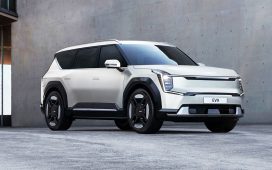
The Kia Telluride has spent years proving that a family SUV does not need a luxury badge to feel polished, desirable or thoughtfully designed. For 2027, Kia has given its three-row success story a complete second-generation redesign—and, at long last, a hybrid powertrain.
The new Telluride Hybrid delivers more power than the standard gasoline model, considerably better fuel economy and a range capable of turning long family trips into fewer fuel-stop negotiations. It also preserves the space, comfort and confident styling that made the Telluride such a formidable presence in the first place.
Hybrid Power With Real Muscle
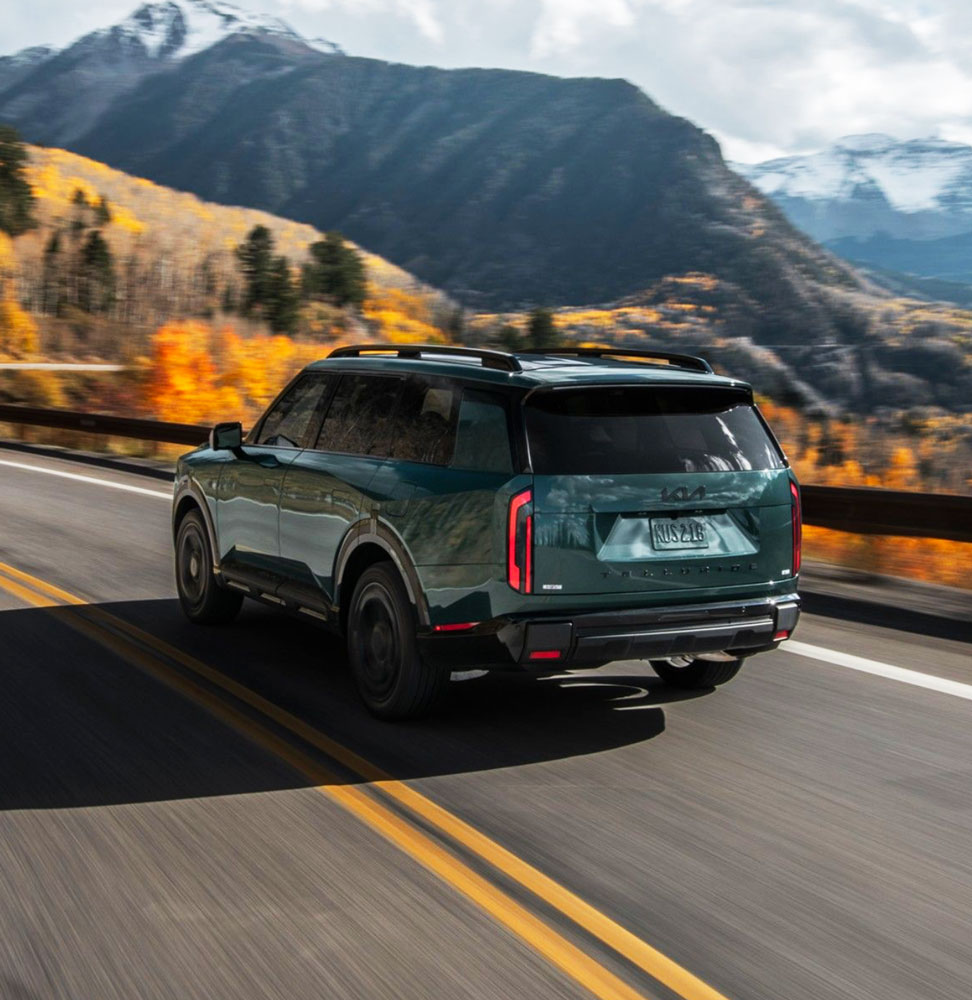
The Telluride Hybrid combines a turbocharged 2.5-litre four-cylinder engine with two electric motors and a 1.65-kWh lithium-ion battery. Together, the system produces 329 horsepower and 339 lb-ft of torque, delivered through a six-speed automatic transmission.
Those numbers make the hybrid more powerful than the regular 2027 Telluride, whose turbocharged gasoline engine produces 274 horsepower and 311 lb-ft. Electric assistance should be particularly useful during acceleration, when a fully occupied three-row SUV needs immediate torque rather than dramatic engine noise.
This is a conventional hybrid rather than a plug-in. There is no charging cable, external charge port or electric-range calculation to manage. The battery is replenished through the engine and regenerative braking, allowing the Telluride to operate like a familiar gasoline SUV while using considerably less fuel.
Kia also equips the hybrid with Electrification-Vehicle Motion Control, which coordinates electric-motor output and braking to help improve stability and body control. It is another indication that the hybrid system has been developed as more than an efficiency add-on.
Efficiency That Families Will Actually Notice
The front-wheel-drive Telluride Hybrid EX carries an EPA estimate of 34 mpg city, 36 mpg highway and 35 mpg combined. It can cover an estimated 637 miles on a full tank, giving it genuine road-trip stamina without requiring a battery-charging itinerary.
The front-wheel-drive SX is rated at 33 mpg combined, while all-wheel-drive versions achieve an estimated 31 mpg combined. That reduction is worth noting, but even the AWD models represent a meaningful efficiency improvement for a large, powerful three-row SUV.
More importantly, Kia has achieved those numbers without stripping away the Telluride’s utility. The hybrid can tow as much as 4,500 pounds when properly equipped, and an available self-levelling rear suspension helps manage heavier loads. It also runs on regular 87-octane gasoline, avoiding another potential ownership expense.
A Bigger, More Confident Telluride
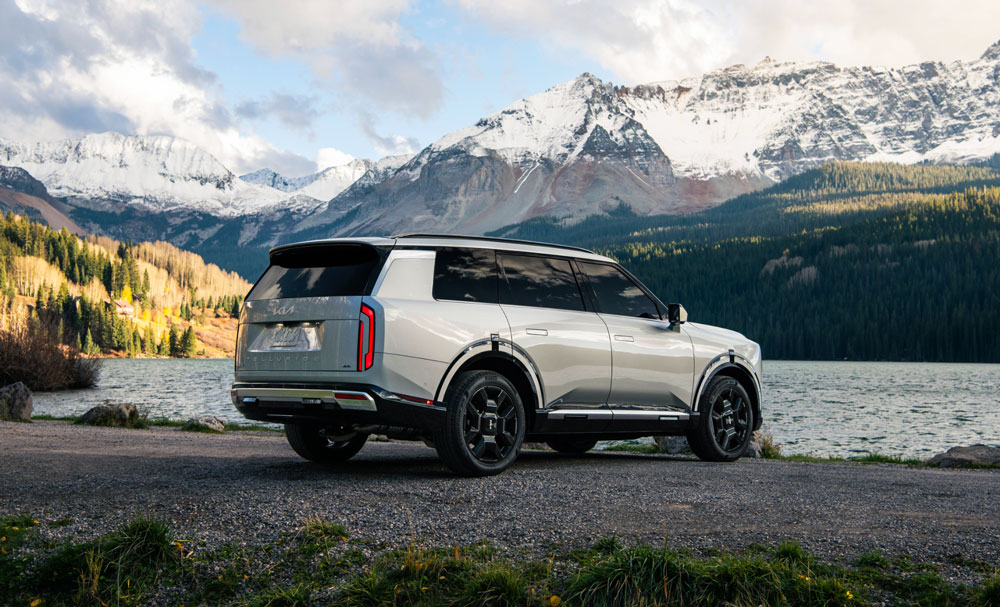
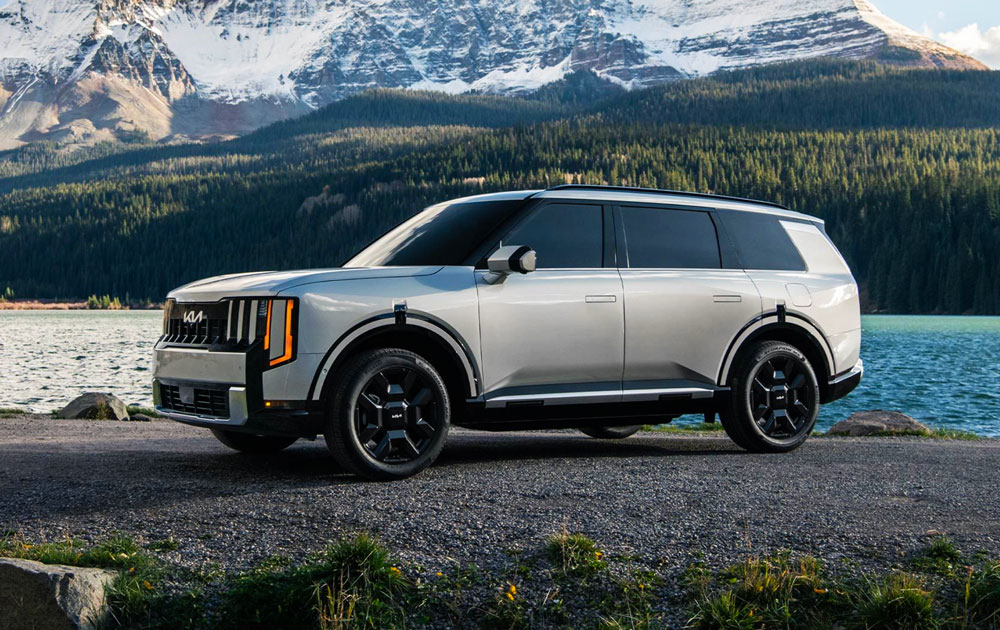
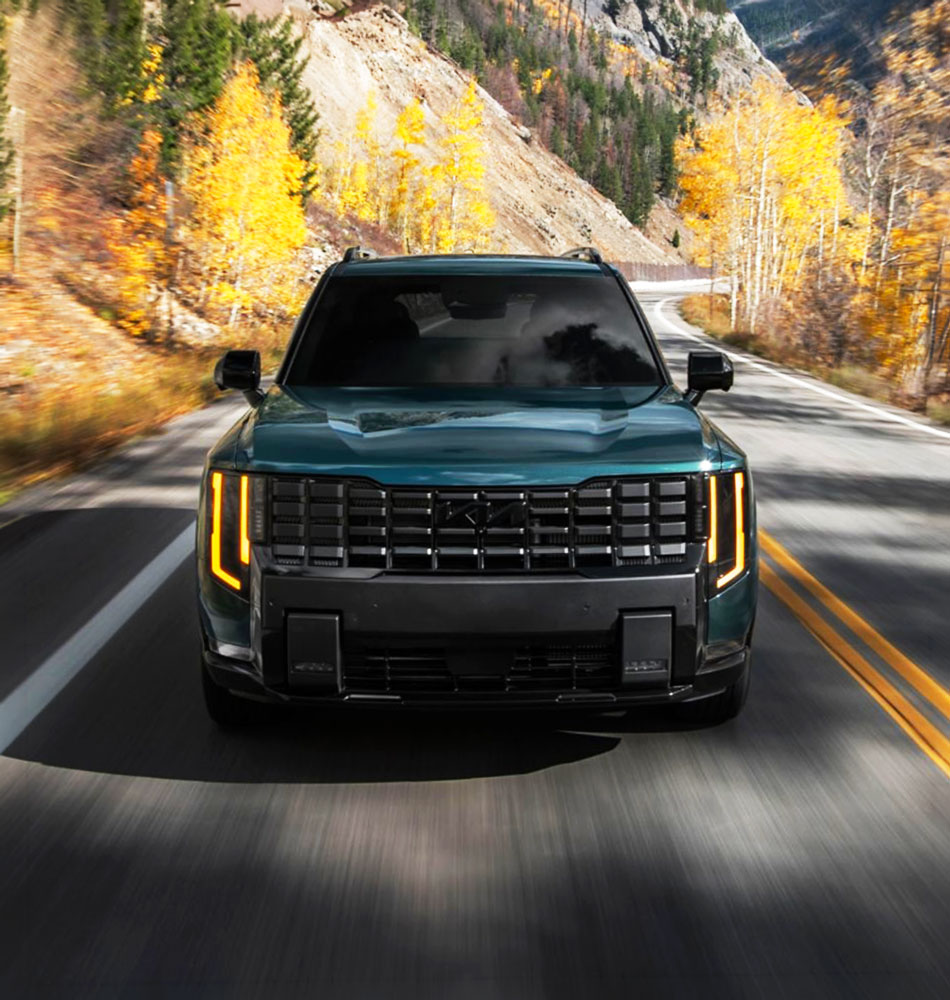
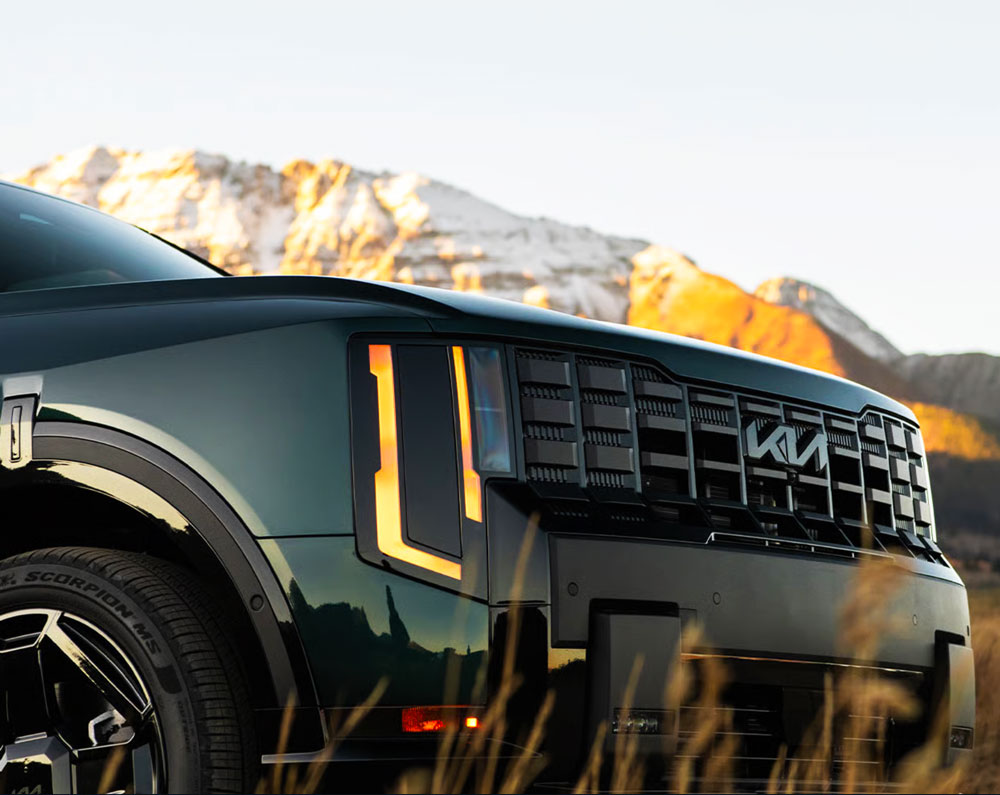
The second-generation Telluride adopts a more upright and architectural design. Its squared body, tall grille, vertical lighting and pronounced wheel arches make it appear closer to a traditional SUV than a softly shaped crossover.
It is also physically larger. Overall length has grown by 2.3 inches, the wheelbase has been extended by nearly three inches and the body stands approximately one inch taller. The added size contributes to improved first- and second-row headroom, easier access to the third row and a more spacious cabin.
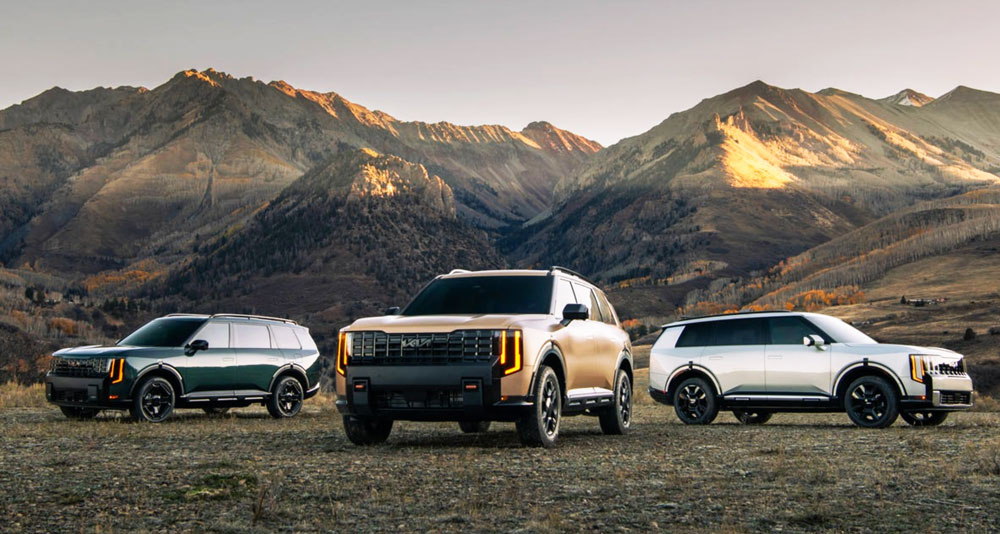
Available flush-fitting door handles give the body a cleaner appearance, while amber daytime running lights provide an immediately recognizable signature. X-Line models turn up the visual drama with dark exterior details, 21-inch wheels, high-utility roof rails and a model-specific grille.
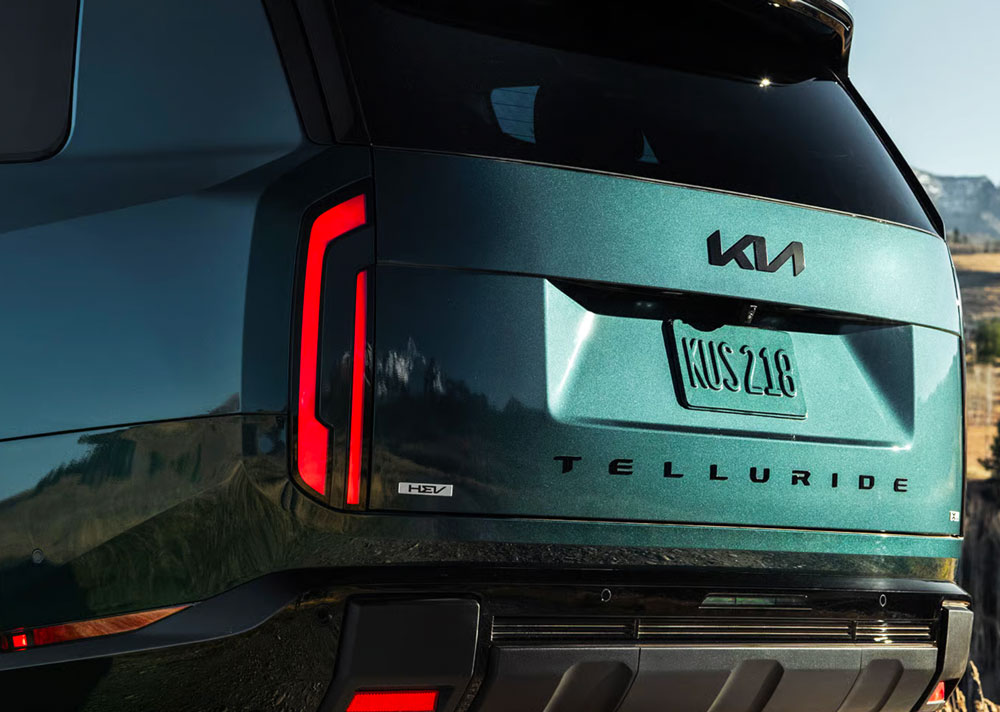
Kia has resisted making the hybrid look like a separate eco-themed edition. Other than its badging and certain trim details, it remains unmistakably a Telluride—which is precisely the point.
Seven Seats and Very Few Compromises
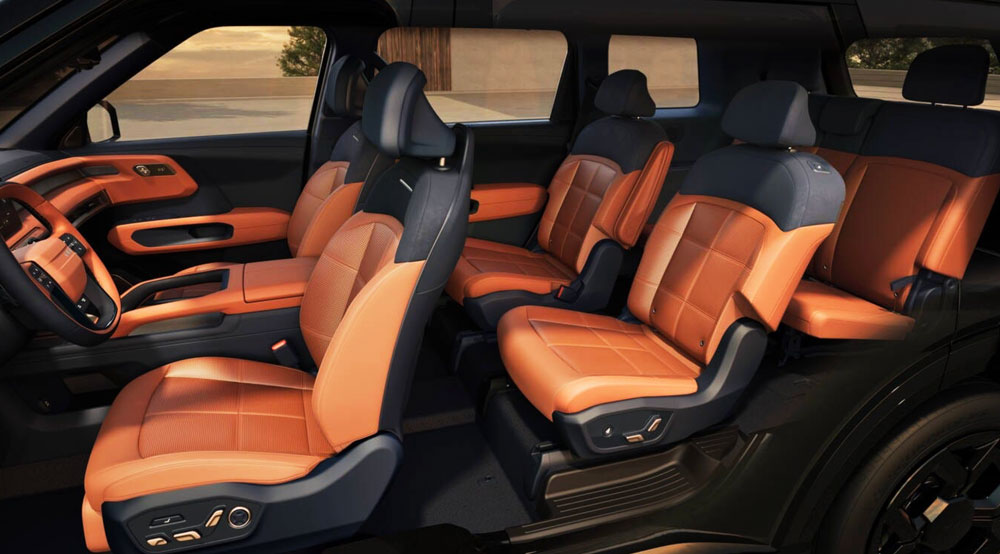
Every Telluride Hybrid uses a seven-passenger configuration with second-row captain’s chairs. Families requiring an eight-seat bench will need to consider the gasoline Telluride, but the captain’s-chair layout creates a more comfortable middle row and a clearer path to the rear.
The second-row seats can tilt and slide to improve third-row access, even when a compatible child seat is installed. With all three rows in use, the hybrid provides 21.3 cubic feet of cargo capacity. That is slightly less than the gasoline model because of the hybrid hardware, but still enough for groceries, luggage or the astonishing quantity of equipment children apparently require to leave the house.
USB-C ports are available across all three rows, accompanied by a 115-volt outlet in the cargo area. Higher trims can add heated and ventilated second-row seats, while the available Executive Package can extend heating to the outer third-row positions.
Kia’s available multifunction cargo table is another clever touch. The movable cargo floor can be repositioned to help organize equipment or used as a table when the vehicle is parked—useful for everything from tailgating to emergency roadside snack service.
Technology Without Forgetting the Driver
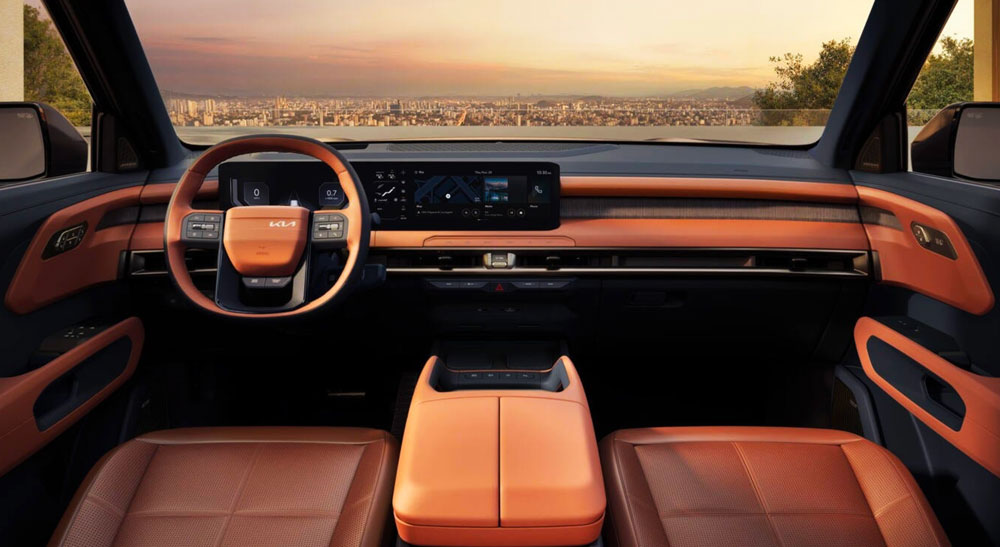
The available digital cockpit incorporates a 12.3-inch instrument display, a 12.3-inch infotainment touchscreen and a separate five-inch climate display. Wireless Apple CarPlay and Android Auto are supported, while physical shortcut controls remain available for commonly used functions.
Higher trims introduce equipment such as a 12-inch head-up display, a digital rearview mirror, a 14-speaker Meridian audio system, dual wireless phone chargers and Digital Key 2.0. Remote Smart Parking Assist is available on the X-Line SX Prestige, allowing the Telluride to move into or out of tight spaces while the driver is standing outside.
The driver-assistance package includes familiar systems such as forward collision avoidance, blind-spot monitoring, lane assistance, Safe Exit Warning and driver-attention monitoring. Available Highway Driving Assist 2 can help manage speed, following distance and lane positioning on compatible roads, although it remains a hands-on assistance system rather than autonomous driving.
Capability With Sensible Limits
All-wheel-drive hybrid models receive Snow, Mud and Sand terrain settings, giving the Telluride useful adaptability for poor weather, cottage roads and loose surfaces. The X-Line strengthens that personality with more rugged styling and practical roof rails.
However, Kia does not offer the hybrid in X-Pro form. Buyers wanting maximum ground clearance, the most trail-oriented equipment or the gasoline model’s 5,000-pound towing capacity will need to remain on the combustion side of the range.
That division makes sense. The hybrid is aimed at families who encounter snowstorms, gravel roads and occasional towing—not those attempting to turn the school run into an overlanding expedition.
Trims and Pricing
In the United States, the 2027 Telluride Hybrid begins at $46,490 for the EX with front-wheel drive, before destination charges. Adding all-wheel drive raises the EX to $48,490.
The front-wheel-drive SX starts at $51,490, followed by the all-wheel-drive X-Line SX at $54,490. The more luxurious SX Prestige AWD begins at $56,590, while the X-Line SX Prestige tops the hybrid range at $57,590.
The EX FWD is the efficiency leader and likely the value sweet spot. Buyers moving into the upper trims gain more luxury and technology, but the larger wheels and standard all-wheel drive reduce combined fuel economy from 35 to 31 mpg.
MaxTake
The 2027 Kia Telluride Hybrid does not reinvent the family SUV. It improves the formula where owners are most likely to notice: stronger performance, substantially better efficiency, longer driving range and a more spacious cabin.
There are compromises. Hybrid models seat seven rather than eight, the rugged X-Pro specification remains gasoline-only and the best fuel-economy figure belongs specifically to the front-wheel-drive EX. Yet none of those limitations undermine the central achievement.
Kia has taken one of the most complete three-row SUVs on the market and given it the powertrain it should have had years ago. The Telluride was already a family favourite. The hybrid finally makes it a more sensible one.