
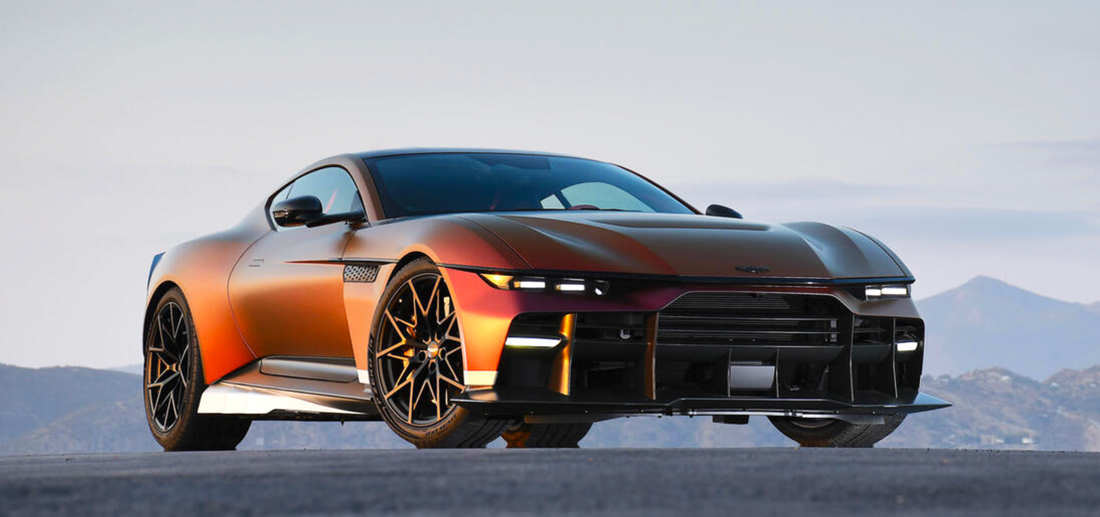
The Aston Martin Valen is not simply another limited-edition supercar. It is a two-seat, carbon-bodied declaration that sound, drama and mechanical excess still have a place at the highest end of the automotive market.
Created by Q by Aston Martin with the company’s Special Vehicle Operations department, the Valen takes the foundations of Aston Martin’s front-engined V12 platform and pushes them in a more aggressive direction. Power rises, weight falls and almost every visible surface becomes more theatrical.
Only 150 examples will be produced, with the first deliveries scheduled for the second quarter of 2027. Its name comes from the Latin word valens, meaning strong or powerful—a suitably muscular addition to Aston Martin’s growing family of V-named specials.
A V12 Turned Up to Eleven
At the heart of the Valen is Aston Martin’s 5.2-litre twin-turbocharged V12, tuned to produce 850 PS—equivalent to approximately 838 horsepower—and 1,000 Nm of torque. That makes it the most powerful front-engined V12 road car in the company’s history.
Aston Martin estimates that the Valen will accelerate from zero to 60 mph in 3.0 seconds before reaching an electronically limited top speed of 214 mph. Power is sent exclusively to the rear wheels through an eight-speed ZF automatic transmission.
There is no manual gearbox and no hybrid system. The Valen’s performance comes from a familiar recipe executed with considerably less restraint: a large twelve-cylinder engine, rear-wheel drive and extensive chassis development.
The transmission receives its own calibration using shift strategies adapted from Aston Martin’s Vantage GT4 racing programme. Sport, Sport+ and Track modes alter the throttle response, gear changes, stability systems and exhaust behaviour. Track mode uses a longer, more progressive accelerator map to provide greater control near the car’s limits.
Sound Becomes Part of the Engineering
The Valen’s titanium exhaust system is more than a lightweight replacement for conventional steel hardware. It is one of the car’s defining features.
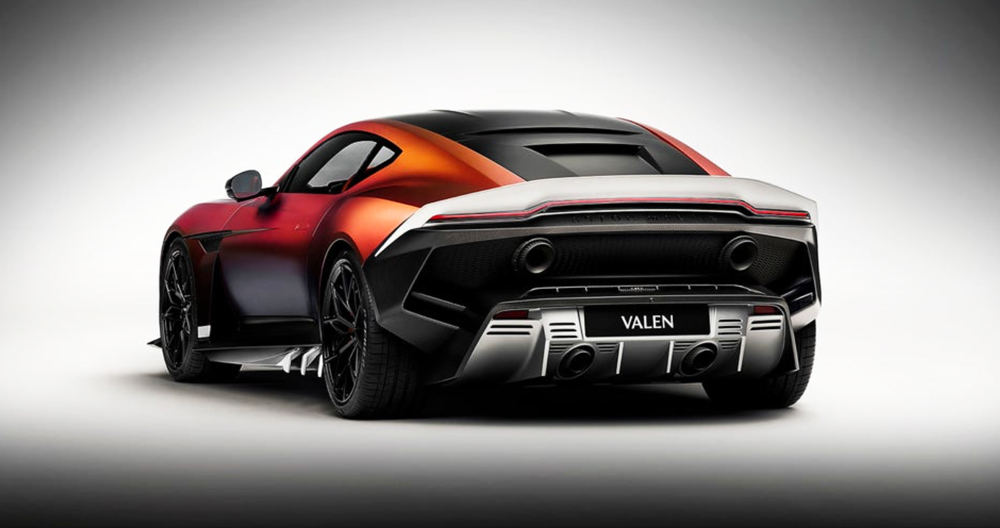
Four exhaust outlets are divided between two upper and two lower positions, giving the rear of the car the appearance of a mid-engined hypercar. The upper pipes remain open, while valves control the lower outlets according to the selected driving mode and engine load.
Aston Martin has tuned the system to reduce some of the deeper frequencies while strengthening the higher notes as the engine speed rises. The upper outlets have even been shaped to create resonance in a manner similar to organ pipes. Subtle, this is not.
The entire titanium system saves 14.8 kilograms, but its more important contribution is emotional. At a time when many high-performance cars deliver their speed with increasing quietness, the Valen treats its V12 soundtrack as a central part of the experience.
Less Weight, More Response
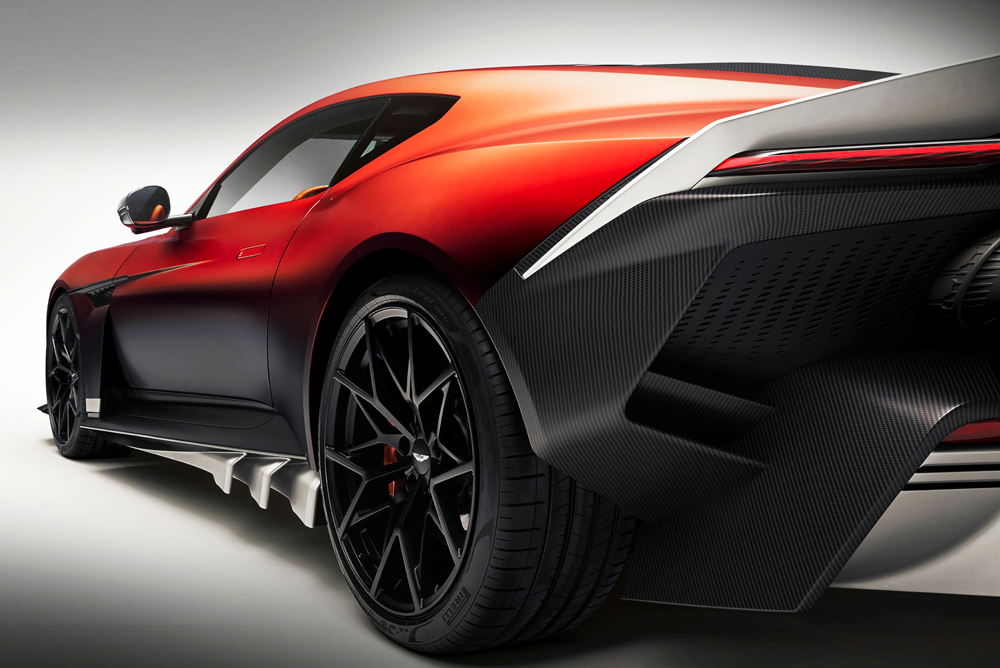
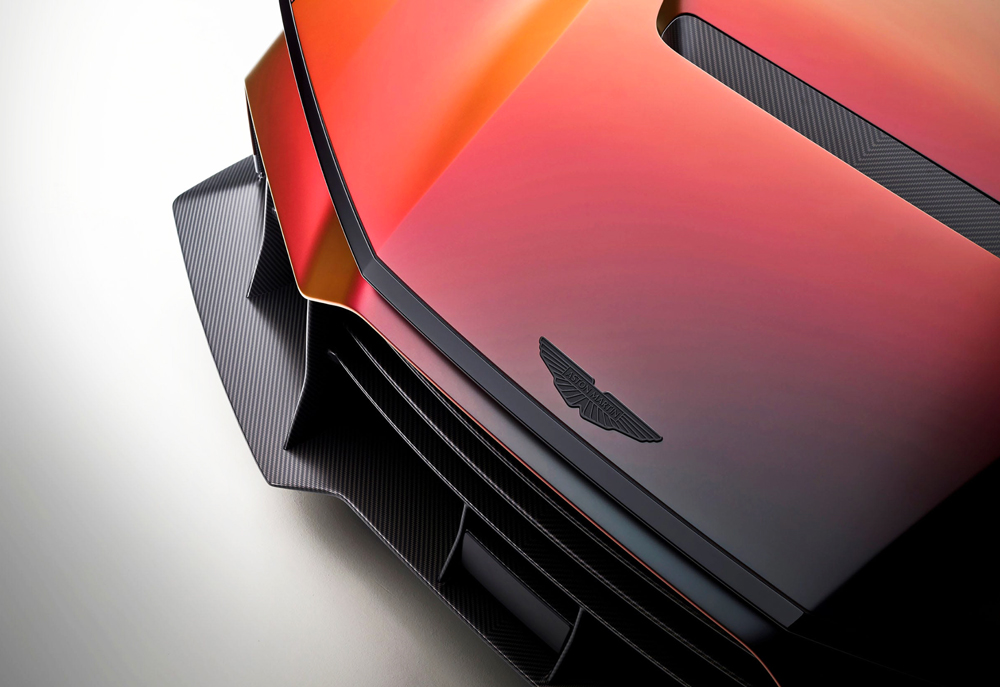
The Valen uses a bonded aluminium structure covered by a full carbon-fibre body. The carbon panels alone reduce weight by approximately 25 kilograms, while standard 21-inch forged magnesium wheels cut unsprung mass by a further six kilograms.
Depending on the selected lightweight components, the Valen can be as much as 110 kilograms lighter than Aston Martin’s core V12 platform. An optional package contributes 16.9 kilograms of that reduction through suspension arms and knuckles machined from solid aluminium, together with titanium chassis bolts.
The suspension combines model-specific springs, a solid-mounted rear subframe and Bilstein DTX semi-active dampers. Aston Martin has also recalibrated the steering, stability control, braking assistance and electronic rear differential to make the car respond like something smaller and lighter.
Carbon-ceramic brakes are standard, measuring 410 millimetres at the front and 360 millimetres at the rear. Specially developed Pirelli P Zero R tyres use Pirelli Cyber Tyre technology to share live information with the car’s braking, stability and traction systems.
This is still intended to be a car capable of covering long distances, but it moves noticeably closer to the focused end of the spectrum than the more polished Vanquish.
A New Shape for the Front-Engined Aston
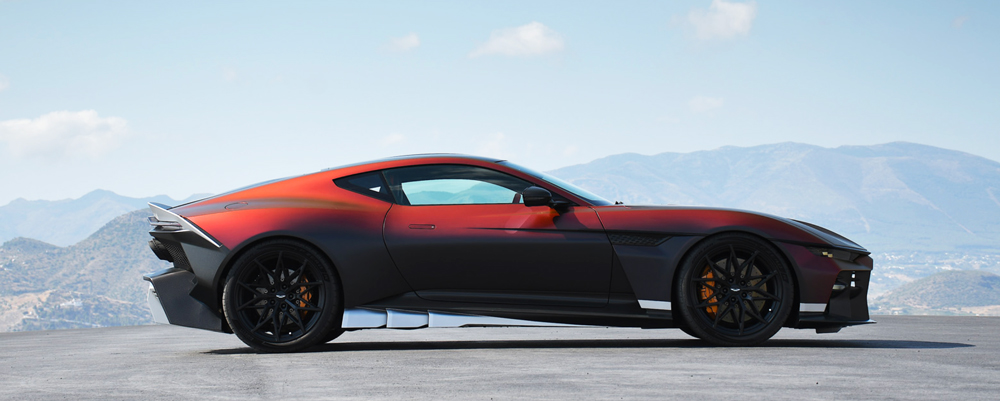
The Valen retains the classic proportions of a front-engined Aston Martin—an extended bonnet, a compact cabin and powerful rear haunches—but almost everything around those proportions has been intensified.
Slim headlamps sit deeply beneath the leading edge of the bonnet. A more angular grille, large splitter and functional side vents give the front a far more confrontational expression than the traditional elegance associated with Aston Martin grand tourers.
Along the sides, sculpted sills feature sawtooth-shaped vortex generators designed to manage airflow beneath the car, reduce lift and create downforce. The body then expands over the rear wheels before terminating in an upswept tail that performs the role of a subtle Gurney flap.
The rear window and conventional trunk lid have been replaced by a solid tailgate. A camera-based mirror provides the rearward view, while the tailgate opens to reveal 170 litres of luggage capacity. That is enough to preserve a degree of touring ability, although the heat generated by the high-mounted exhausts may encourage owners to pack carefully.
A full-width light bar, perforated heat-extraction panel, large diffuser and four titanium outlets complete a rear design that is closer to rolling sculpture than understated grand touring.
A Cabin Built Around the Driver
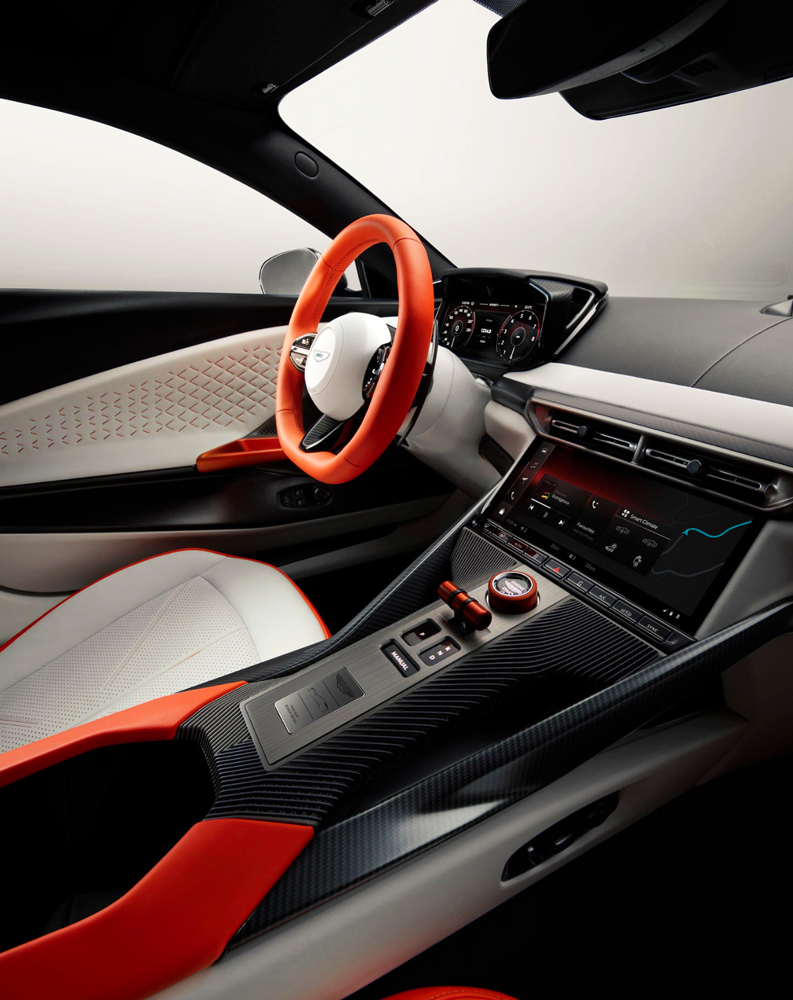
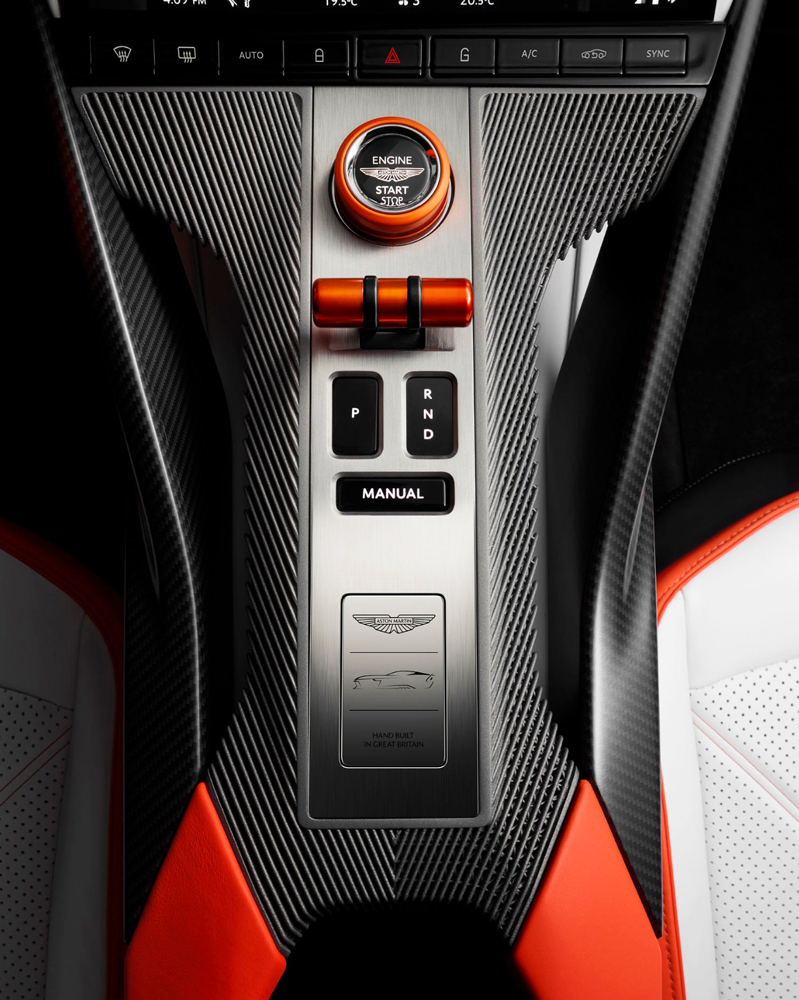
Inside, Aston Martin has moved away from the heavier visual treatment of the Vanquish. The Valen receives a slimmer centre console incorporating 3D-printed components and a performance switch panel related to the one used in the Valhalla.
The console is angled towards the driver, while the central touchscreen is positioned at a shallower angle to integrate more cleanly with the dashboard. Buyers can choose between Sports Plus seats intended to balance support with touring comfort or lighter carbon-fibre performance seats.
Semi-aniline leather, Alcantara, exposed carbon fibre, different upholstery layouts and an expanded selection of anodised finishes provide the expected level of Q personalisation. Customers can also specify exposed carbon bodywork with a carefully aligned herringbone weave, coloured tints and satin or gloss finishes.
The result is still unmistakably luxurious, but the luxury has been reorganized around performance rather than decoration.
Exclusivity Becomes the New Flagship Formula
The Valen arrives above Aston Martin’s regular production range, where rarity and personal commissioning matter almost as much as conventional performance statistics. Aston Martin has not published an official list price, although the Valen occupies the seven-figure territory expected of the company’s most exclusive Q creations.
Its significance extends beyond the 150 customers who will receive one. The Valen shows how Aston Martin can use its existing mechanical foundations to create highly individual cars with distinct design, sound and driving personalities.
It also demonstrates that the V12 never truly disappeared from Aston Martin. The Vanquish, Valour and Valiant already kept the configuration alive. What the Valen brings back is something more specific: the idea of the twelve-cylinder flagship as unapologetic theatre.
MaxTake
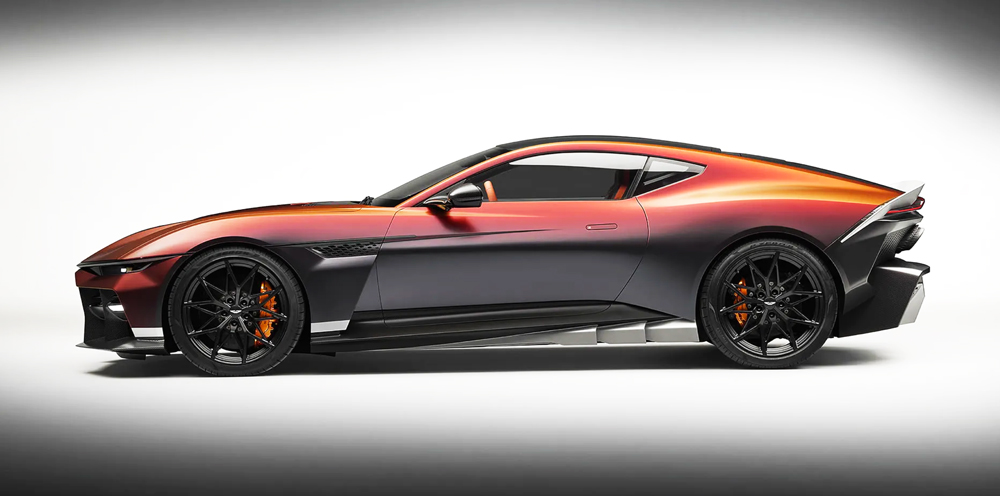
The Aston Martin Valen is louder, lighter and considerably more provocative than the grand tourer beneath its carbon skin. Its numbers are formidable, but the real attraction lies in how deliberately it turns performance into spectacle.
With only 150 examples planned, the Valen will remain an exceptionally rare sight. Yet its message is far broader. At the summit of the market, where speed alone is no longer enough, Aston Martin is betting that emotion, craftsmanship and twelve cylinders can still command the room.