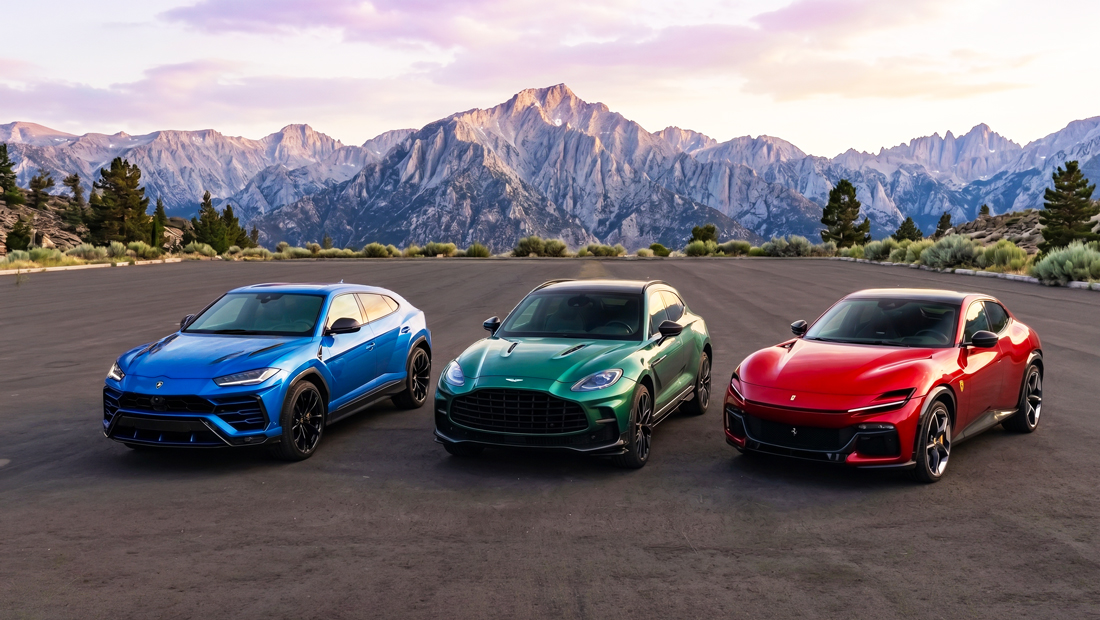
The modern performance SUV has reached a point where practicality is almost incidental. The Ferrari Purosangue, Lamborghini Urus SE and Aston Martin DBX707 can carry passengers, absorb long journeys and cope with difficult weather, but their real purpose is far more indulgent: delivering supercar pace without demanding the compromises of a traditional supercar.
Each approaches that mission differently. Ferrari relies on a naturally aspirated V12, an innovative active suspension and a cabin built around four individual seats. Lamborghini combines a twin-turbocharged V8 with plug-in hybrid power, giving the Urus SE the highest output of the three. Aston Martin takes a more traditional route, using a muscular V8, a spacious five-seat cabin and one of the most complete luxury interiors in the class.
These are not merely fast SUVs. They are three competing interpretations of what an exotic performance car should become when it grows taller, adds rear doors and reluctantly acknowledges the existence of luggage.
The Numbers
| Ferrari Purosangue | Lamborghini Urus SE | Aston Martin DBX707 | |
|---|---|---|---|
| Engine | 6.5-litre naturally aspirated V12 | 4.0-litre twin-turbo V8 plug-in hybrid | 4.0-litre twin-turbo V8 |
| Power | 725 CV | 800 CV | 707 PS |
| Torque | 716 Nm | 950 Nm | 900 Nm |
| Transmission | 8-speed dual-clutch | 8-speed automatic | 9-speed wet-clutch automatic |
| Drive | All-wheel drive | All-wheel drive | All-wheel drive |
| 0–100 km/h | 3.3 seconds | 3.4 seconds | 3.3 seconds |
| Top speed | More than 310 km/h | 312 km/h | 310 km/h |
| Seating | Four | Five | Five |
Ferrari Purosangue — The Emotional Choice
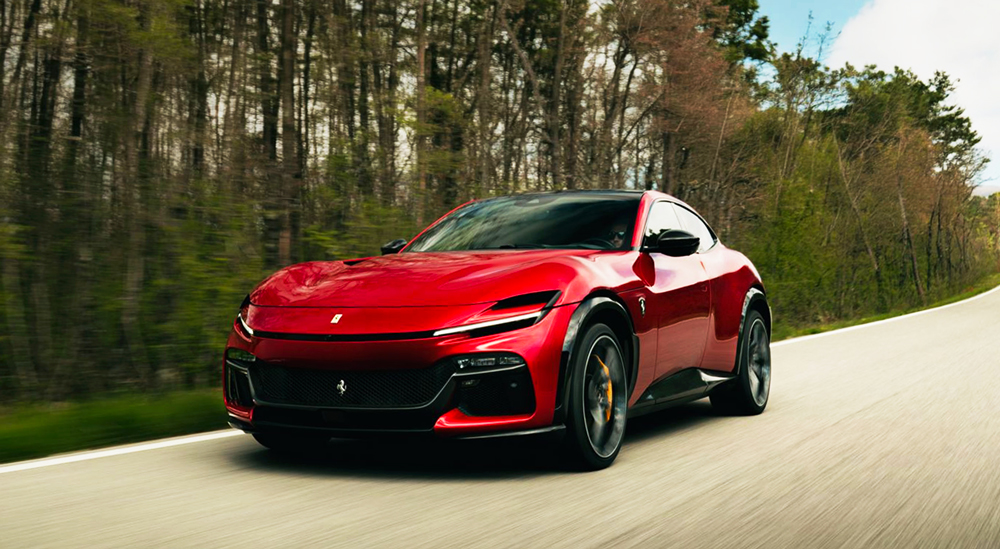
Ferrari refuses to describe the Purosangue as an SUV, and the company’s reluctance makes sense once the car is viewed in person. Its long bonnet, rear-set cabin and low roofline give it the proportions of an elevated grand tourer rather than a conventional luxury utility vehicle. Even the rear doors open backwards, preserving the drama of a Ferrari while making the second row easier to access.
The defining feature is its 6.5-litre naturally aspirated V12. Producing 725 CV and revving beyond 8,000 rpm, it delivers its performance with a sharpness and theatricality the two turbocharged rivals cannot fully reproduce. The Purosangue does not simply accelerate; it builds toward a crescendo. There is no electric assistance filling gaps in the power curve and no turbocharged surge disguising the engine’s character. The response is immediate, linear and gloriously old-fashioned.
Ferrari’s active suspension is equally important. Each damper can actively control body movement, allowing the Purosangue to resist roll without relying on an excessively stiff setup. It remains remarkably composed through corners, yet it does not punish its occupants every time the road surface deteriorates. The steering is fast, the front end feels eager and the eight-speed dual-clutch transmission behaves more like a supercar gearbox than a conventional SUV automatic.
The cabin is intimate and heavily focused on the driver. There is no traditional central infotainment display dominating the dashboard; instead, the passenger receives a dedicated screen while many functions are concentrated around the driver’s instrument panel. Four individual seats reinforce the sense that this is a grand tourer with extra space, not a family SUV wearing a Ferrari badge.
That distinction also exposes its limitations. The Purosangue seats only four, its luggage space is less generous than those of its rivals and its price sits in another financial postcode. Availability can be just as challenging as affordability. Buyers are not choosing the Ferrari because it is the most rational option. They are choosing it because it makes rationality feel rather dull.
Lamborghini Urus SE — The Technological Powerhouse
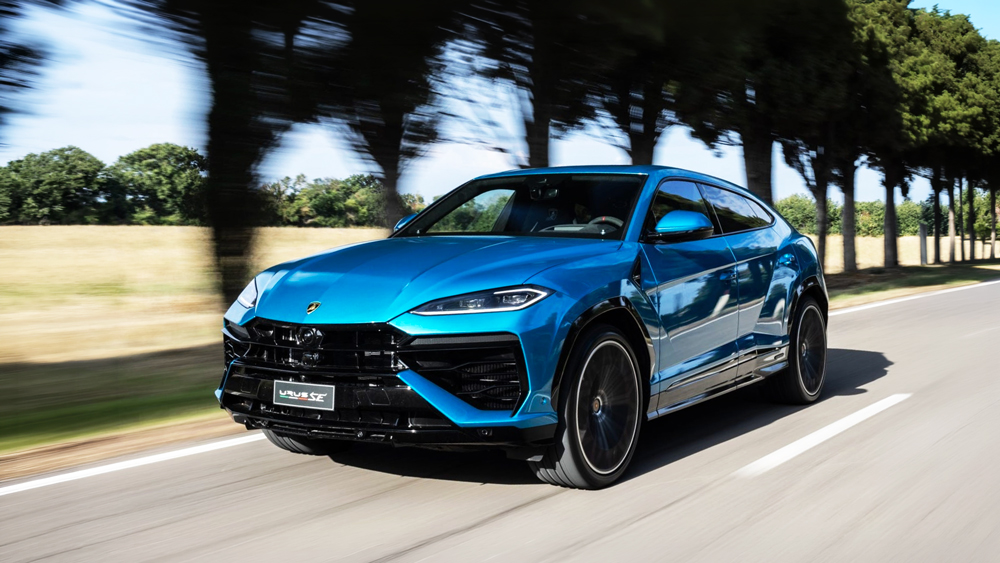
The Urus SE is the most powerful vehicle in this comparison. Its plug-in hybrid system combines a 4.0-litre twin-turbocharged V8 with an electric motor to produce 800 CV and 950 Nm. The hybrid hardware is not merely an efficiency exercise; it strengthens low-speed response, fills the gaps between gear changes and gives Lamborghini greater control over how power reaches each wheel.
Despite carrying the additional weight of its battery and electric system, the Urus SE reaches 100 km/h in 3.4 seconds and continues to a top speed of 312 km/h. It feels relentlessly fast rather than delicate, delivering the kind of acceleration that makes its size temporarily difficult to comprehend. Ferrari supplies the soundtrack, but Lamborghini brings the sledgehammer.
The electrified drivetrain also broadens the Urus’s personality. It can travel for shorter journeys using electric power, operate more quietly in urban environments and reserve the V8 for moments when its performance is actually needed. That will not turn it into an economy car, naturally, but it gives the SE a level of flexibility neither the Ferrari nor the Aston Martin can match.
Lamborghini has also worked to make the hybrid system part of the handling package. The electric motor, centre differential and electronically controlled rear differential cooperate to distribute torque, while the suspension and active anti-roll systems keep the body under control. The result is an SUV that feels secure, adjustable and surprisingly willing to rotate when driven aggressively.
Inside, the Urus SE remains recognisably Lamborghini. The design is angular, the controls are theatrical and the starter button still looks as though it should launch something considerably more dangerous than an engine. It offers five seats and useful luggage capacity, making it much easier to integrate into daily life than its styling suggests.
The compromise is that the Urus shares portions of its underlying architecture with other premium SUVs from within the Volkswagen Group. Lamborghini has transformed the driving experience, design and atmosphere, but the Ferrari feels more mechanically bespoke. The Urus also has a busier interface and a less intimate cabin than the Purosangue. It is the most versatile machine here, although not necessarily the most special.
Aston Martin DBX707 — The Complete Grand Tourer
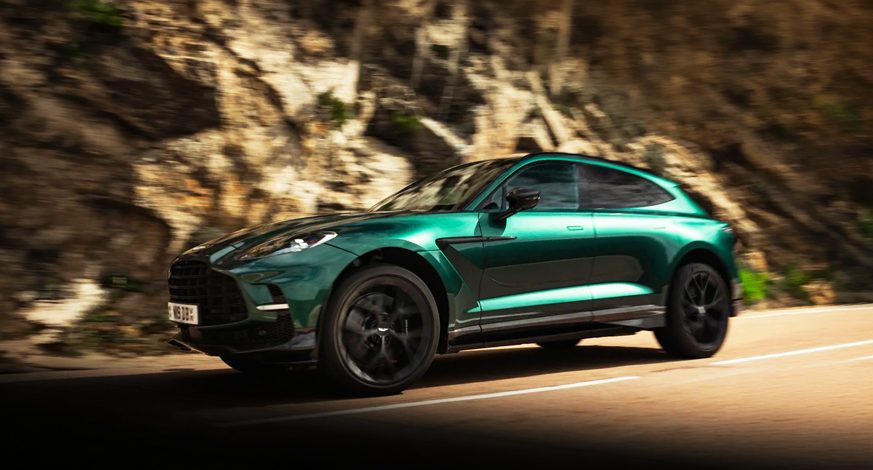
The DBX707 may have the lowest headline power figure of the three, but 707 PS and 900 Nm are hardly signs of restraint. Its 4.0-litre twin-turbocharged V8 sends power through a nine-speed automatic using a wet clutch rather than a conventional torque converter. That change gives the DBX sharper launches and faster shifts, helping it reach 100 km/h in 3.3 seconds and 310 km/h at the top end.
Its greatest strength is balance. The DBX707 is quick enough to challenge the Ferrari and Lamborghini, yet it behaves like a genuine luxury SUV when the road straightens. The air suspension can soften its reactions, the steering settles naturally at motorway speeds and the cabin provides more usable space than the Purosangue. Its 2,700-kilogram braked towing capacity also gives it a degree of real-world capability that seems almost comically sensible in this company.
Select the more aggressive driving modes, however, and the Aston becomes far more serious. The steering is measured rather than hyperactive, the carbon-ceramic brakes provide enormous stopping power and the rear-biased all-wheel-drive system allows the chassis to feel playful without becoming intimidating. It does not disguise its dimensions quite as convincingly as the Ferrari, but it communicates clearly and remains remarkably composed.
The redesigned cabin corrected one of the original DBX’s most obvious weaknesses. Aston Martin’s current infotainment system, physical shortcut controls and higher-quality displays now feel appropriate for a vehicle at this level. The interior also blends sport and traditional luxury particularly well, with rich materials, restrained detailing and a more welcoming atmosphere than the deliberately intense Lamborghini.
The DBX707’s challenge is emotional hierarchy. It sounds excellent, handles beautifully and offers the greatest everyday practicality, but it lacks the Ferrari’s V12 theatre and the Lamborghini’s hybrid-powered numerical dominance. Aston Martin has since expanded the range with the more powerful DBX S, but the DBX707 remains an exceptionally capable performance SUV and arguably the easiest of these three to live with.
Performance Winner — Ferrari Purosangue
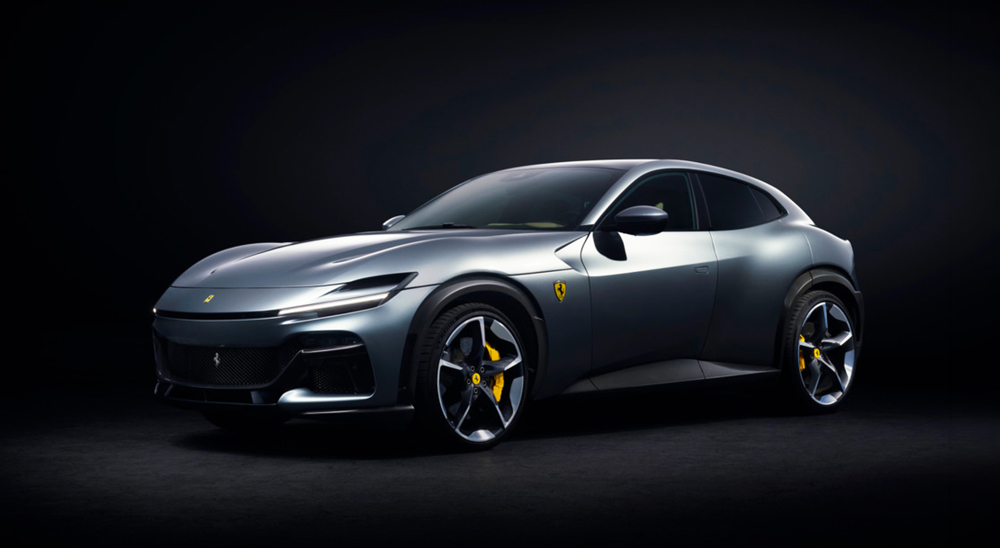
The Urus SE has more power and a slightly higher published top speed, while the DBX707 matches the Ferrari’s 0–100 km/h time. Yet performance is more than a collection of numbers. The Purosangue’s immediate throttle response, dual-clutch transmission, active suspension and high-revving V12 create the most connected experience. It feels the least like an SUV and the most like a genuine supercar stretched into a new shape.
Luxury Winner — Aston Martin DBX707
Ferrari creates occasion and Lamborghini delivers spectacle, but the Aston Martin provides the richest combination of comfort, materials and space. Its cabin feels expensive without becoming overwhelming, while the suspension offers enough compliance for long-distance driving. It is the one most likely to leave passengers relaxed rather than wondering why every school run has become a qualifying lap.
Practicality Winner — Aston Martin DBX707
Five proper seats, generous cargo space, strong towing capability and a comfortable ride give the DBX707 the advantage. The Urus SE is close and gains useful electric-running ability, but the Aston remains the more natural grand tourer. The Purosangue is usable by Ferrari standards, although four seats and a smaller cargo area limit its flexibility.
Technology Winner — Lamborghini Urus SE
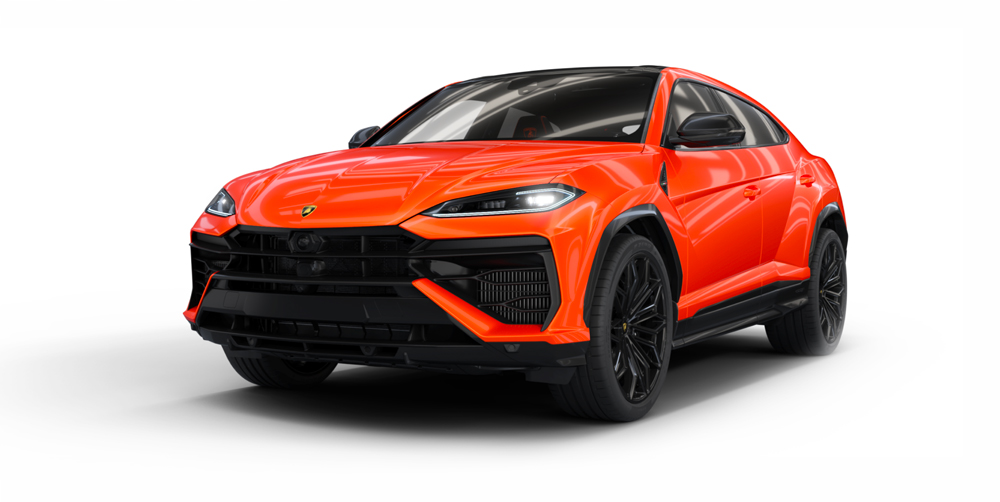
The Urus SE’s plug-in hybrid system does more than increase efficiency. It contributes directly to power delivery, traction and handling while allowing limited electric-only driving. Combined with its sophisticated torque distribution and active chassis systems, it is the most technologically layered vehicle of the three.
Character Winner — Ferrari Purosangue
There is no clever software substitute for a naturally aspirated Ferrari V12. The Purosangue sounds better, responds more cleanly and feels more exotic at ordinary speeds. The rear-hinged doors, four-seat layout and sculpted proportions reinforce the sense that it was designed as a Ferrari first and a practical vehicle second.
The Verdict
The Aston Martin DBX707 is the smartest all-round purchase. It is enormously fast, beautifully finished and genuinely useful, with enough comfort and cargo capacity to serve as the only vehicle in a household. It delivers the fewest compromises and may be the one owners use most often.
The Lamborghini Urus SE is the most versatile. It has the strongest power figure, the broadest range of personalities and the only plug-in hybrid system in this comparison. It can be quiet, aggressive, practical or outrageous, sometimes during the same journey. For drivers who want one exotic SUV to handle nearly every situation, the Urus SE makes a compelling case.
The Ferrari Purosangue wins the showdown. It is the least practical and by far the hardest to justify, but it delivers the experience these vehicles ultimately promise: the emotion of an exotic car without surrendering everyday usability. The V12, active suspension and rear-biased character give it a mechanical identity its rivals cannot duplicate. It does not win because it is the best SUV. It wins because it feels least constrained by being one.
MaxTake
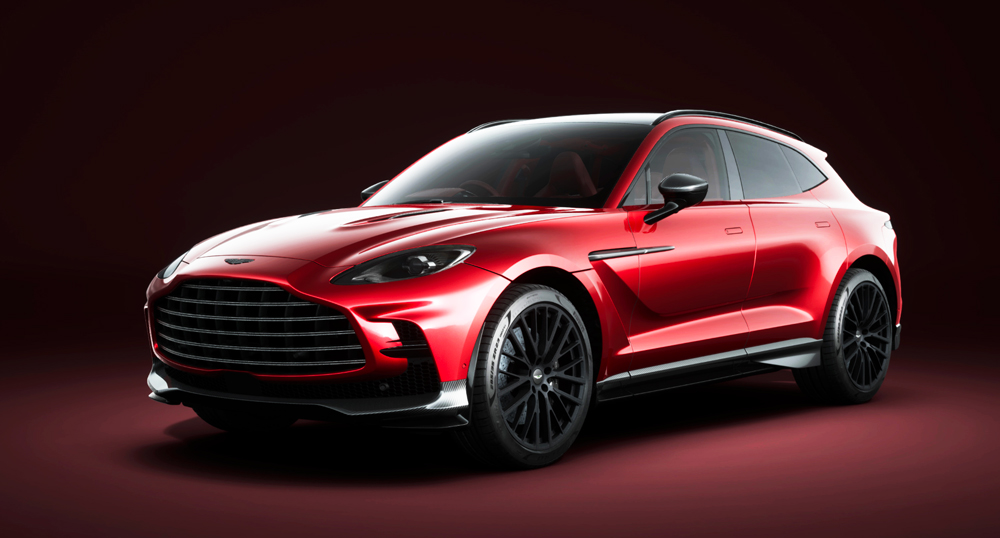
The Aston Martin DBX707 is the best luxury SUV, the Lamborghini Urus SE is the best high-performance all-rounder and the Ferrari Purosangue is the most desirable machine. Aston Martin appeals to the head, Lamborghini satisfies nearly every requirement, but Ferrari reaches somewhere more dangerous—the part of the brain responsible for turning an objectively ridiculous purchase into an absolutely necessary one.