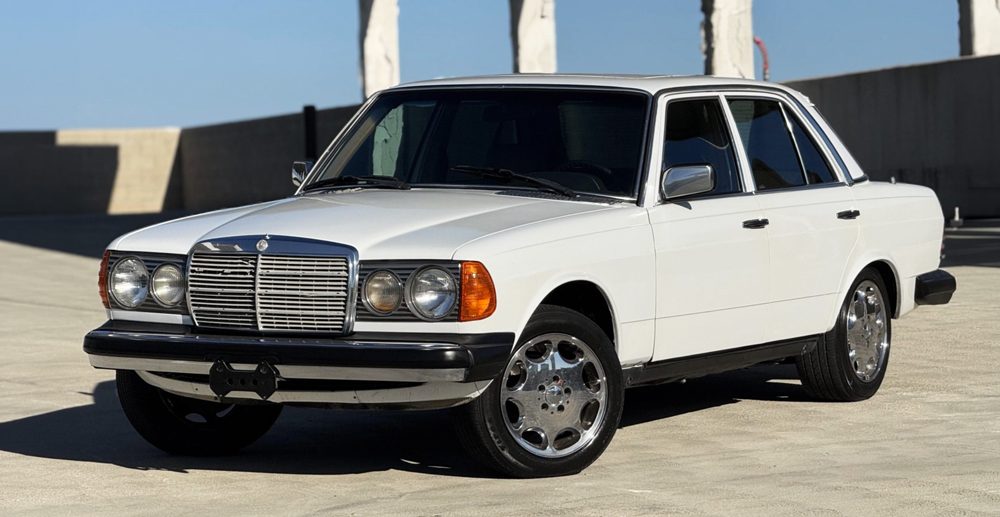
Some luxury cars are remembered for their speed, others for their design, and a select few for the technology they introduced. The Mercedes-Benz W123 earned its place in history by doing something less glamorous but ultimately more impressive: it refused to quit. Built between 1975 and 1986 and introduced to the public in 1976, the W123 became a symbol of restrained prestige, meticulous engineering and extraordinary durability. It was elegant enough for diplomats and executives, practical enough for families and dependable enough for taxi operators who expected their cars to work almost continuously.
Nearly 2.7 million examples were produced across the wider 123 series, making it one of the most successful Mercedes-Benz model families of its era. Yet those numbers only tell part of the story. The W123 did not merely sell well; it established an idea of what a Mercedes should be. It showed that luxury could come from solidity, comfort and longevity rather than decoration or excess. Decades later, surviving examples continue to serve as daily transportation, prized classics and rolling reminders of a time when engineering ambitions were measured in lifetimes.
Built Without an Expiration Date
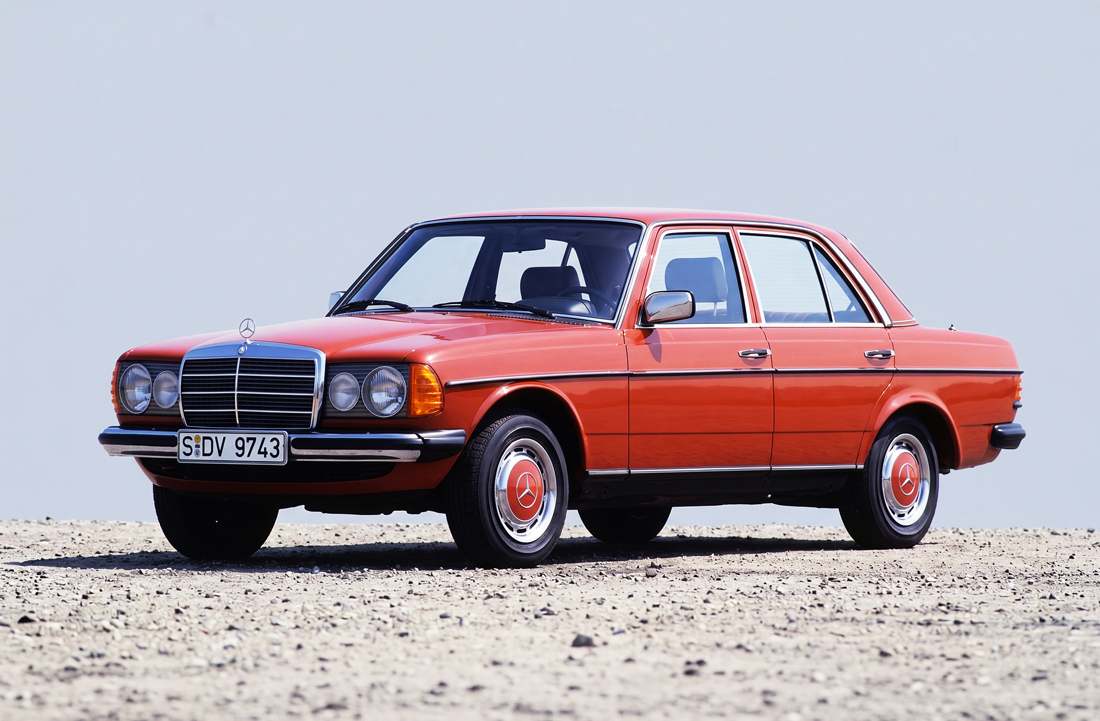
Mercedes-Benz developed the W123 as the successor to the respected W114 and W115 series. The challenge was not simply to create something newer. The company needed to preserve the dependability of its predecessors while improving comfort, safety, refinement and overall usability. The resulting car was conservative in appearance but deeply considered beneath the surface.
Its body was engineered around a strong passenger compartment with front and rear crumple zones designed to absorb collision energy. Mercedes also incorporated details such as a safety-oriented steering system, reinforced roof structure and a protected fuel-tank location. Later cars could be ordered with anti-lock brakes, while a driver airbag became available near the end of the production run in selected markets. These features helped place the W123 among the more safety-conscious cars of its period without turning it into a technological experiment.
Mechanical components were similarly substantial. Suspension parts, door hinges, seat frames, switches and interior fittings were designed to tolerate years of heavy use. Even the doors contributed to the impression: they closed with a dense, mechanical sound that became part of the car’s identity. The W123 was not indestructible in the literal sense, but it was built with margins of strength that are difficult to imagine in an industry now focused on reducing weight, cost and production time.
Luxury Through Substance
The W123 arrived before luxury became closely associated with enormous screens, configurable lighting and complicated electronic systems. Its appeal was quieter. The cabin offered supportive seats, excellent outward visibility, clear instrumentation and controls that felt deliberately weighted. Wood trim appeared on many versions, but the atmosphere remained purposeful rather than theatrical.
Depending on specification and market, buyers could add equipment such as automatic climate control, power windows, central locking, a sunroof and cruise control. None of these features defined the car, however. The real luxury came from its composure. The W123 rode with a calm, controlled softness, filtering rough surfaces without becoming vague. Its steering was deliberate, its seats were designed for long journeys and its cabin created a reassuring separation from the world outside.
Performance was rarely dramatic, especially in the lower-powered diesel models. A 200 D or 240 D demanded patience, particularly when fully loaded. Yet speed was never the point. These cars delivered their power predictably and settled into a steady rhythm on the open road. Petrol-powered versions such as the 230 E and six-cylinder 280 E offered stronger performance, but even the quickest W123 remained more stately than sporting.
The Diesel Legend
No part of the W123 story is more important than its diesel engines. Mercedes offered several four- and five-cylinder diesel configurations, including the 200 D, 220 D, 240 D and 300 D, with turbocharged versions appearing in certain markets. These engines were not especially quiet or fast, but they became famous for their ability to accumulate enormous distances when properly maintained.
Mechanical fuel injection, modest specific output and robust internal construction helped the diesels endure demanding service. W123 taxis became common sights across Europe, the Middle East, Africa and other regions where reliability mattered more than acceleration. Their ability to survive long shifts, inconsistent road conditions and repeated repairs turned the model into an international symbol of dependability.
The reputation was not built on a lack of maintenance. These cars still required regular fluid changes, valve adjustments on many engines and attention to cooling, vacuum and fuel systems. Their advantage was that much of the underlying engineering was understandable, serviceable and capable of being repaired without replacing half the vehicle. A W123 rewarded care by returning years—sometimes decades—of continued service.
One Car, Several Identities
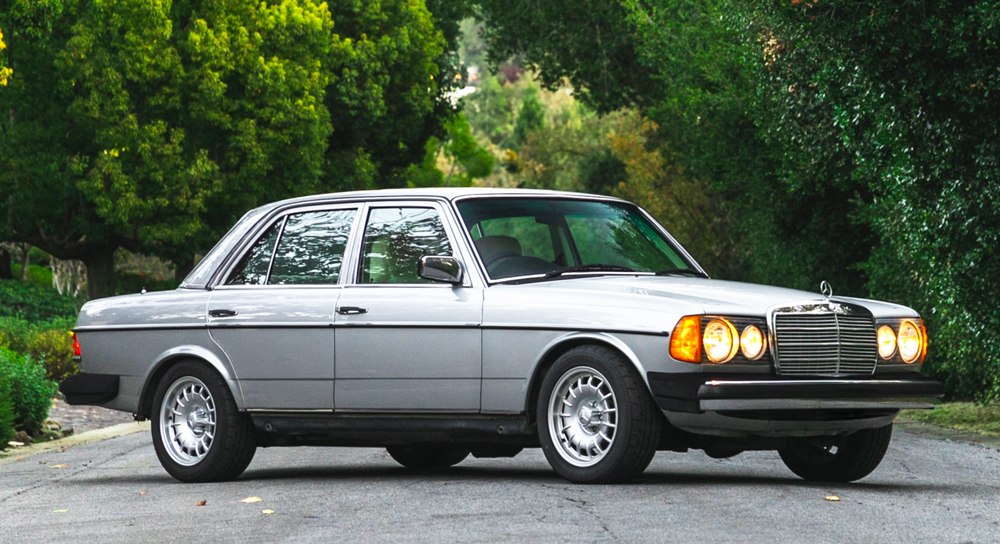
Although the four-door saloon was the heart of the range, Mercedes expanded the 123 family to meet several different needs. The C123 coupé used a shorter wheelbase and pillarless side-window treatment to create a more elegant personal-luxury model. It retained the substance of the saloon while giving the design a lower, more graceful profile.
The S123 T-Modell estate was even more significant. It was Mercedes-Benz’s first series-production estate developed and manufactured as an official part of the passenger-car range. Earlier Mercedes estates had generally been converted by outside coachbuilders. The S123 combined a refined cabin with a large cargo area, self-levelling rear suspension and the same long-distance character as the saloon. It helped transform the premium estate from a specialist utility vehicle into a desirable luxury car.
Long-wheelbase versions were also produced for taxi, limousine and commercial applications, while special bodies were created for ambulances, hearses and other professional duties. Few luxury-car platforms have moved so naturally between private estates, family transport, diplomatic service and round-the-clock commercial work.
Design That Never Needed to Shout
The W123’s styling borrowed some of its visual authority from the larger W116 S-Class. Its upright grille, ribbed rear lamps, neatly defined body surfaces and formal proportions created a shape that was unmistakably Mercedes-Benz. Higher-specification models initially received rectangular headlamps, while many other versions used round lamps behind shared covers. Later updates brought rectangular lighting across more of the range.
There was little about the design that chased fashion. That restraint became one of its greatest strengths. The W123 looked respectable without appearing extravagant and expensive without seeming fragile. In cities around the world, it could belong equally naturally outside a government building, an international hotel, a suburban home or a taxi rank.
Its shape has also aged with unusual dignity. The slim pillars, generous glass area and compact overhangs give the car a visual lightness that contrasts with the size and complexity of modern luxury vehicles. It looks engineered rather than styled—a distinction that helps explain why it remains so recognizable.
Not Entirely Unbreakable
The mythology surrounding the W123 can sometimes hide the realities of owning one today. Rust is the greatest threat, particularly around the wheel arches, jacking points, sills, floors, suspension mounting areas and edges surrounding the glass. Water leaks can damage interiors, while neglected cooling systems can create expensive engine problems.
Vacuum-operated central locking and engine-shutoff systems can develop leaks, automatic climate-control components may become troublesome and ageing suspension or steering parts can make a tired car feel far less composed than Mercedes intended. Parts availability remains relatively strong for a vehicle of its age, but restoration costs can quickly exceed the purchase price of a neglected example.
A surviving W123 should therefore be judged by its condition and maintenance history rather than mileage alone. A well-maintained high-mileage car can be far more desirable than a low-mileage example weakened by rust, poor storage or years of deferred repairs. The car’s reputation for toughness is deserved, but even a tank needs someone to check the oil.
The Standard Mercedes Left Behind
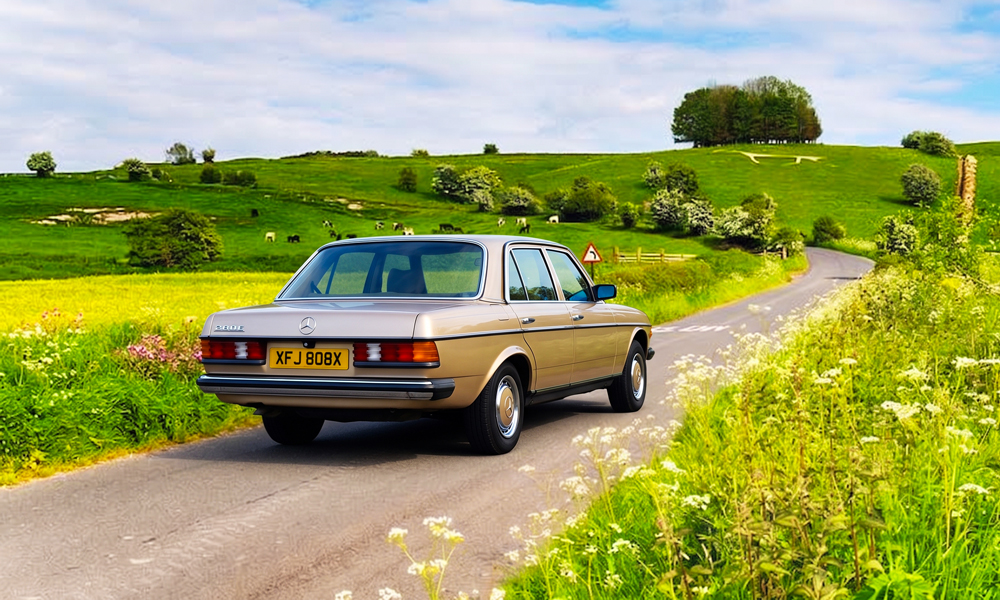
The W123 helped define the modern idea of the Mercedes-Benz E-Class long before the E-Class name was officially applied to this part of the range. It established a formula based on comfort, safety, engineering discipline and understated status. The W124 that followed carried those values into a more aerodynamic and technologically advanced era, but the W123 remained the emotional benchmark for durability.
Its influence extends beyond Mercedes-Benz. The car represents an industrial philosophy in which long service life was itself a form of luxury. Owners were not merely buying transportation for the next few years; they were buying a machine expected to remain useful through changing fashions, economic cycles and generations of drivers.
That idea feels especially powerful today. Modern cars are faster, safer, cleaner and more capable, but few create the same confidence that they might still be working several decades from now. The W123’s greatest achievement was not perfection. It was trust.
MaxTake
The Mercedes-Benz W123 became legendary because its luxury was never superficial. Its appeal lived in the density of its construction, the calmness of its ride and the sense that every component had been designed for years of honest service. It could be slow, rust-prone and expensive to restore, but a properly cared-for example delivered something increasingly rare: permanence.
For collectors, the coupés and beautifully preserved estates may generate the most immediate desire. For purists, a simple diesel saloon remains the definitive expression of the W123 philosophy. Whatever the body style or engine, the underlying message is the same. True luxury is not just how a car makes its owner feel on the first day. It is how faithfully it continues to perform after the excitement has faded, the warranty has expired and the odometer has gone around more times than anyone expected.