The Super Bee has never been the subtle member of the Dodge family. Since the badge first appeared in 1968, it has represented a particularly direct interpretation of American muscle: a powerful engine, unmistakable graphics and just enough practicality to make the performance usable beyond a drag strip. For 2027, the bee is back—and it has landed on the newest generation of the Charger.
The 2027 Dodge Charger Super Bee Launch Edition becomes the quickest, fastest and most powerful factory Super Bee yet. Its twin-turbocharged 3.0-litre Hurricane inline-six produces 600 horsepower and 531 lb-ft of torque, sending the car from zero to 60 mph in a claimed 3.6 seconds and through the quarter-mile in 11.8 seconds. It is more than a commemorative package with yellow stitching and an angry insect on the bodywork. Dodge has substantially upgraded the engine, cooling system, suspension, brakes and aerodynamics to create the most serious gasoline-powered Charger of the current generation.
Six Cylinders, 600 Horsepower
The largest break with Super Bee tradition is sitting under the hood. Instead of a naturally aspirated or supercharged Hemi V8, the new car uses a specially developed version of Dodge’s High Output Hurricane straight-six. That will inevitably become the central argument surrounding the car, but Dodge has not simply increased turbo boost and changed the software.
Larger 58-millimetre Garrett turbochargers flow more air than the units fitted to the 550-horsepower Charger Scat Pack. Dodge has also revised the intake system, charge-air path, intercooler, exhaust, engine calibration and much of the cooling package. The resulting 600 horsepower makes this the strongest factory version of the Hurricane six-cylinder engine yet fitted to a Charger.
Maximum torque remains 531 lb-ft, matching the Scat Pack, but the additional airflow allows the Super Bee to sustain greater power higher in the rev range. A TorqueFlite 880RE eight-speed automatic transmission is standard. There is no manual option, but larger steering-wheel paddles provide direct control when the driver wants to manage shifts.
The Super Bee is not the most powerful Charger overall—the electric Daytona Scat Pack still produces as much as 670 horsepower with its PowerShot function. It is, however, the most powerful Charger Sixpack and the flagship gasoline model announced for the current lineup.
All-Wheel Drive That Can Let Go
Power reaches all four wheels, giving the Super Bee the traction needed to deliver its 3.6-second sprint without turning the opening metres into an expensive tire-smoking ceremony. Launch Control manages torque at the wheels according to available grip, helping reduce wheelspin and improve repeatability.
The system can also disconnect the front axle and switch the car into rear-wheel drive at the press of a button. That gives the Super Bee a useful split personality: all-wheel-drive security and acceleration when conditions demand it, followed by traditional rear-driven behaviour when the driver wants a more playful experience on a closed course.
Dedicated Drag and Track settings adjust the car for different forms of performance driving. Drag mode prioritizes straight-line launches, while Track mode sharpens the responses required for repeated braking, cornering and acceleration. These additions matter because the Super Bee is intended to be more than a quick grand tourer wearing historical graphics.
A Chassis Built for More Than Burnouts
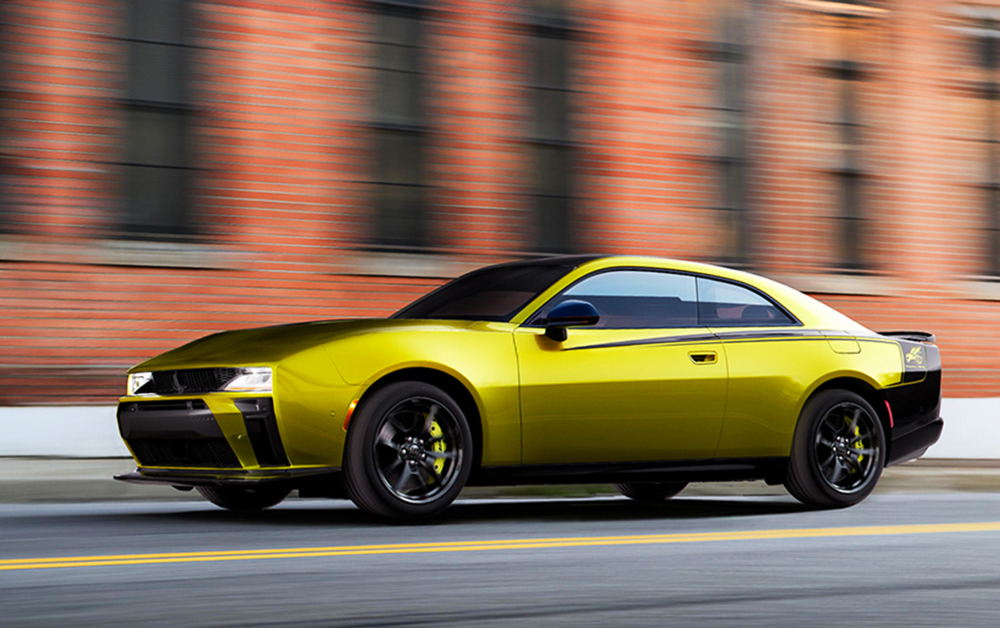
Dodge has given the Super Bee a meaningful suspension overhaul. Front spring rates are increased by 12 percent, while the rear springs are six percent stiffer. The front suspension receives firmer tension-link and handling-link bushings, and the rear stabilizer bar is stiffened by 20 percent. Together, the changes are intended to improve steering response, body control and resistance to understeer.
An available dual-valve adaptive damping system independently manages compression and rebound forces. This allows the dampers to provide greater control during aggressive driving without making the car needlessly punishing over rough pavement. It is an important piece of technology for a large, powerful Charger expected to function as both a road car and a track-capable machine.
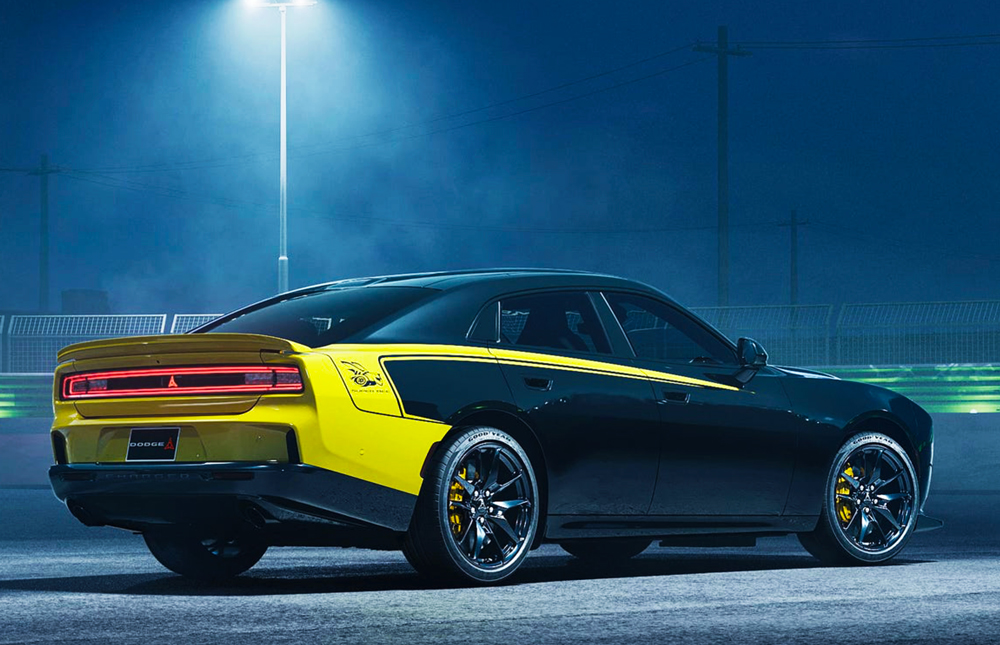
The Super Bee rides on wide 20-by-11-inch gloss-black wheels fitted with 305/35ZR20 Goodyear Eagle F1 Supercar 3 summer tires. Those tires give the car a substantially larger contact patch than a standard Charger and should help translate its power into usable acceleration and cornering grip.
Six-piston Brembo front calipers and four-piston rear calipers clamp 16-inch brake rotors. Dodge says the system provides 27 percent more brake-pad area and twice the fade resistance of the previous-generation SRT Charger’s brakes. That is the sort of upgrade that separates a genuine performance model from one designed mainly for parking-lot admiration.
Cooling and Aerodynamics Join the Fight
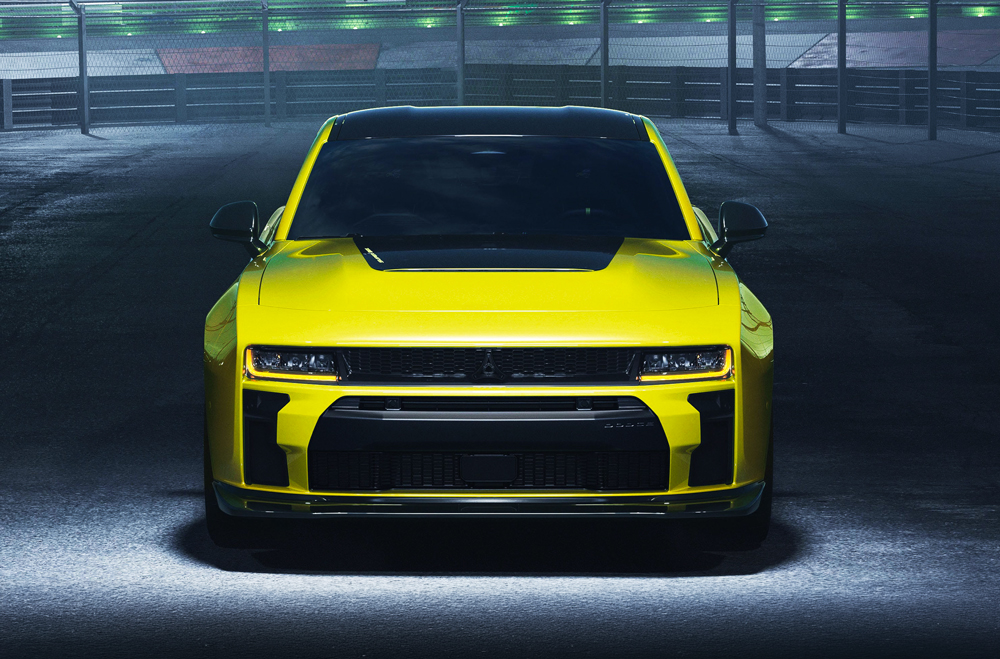
The exterior changes serve a functional purpose alongside the expected Super Bee attitude. Revised front and rear fascias improve airflow, while the heavy-duty cooling system is designed to keep the engine performing during repeated hard use. Dodge claims the reworked front end increases airflow by approximately 30 percent.
A rear performance spoiler and other aerodynamic revisions generate more than 100 pounds of downforce at 150 mph. That figure will be mostly academic on public roads, but it demonstrates that the Super Bee’s body modifications were shaped around high-speed stability rather than nostalgia alone.
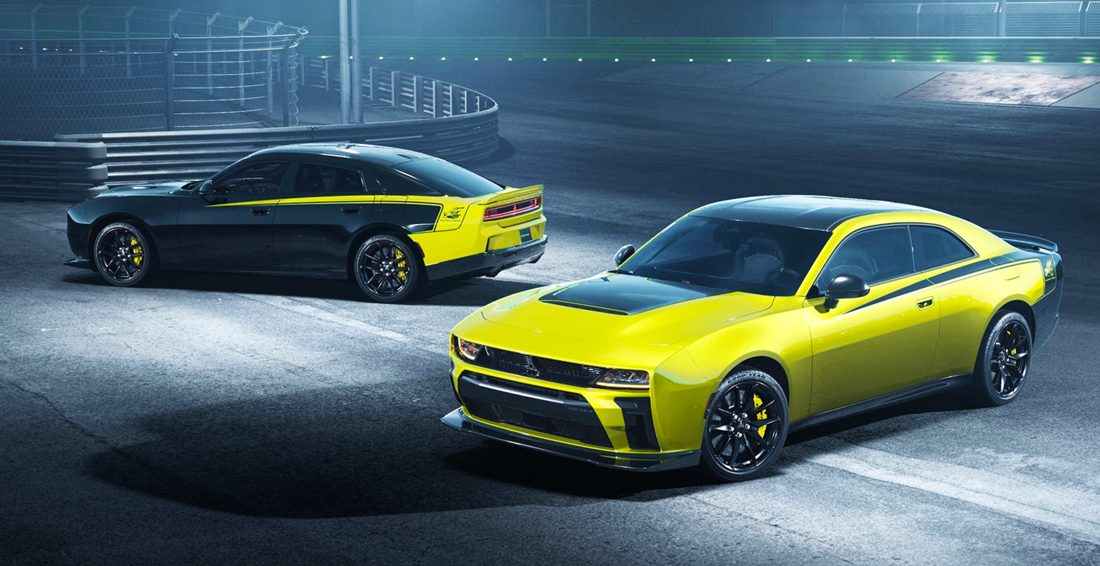
Dark exhaust outlets, gloss-black wheels, bright yellow brake calipers, model-specific graphics and Super Bee badges complete the transformation. Buyers will initially have three exterior colours: the vivid Sucker Punch, the grey-toned Shady and the more restrained Diamond Black. Restrained, of course, remains a relative term when the car has a cartoon bee advertising its intentions.
Inside the Hive
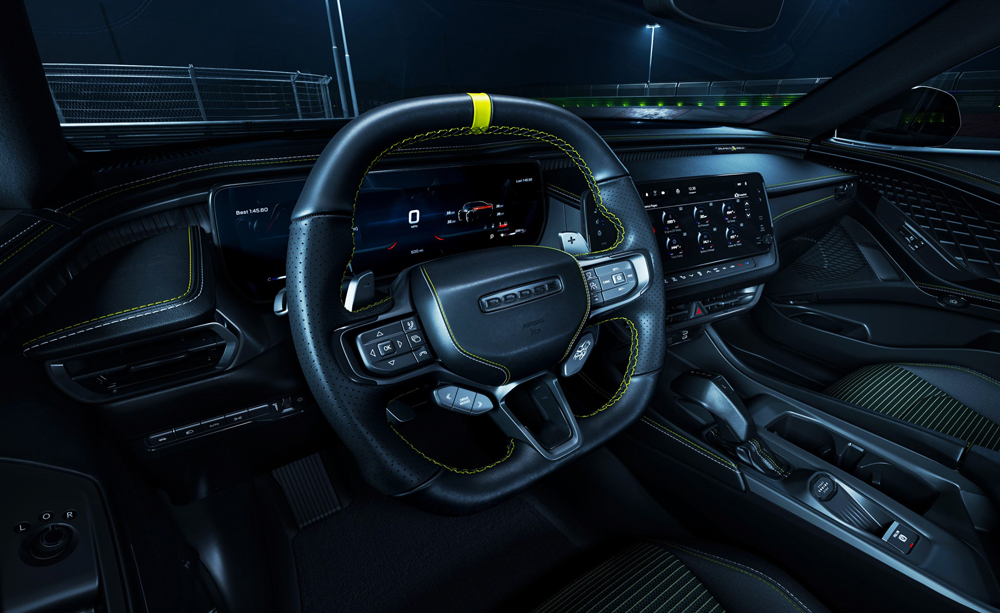
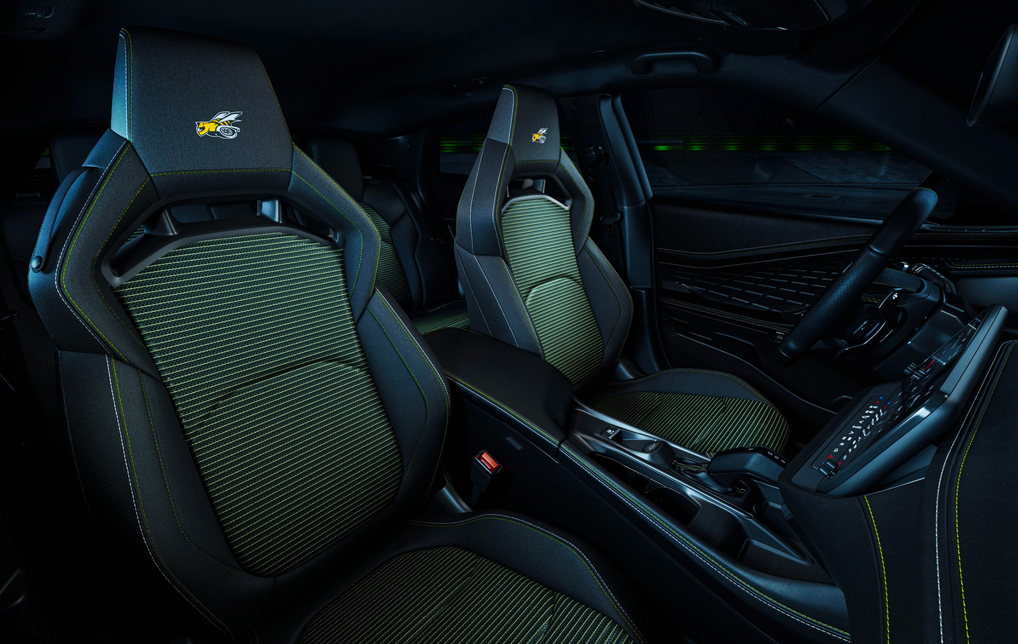
The cabin builds on the current Charger’s driver-focused layout with Super Bee details rather than attempting a complete redesign. The seats receive distinctive logos and pronounced bolstering, while yellow contrast stitching and a Super Bee emblem on the instrument panel carry the theme inside.
A performance steering wheel and enlarged paddle shifters place the major controls within easy reach. The modern Charger’s digital displays also support performance information and drive-mode adjustment, giving the new Super Bee a more technical cockpit than any of its predecessors.
The available Track Package adds the Drive eXperience Recorder developed with Cosworth. A built-in forward-facing camera records 1080p video at 60 frames per second while collecting driving data. Owners can map a circuit, review laps through the vehicle’s display and transfer recordings through a USB connection for closer analysis. It is a far more constructive use of an onboard camera than documenting yet another questionable street takeover.
Coupe Attitude or Four-Door Usefulness
Dodge plans to offer the Charger Super Bee in both two-door and four-door configurations. The two-door model provides the cleaner connection to the traditional muscle coupe, while the four-door version opens the experience to buyers who need easier rear-seat access without surrendering the performance hardware.
Both body styles use the new Charger’s large rear liftback rather than a conventional trunk. This gives the Super Bee considerably more cargo flexibility than its styling suggests and reinforces the current Charger’s unusual position between a muscle car, grand tourer and practical fastback.
That versatility could prove important. Specialty performance cars are becoming increasingly expensive, and buyers may be less willing to accept something that is useful only on sunny weekends. The Super Bee can carry passengers, swallow luggage, handle poor weather through all-wheel drive and still deliver an 11-second quarter-mile.
The V8 Question
No specification will completely silence buyers who believe a Dodge muscle car should have eight cylinders. The Hurricane engine may be more powerful than many historic V8s, but horsepower alone does not reproduce the sound, response or cultural weight of a Hemi.
Dodge appears to understand that the inline-six must earn acceptance through capability. The company has therefore made the Super Bee faster, more technically sophisticated and more adaptable than simply installing the Scat Pack engine beneath a heritage badge. Its 600-horsepower output, switchable drivetrain, upgraded cooling and track-focused chassis create a performance case that can be evaluated independently of cylinder count.
The real test will come through sound and character. A twin-turbocharged straight-six delivers power differently from a large-displacement V8, and the Super Bee will need to feel exciting rather than merely effective. If it does, it may help broaden the definition of American muscle without erasing what came before it.
Launch Edition and Availability
Every 2027 Super Bee announced so far will be produced in Launch Edition specification. Dodge has confirmed that the model will become available around the middle of 2027, but final pricing and production numbers have not yet been released.
The 550-horsepower Charger Scat Pack provides the mechanical starting point, so the Super Bee will sit above it in the gasoline range. Its larger turbochargers, extensive chassis upgrades, specialized cooling, braking hardware and Launch Edition status will inevitably command a significant premium. How significant will determine whether the new Super Bee preserves the badge’s attainable-performance spirit or moves it into collector territory.
MaxTake
The 2027 Dodge Charger Super Bee is a serious performance model disguised as a nostalgia trip. Its graphics and heritage badges may attract the first glance, but the 600-horsepower engine, wide summer tires, Brembo brakes, upgraded suspension and switchable drivetrain give the car genuine substance.
The missing V8 will dominate the conversation, yet dismissing the Super Bee on cylinder count alone overlooks what Dodge has built. This is the quickest and most capable factory Super Bee to date, offered with two or four doors and enough practicality to be driven regularly. If the final price remains within reach of traditional Dodge performance buyers, the new bee could prove that American muscle can evolve without completely losing its sting.