Thirty years ago, the original Audi A3 arrived with a proposition that now seems completely ordinary: combine the dimensions and practicality of a compact hatchback with the design, materials and badge appeal of a premium car. In 1996, however, that formula was still largely unproven. Luxury manufacturers were expected to build executive sedans, grand tourers and increasingly ambitious flagships—not small three-door hatchbacks designed for crowded European streets.
The first-generation A3, known internally as the 8L, changed that calculation. It gave younger buyers and urban drivers a more attainable entry into the Audi brand without presenting itself as a bargain-basement model. More importantly, it demonstrated that a premium manufacturer could move downmarket without necessarily damaging its image. Three decades later, compact luxury models are fundamental to the European lineups of Audi, BMW and Mercedes-Benz. The A3 did not invent every ingredient, but it assembled them into the blueprint the industry ultimately followed.
A New Kind of Entry-Level Audi
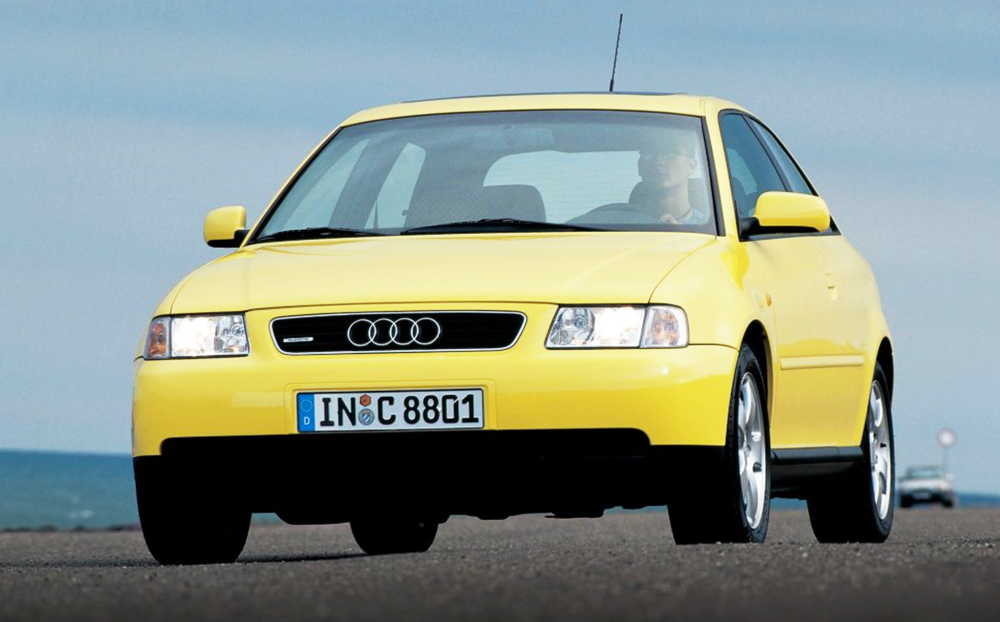
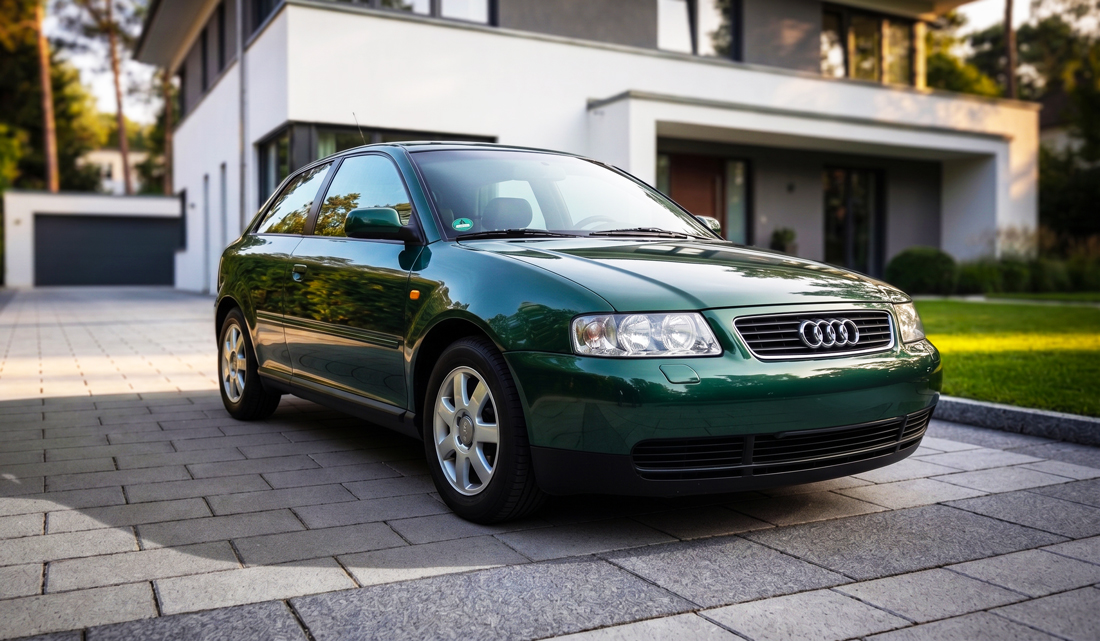
Audi presented the A3 at the 1996 Paris Motor Show before launching it in Europe that year. It was the company’s first small hatchback since the Audi 50 left production in 1978, but this was not meant to be a nostalgic return to basic transportation. The A3 was designed to feel like a smaller member of Audi’s modern range, carrying the restrained styling, solid construction and carefully ordered cabin associated with the contemporary A4 and A6.
At approximately 4.15 metres long, the original A3 was compact without looking cheap or deliberately youthful. Its clean profile, wide rear pillars and subtly flared wheel arches gave it more visual weight than an ordinary family hatchback. The cabin followed the same philosophy. The dashboard was conservative, but its switchgear, materials and tightly controlled design helped establish the idea that perceived quality could matter just as much as vehicle size. It was a compact car that did not constantly remind its owner that they had purchased the smallest model.
Shared Engineering, Distinct Identity
Underneath, the A3 introduced Volkswagen Group’s PQ34 platform, the architecture that would later underpin the fourth-generation Volkswagen Golf, SEAT León, Škoda Octavia and several other models. The Golf IV did not reach the market until 1997, meaning the Audi was the first production model to use the platform.
Platform sharing inevitably encouraged critics to describe the A3 as an expensive Golf. Mechanically, the relationship was undeniable, but that criticism overlooked the larger strategy. Audi used common engines and structural components while creating a distinct exterior, cabin, equipment hierarchy and driving character. The A3 demonstrated how one mass-produced platform could support several brands at different price points without making the finished products feel identical.
That approach has since become standard across the global auto industry. Modern luxury compacts routinely share architectures, powertrains and electronics with less expensive relatives. The commercial question is no longer whether the parts are shared, but whether the premium model provides enough design, refinement and brand character to justify its position. The original A3 helped establish that playbook.
From Practical Hatchback to Performance Family
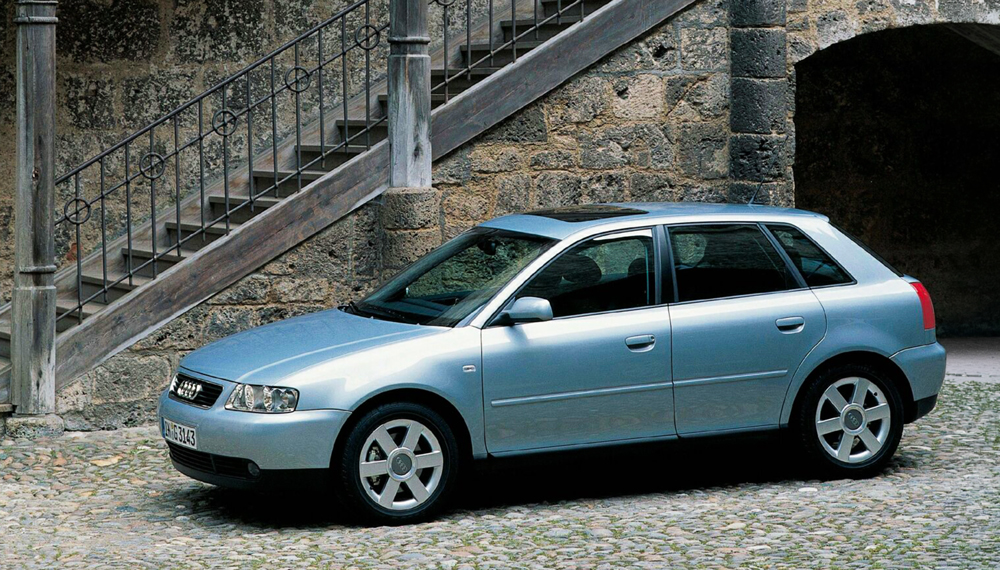
The A3 initially arrived exclusively as a three-door hatchback, giving it a sportier appearance than the typical five-door family car. Its early engine range included 1.6- and 1.8-litre gasoline units, a turbocharged 1.8-litre and the economical 1.9 TDI diesel. The turbocharged 1.8 used five valves per cylinder and produced 150 PS, giving the small Audi credible performance without turning it into an aggressive hot hatch.
Audi expanded the formula quickly. Quattro all-wheel drive joined the A3 range in 1998, followed by a more practical five-door body in March 1999. That same year brought the first S3, powered by a turbocharged 1.8-litre four-cylinder producing 210 PS. Later versions reached 225 PS, supported by all-wheel drive, broader bodywork and a cabin that remained remarkably discreet for such a capable performance car.
The S3 was especially important because it created a new rung on the performance ladder. It offered more polish and all-weather confidence than many traditional hot hatchbacks, yet remained smaller and less conspicuous than an executive sports sedan. The modern S3 and five-cylinder RS 3 can trace their positions directly back to that first 8L model.
It Was Not Technically the First
The A3’s legacy deserves one important qualification. BMW had introduced the 3 Series Compact in 1994, two years before the Audi, so the A3 was not the first premium-badged compact hatchback. The BMW, however, was essentially a shortened derivative of the existing 3 Series, complete with rear-wheel drive and styling that visibly connected it to the larger sedan.
Audi pursued a different and ultimately more scalable idea. The A3 was conceived as a conventional front-wheel-drive compact hatchback with premium execution, efficient packaging and a broad range of engines. It fitted naturally into the same market occupied by the Golf while sitting above it in materials, image and pricing. The result was easier to understand and easier to sell in volume.
Mercedes-Benz entered the compact market with the original A-Class in 1997, although its tall, space-efficient shape followed a very different philosophy. BMW eventually introduced the purpose-built 1 Series in 2004. By then, the premium compact was no longer an experiment. It had become a recognized category, and the A3 was its most established template.
The Quiet Design Has Aged Well
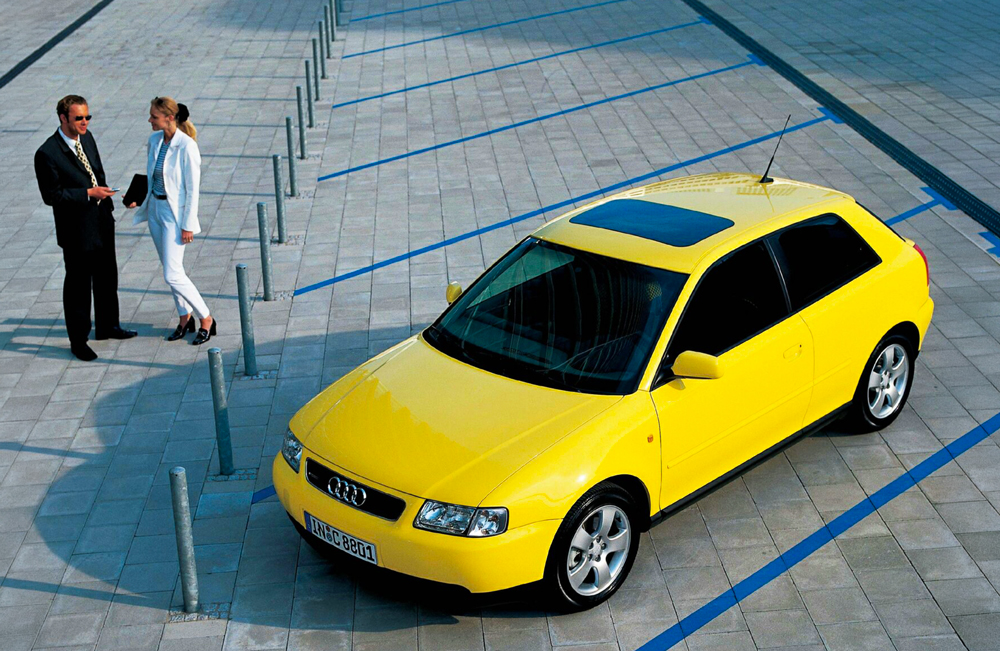
The original A3 lacks the oversized grille, elaborate lighting signatures and sharply creased bodywork that define many current premium cars. Its design is almost startlingly simple by modern standards. That restraint is also why clean examples still look convincing three decades later.
Inside, the analogue instruments, physical climate controls and straightforward centre console belong unmistakably to the 1990s, but the layout remains logical. There are no screens fighting for attention and few decorative elements trying to manufacture a sense of luxury. The quality came from how the pieces were shaped, fitted and operated. It was premium through execution, not digital theatre.
The 8L A3 is also beginning to cross the line from ordinary used car to recognized modern classic, particularly in original three-door form. Early turbo models, well-preserved diesels and unmodified S3s best capture the character of the generation. As always with older German performance cars, condition and maintenance history matter more than a tempting purchase price. A cheap S3 can develop expensive tastes with impressive speed.
The Legacy Is Larger Than the Car
The original A3’s greatest achievement was not a single engine, design feature or piece of technology. It was proving that premium could become a matter of experience rather than physical size. Buyers were willing to pay more for a smaller car if it delivered the materials, refinement, styling and identity they associated with a prestige brand.
That realization reshaped the European luxury market. Compact models became entry points for younger customers, high-volume products for manufacturers and increasingly sophisticated cars in their own right. The category eventually expanded beyond hatchbacks into sedans, crossovers, plug-in hybrids and high-performance derivatives. Four generations later, the A3 remains part of Audi’s range, while the formula it helped normalize can be seen across the industry.
MaxTake
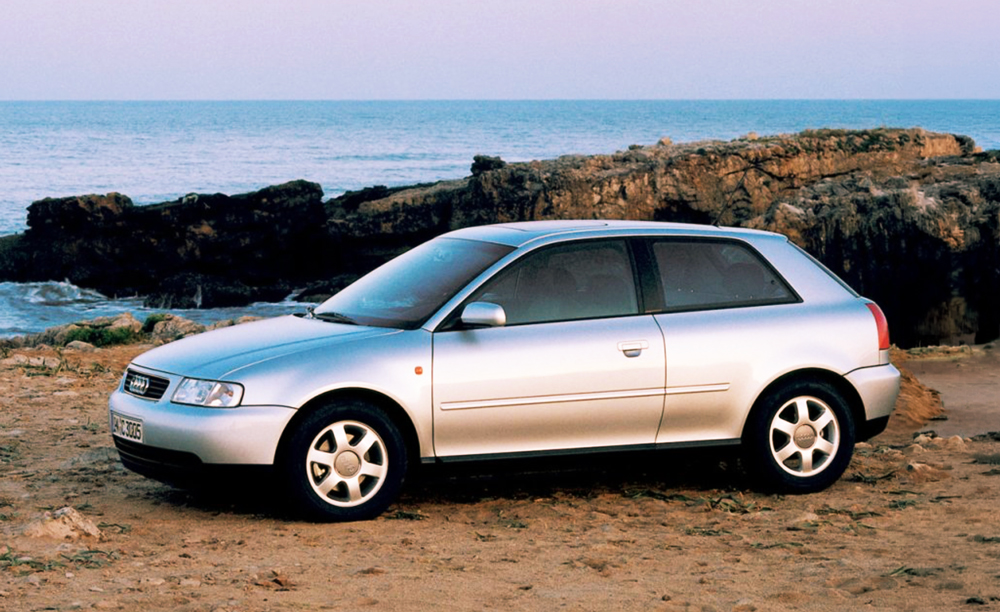
The 1996 Audi A3 was not revolutionary because it used exotic engineering or dramatic styling. It was revolutionary because it made a small premium car feel entirely logical. By combining shared Volkswagen Group architecture with distinctly Audi design, quality and performance, it turned an uncertain niche into a durable business model.
At 30, the first A3 looks refreshingly restrained, but its influence is anything but small. It proved that luxury did not require a large body, a large engine or a distant flagship price. Sometimes four rings, a carefully built cabin and a compact footprint were more than enough to change the market.