
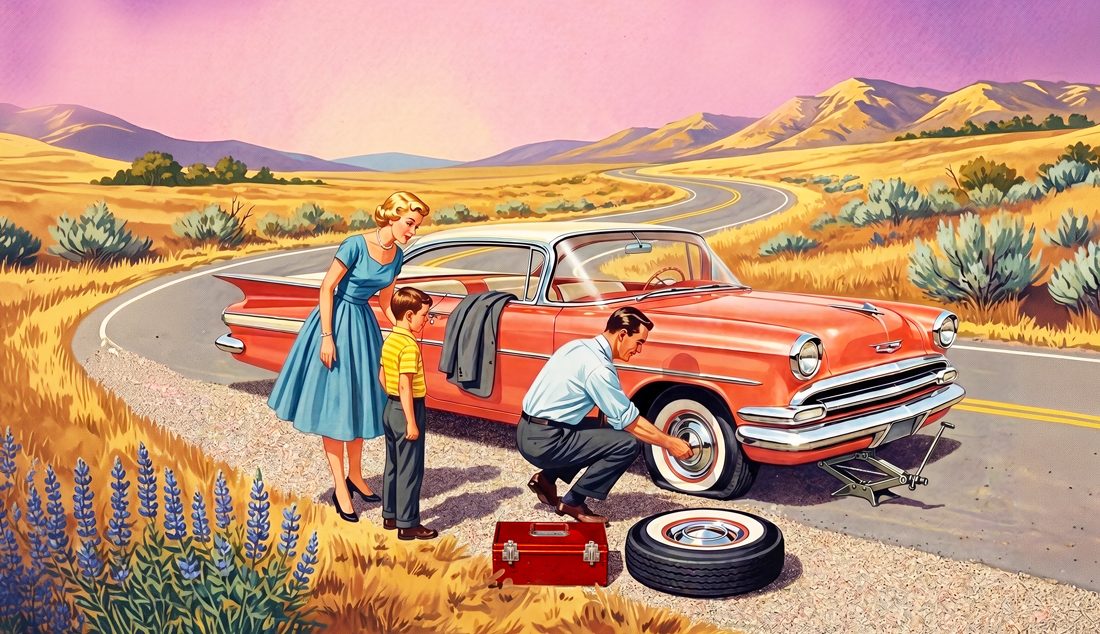
For generations, a flat tire followed a familiar script: open the trunk, lift the cargo floor and find a spare wheel, jack and lug wrench waiting underneath. In many modern vehicles, that compartment now contains a battery, charging cables, audio equipment, storage trays—or little more than a canister of sealant and a compact air compressor.
The spare tire has not disappeared from every new vehicle, particularly trucks, off-roaders and larger SUVs. Yet across sedans, crossovers, performance cars and electric vehicles, it is increasingly optional or absent altogether. Automakers have decided that most drivers can live without the weight and packaging demands of a fifth wheel. The trouble is that punctures, potholes and damaged sidewalls have declined to participate in this plan.
Why Automakers Are Leaving the Spare Behind
A spare wheel, tire, jack and tools can add 30 pounds or more to a vehicle. Removing that equipment produces a small improvement in fuel consumption or electric driving efficiency while freeing valuable space beneath the cargo floor. On an EV, where batteries and electrical components compete for every available centimetre, that packaging advantage becomes particularly useful.
There is also a straightforward cost benefit. Eliminating the wheel, tire, jack, wrench and mounting hardware reduces the number of components installed at the factory. United States safety regulations do not require new vehicles to include a spare tire, so manufacturers are free to substitute another mobility solution—or leave the driver dependent on roadside assistance.
The result can make a specification sheet look better. The vehicle is slightly lighter, the cargo area may be larger and the official efficiency numbers may receive a fractional improvement. Whether that is a good exchange becomes considerably less theoretical when a driver hits a pothole on a cold, empty highway.
The Tire-Pressure Warning Is Only the First Step
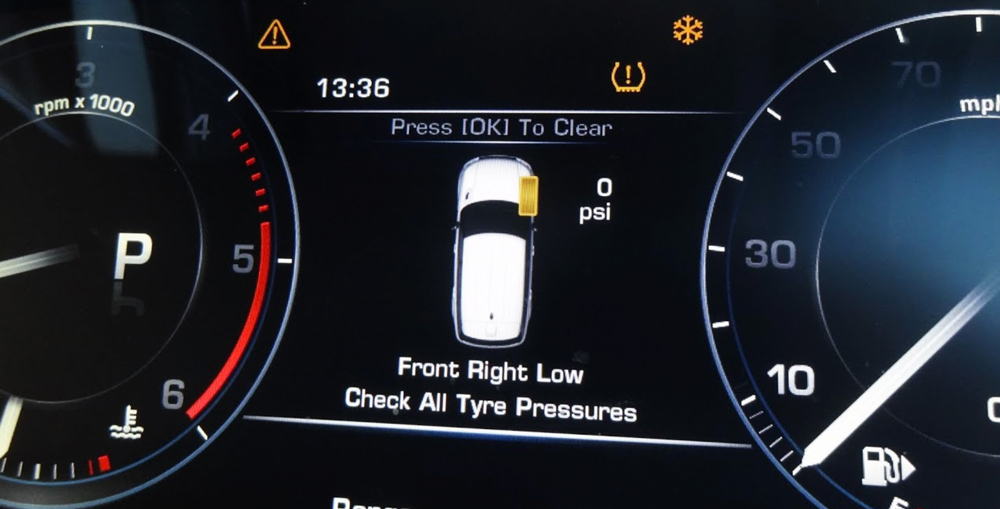
Modern vehicles commonly use a tire-pressure monitoring system to warn when one or more tires become significantly underinflated. This can give the driver time to react before a slow leak becomes a completely flat tire, but TPMS is an alert system, not a repair system. It cannot seal a hole, replace a damaged wheel or determine whether the tire remains safe to drive.
When the warning appears, the driver is expected to reduce speed, avoid aggressive steering and find a safe place to stop. A visual inspection may reveal a nail in the tread, a visibly deflated tire, sidewall damage or a bent wheel. If the vehicle begins pulling, vibrating or making an unusual noise, continuing to drive can destroy a tire that might otherwise have been repairable.
A sudden blowout requires a calmer response. Hold the steering wheel firmly, avoid slamming on the brakes, ease off the accelerator gradually and guide the vehicle toward a safe stopping area as its speed falls. The first objective is maintaining control; diagnosing the tire comes later.
The Inflator Kit Has Become the New Default
The most common spare-tire replacement is a temporary mobility kit containing an electric compressor and a bottle of liquid sealant. The sealant is injected through the valve stem, after which the compressor attempts to restore enough pressure for the vehicle to reach a tire shop.
When it works, the system is lighter, smaller and easier to use than changing a wheel beside traffic. It can be effective against a small puncture in the main tread area, such as one caused by a nail or screw. Manufacturer instructions usually require the driver to travel at reduced speed, stop after a short distance to check the pressure and obtain professional service promptly. The permitted speed and distance vary considerably between vehicles and kits, making the owner’s manual—not guesswork—the final authority.
The important word is “temporary.” Tire-industry repair guidance does not consider sealant a permanent repair. A qualifying puncture generally must be no larger than 6 millimetres, remain within the repairable tread area and be inspected from inside after the tire has been removed from the wheel. A proper permanent repair typically seals both the puncture channel and the inner liner; pushing an external plug into the tire is not considered a complete professional repair.
Sealant bottles also expire, and some are intended for only one use. Drivers should check the date periodically and replace the canister after it has been used. The tire technician should always be told that sealant was injected because the wheel and tire-pressure sensor may require cleaning and inspection.
The Damage an Inflator Cannot Solve
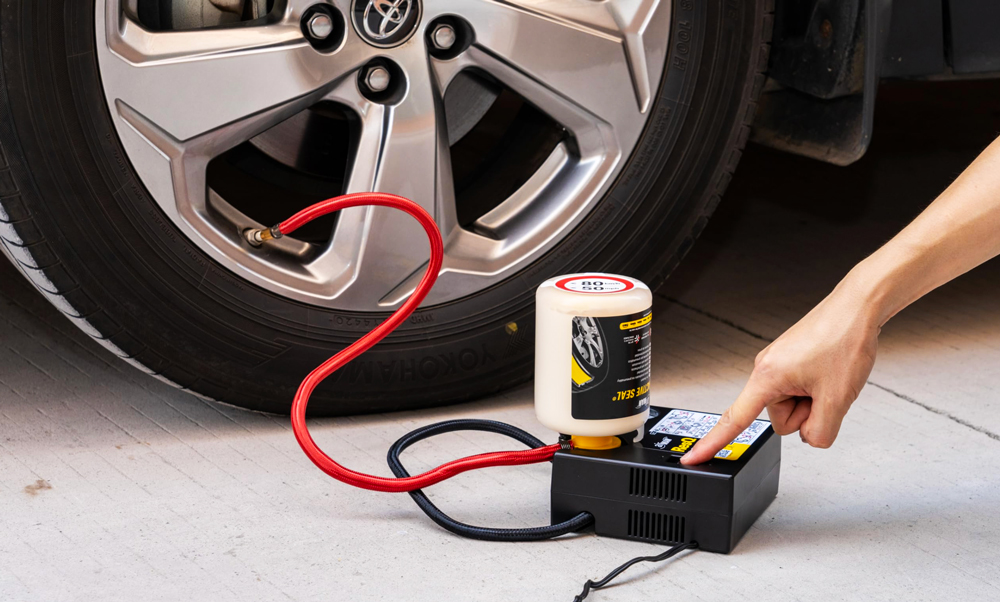
Mobility kits are designed around a narrow type of failure. They generally cannot repair a cut or puncture in the sidewall, a separated tread, a blowout, a tire that has come off the rim or damage caused by a badly bent or cracked wheel. They may also fail if the puncture is too large or the vehicle was driven far enough on the flat tire to damage its internal structure.
That distinction matters because many urban flats are caused by nails, while some of the most disruptive failures come from potholes, curbs and road debris. Those impacts frequently damage the shoulder, sidewall or wheel—the exact areas a sealant kit cannot rescue. In that situation, the compressor is essentially an electric consolation prize, and the vehicle will need to be towed.
Drivers should not repeatedly add air to a tire that continues losing pressure and assume the problem has been solved. An underinflated tire generates additional heat and can suffer hidden internal damage. Even if it appears to hold air again, it should be inspected professionally before returning to normal highway use.
Run-Flat and Self-Sealing Tires Offer Another Answer
Some manufacturers replace the spare with run-flat tires. Their reinforced construction allows the tire to continue supporting the vehicle after pressure has been lost, giving the driver a limited opportunity to reach a safer location or service facility. A commonly advertised limit is approximately 80 kilometres at no more than 80 km/h, although the actual allowance depends on the tire, vehicle, load and operating conditions. The specifications in the vehicle manual and on the tire must always take priority.
Run-flats eliminate the need to stop immediately beside traffic, but they are not indestructible. Driving range after pressure loss is limited, and a damaged run-flat may have to be replaced rather than repaired. Replacement sizes can also be more expensive or difficult to locate, particularly when travelling far from a major city.
Self-sealing tires use a sealant layer inside the tire to close certain small tread punctures automatically. They can prevent a nail or screw from producing an immediate loss of pressure, but they cannot overcome major tread damage, sidewall cuts or a broken wheel. Even when the pressure remains stable, the punctured tire should still be inspected.
Roadside Assistance Is Now Part of the Vehicle
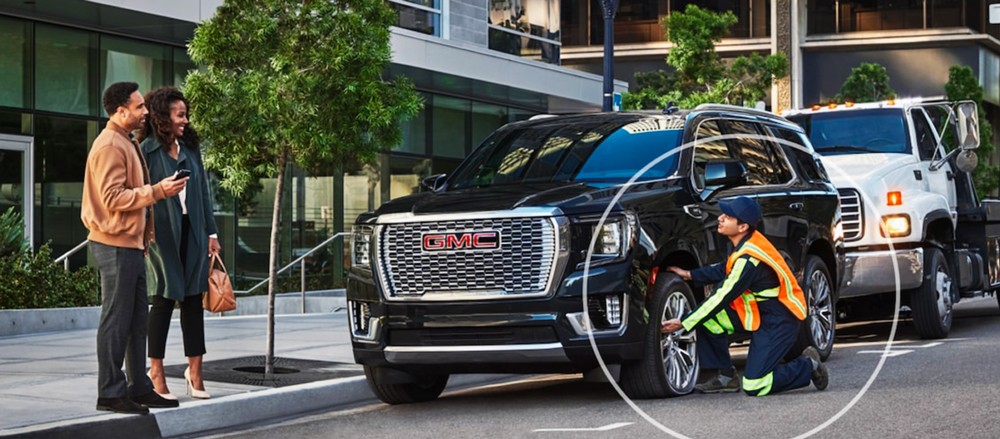
With no spare onboard, automakers increasingly treat connectivity and roadside service as part of the flat-tire strategy. The driver presses an in-car assistance button, uses a manufacturer app or calls a service provider that can inspect the problem and arrange a tow.
That solution is convenient in a city with strong mobile coverage and nearby tire shops. It becomes less reassuring on a remote highway, during severe weather or when the required tire size is unavailable. Roadside providers may be able to add air, install a spare carried by the vehicle or tow it, but drivers should not assume a technician will arrive with a correctly sized replacement wheel.
New-vehicle roadside coverage may also be limited by time, mileage, location or ownership status. Drivers should know who provides their service, how long the coverage lasts and what towing distance is included. Saving the telephone number separately is wise because an app becomes remarkably decorative when a phone has no data connection or battery power.
What Drivers Should Check Before They Need It
The first step is simply looking beneath the cargo floor. Buyers should never assume a new vehicle includes a spare because another trim level—or even an identical-looking model—may use a different tire solution. Confirm whether the vehicle carries a full-size spare, temporary spare, run-flat tires, self-sealing tires, a mobility kit or no physical solution at all.
If there is a mobility kit, locate it, read its instructions and check the sealant’s expiry date before a road trip. A separate tire-pressure gauge, charged flashlight, gloves, reflective safety equipment and portable power bank can make a roadside problem easier to manage. The roadside-assistance details should be saved in the vehicle and on the driver’s phone.
Owners who regularly travel through remote areas may want an optional spare-wheel package, but it must be designed for the vehicle. The wheel needs the correct diameter, bolt pattern, load rating and brake clearance, while the jack must be suitable for the vehicle’s weight and approved lifting points. This is especially important with heavy EVs and vehicles carrying large performance brakes. A random compact spare and generic jack are not an upgrade if they cannot be used safely.
Is a Spare Tire Still the Better Solution?
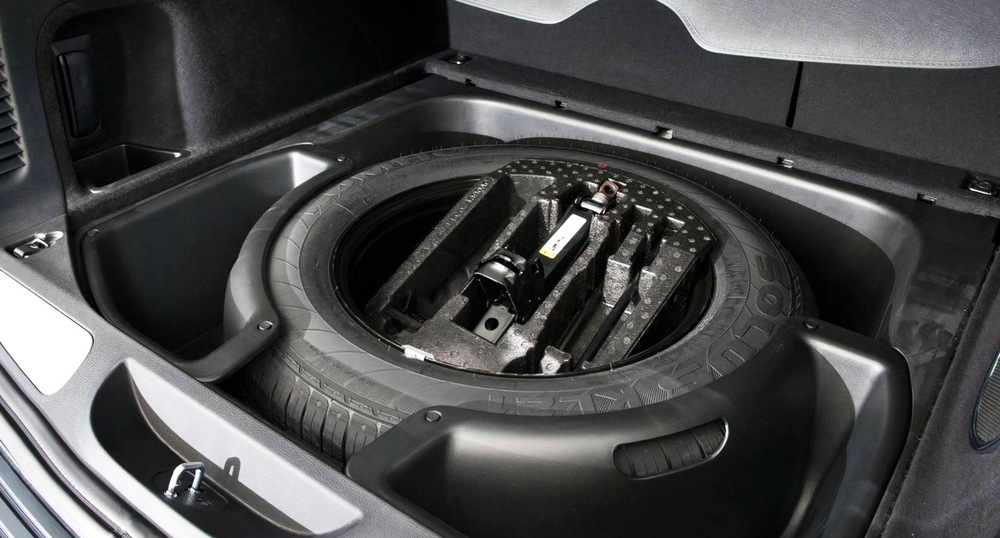
For a small tread puncture close to home, an inflator kit can be faster and cleaner than unloading the trunk and changing a wheel. Run-flat and self-sealing technology can also keep a minor problem from becoming an immediate roadside stop. These systems are not useless; they are simply less versatile than the hardware they replaced.
A correctly inflated spare can handle many failures that sealant cannot, including significant tire damage, provided the wheel itself and the vehicle’s mounting components remain intact. That makes it particularly valuable for rural travel, winter driving, construction zones and long-distance touring. It also gives the owner more control over when and where the damaged tire is repaired.
The strongest modern strategy may therefore depend on how the vehicle is used. A city commuter with comprehensive roadside coverage may reasonably accept a mobility kit. A driver crossing northern highways, desert roads or sparsely populated regions should consider a proper spare essential equipment, even if it must be purchased separately.
MaxTake
The spare tire is not disappearing because flat tires have become obsolete. It is disappearing because automakers have transferred more of the recovery process to tire technology, roadside networks and the driver. Modern motorists are expected to recognize a warning, understand the limits of a sealant kit and summon help when the damage exceeds what the vehicle can handle.
That system can work, but only when the driver knows what is—and is not—inside the car. Before the next long trip, lift the cargo floor and take a look. Discovering that your spare tire has been replaced by a small compressor is much less irritating in the driveway than it is at midnight beside the highway.