Electric pickups have already demonstrated that they can accelerate like performance cars, tow substantial trailers and power everything from tools to campsites. The more difficult test begins when the pavement disappears. Off-roading demands traction, precise control, durable hardware and the ability to keep moving far from the nearest charging station.
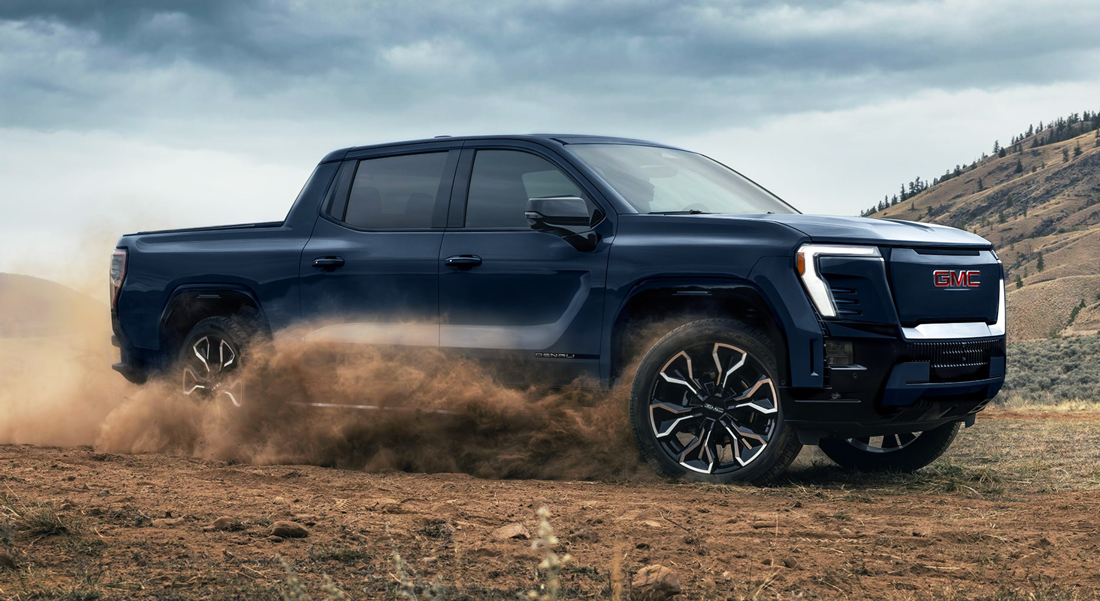
The GMC Sierra EV AT4 approaches that challenge with more than rugged styling. It combines a factory lift, 35-inch all-terrain tires, dual-motor four-wheel drive and one of the most useful rear-steering systems fitted to a modern pickup. It is unquestionably capable, but whether it qualifies as a real off-roader depends on how extreme the trail becomes.
More Than an Appearance Package
The AT4 treatment adds two inches of ground clearance over the standard Sierra EV, bringing the total to approximately 10 inches. The truck also receives a lifted coil-spring suspension, 18-inch wheels wrapped in 35-inch all-terrain tires, red front recovery hooks and a dedicated Terrain drive mode.
These are meaningful upgrades. The larger tires improve traction and help the truck roll across ruts, loose surfaces and smaller obstacles, while the additional clearance provides greater protection when travelling over uneven ground.
The Sierra EV AT4 is not, however, an electric equivalent of the more extreme Sierra 1500 AT4X. It does not receive the front and rear locking differentials or specialized Multimatic dampers associated with GMC’s most aggressive combustion-powered off-road trucks. The AT4 is designed for trails and difficult access roads, not for spending an afternoon attempting to climb boulders for entertainment.
Electric Power Works Surprisingly Well Off-Road
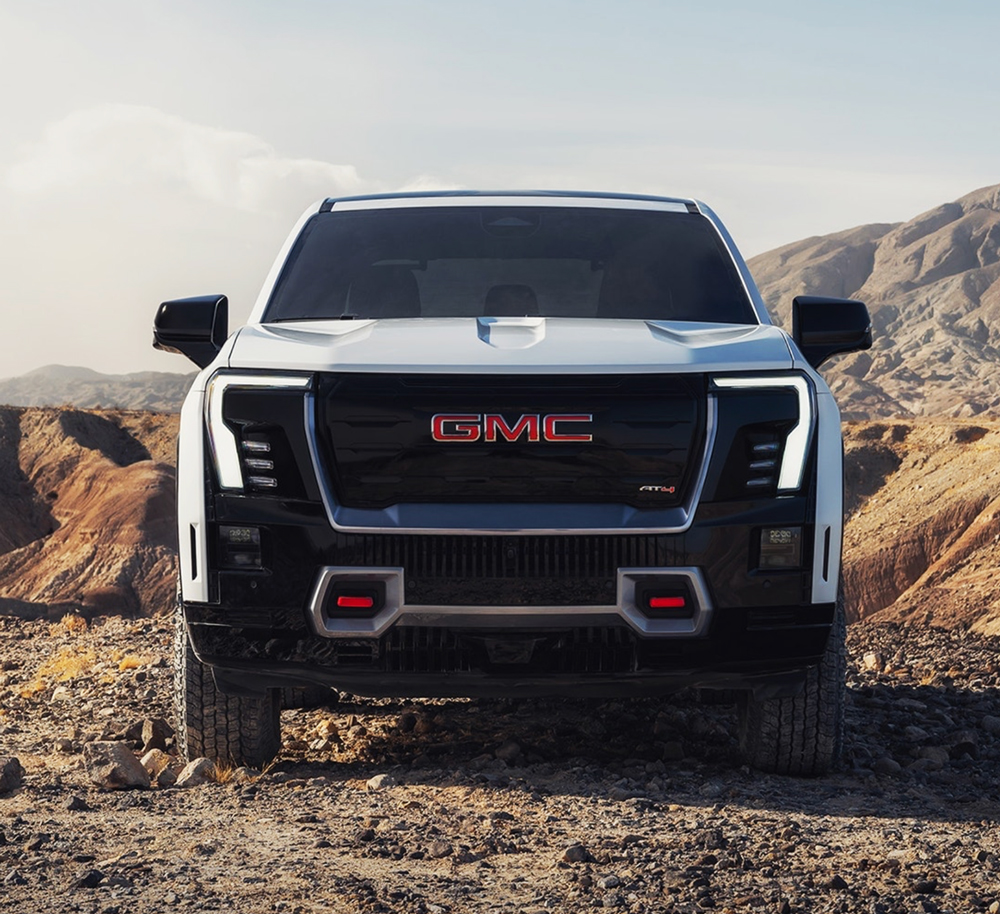
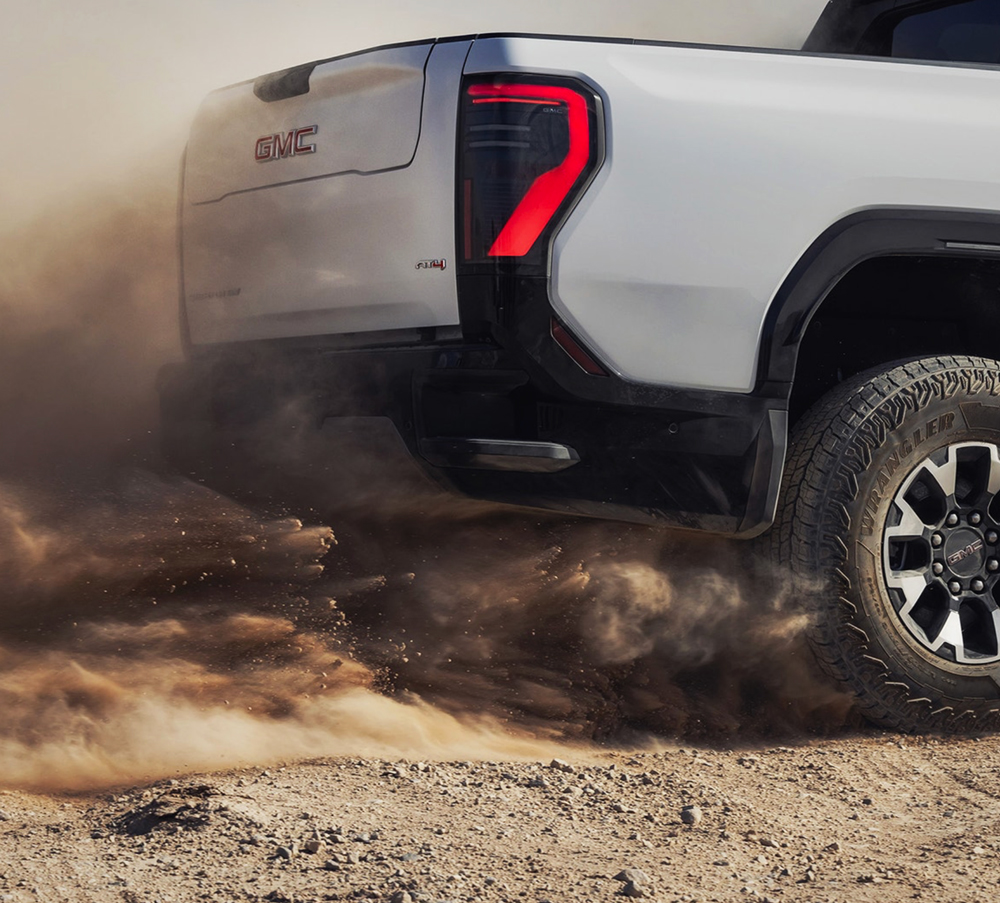
The Sierra EV AT4 uses two electric motors to deliver power to all four wheels. In the Max Range version, output reaches 725 horsepower and 775 pound-feet of torque, allowing this enormous pickup to reach 60 mph in approximately 4.4 seconds.
That performance is entertaining on the road, but electric power offers an even more useful advantage on the trail: control. There is no transmission searching for the correct gear and no engine that needs to build revs before producing meaningful torque. Power arrives immediately and can be delivered in small, carefully measured amounts.
Terrain mode coordinates the electric motors, one-pedal driving and automatic braking to help the Sierra creep across uneven ground. When the driver lifts off the accelerator, the truck can slow or hold its position rather than rolling backwards on an incline. It creates an experience similar to low-range crawling, but without a traditional transfer case.
On slippery climbs, muddy tracks and loose gravel, that smooth delivery can make the Sierra EV easier to manage than a conventional pickup with a powerful engine and abrupt throttle response.
Four-Wheel Steering Is the Secret Weapon
A full-size electric pickup measuring nearly six metres long would normally feel badly out of place on a narrow trail. The Sierra EV AT4 counters its size with standard four-wheel steering.
At lower speeds, the rear wheels can turn in the opposite direction to the fronts, reducing the turning circle and helping the truck rotate through tight corners. The system gives the Sierra EV AT4 a turning diameter of approximately 39 feet, nearly five feet tighter than versions without rear steering.
CrabWalk turns the rear wheels in the same direction as the fronts, allowing the truck to move diagonally at low speed. It may look like a party trick, but it can help the driver reposition the truck around rocks, move away from the edge of a narrow trail or line up with a difficult section without making repeated three-point turns.
For a pickup with a 145.7-inch wheelbase, rear steering is not simply clever technology. It is what makes the Sierra EV manageable when the surroundings become tight.
The Weight Never Disappears
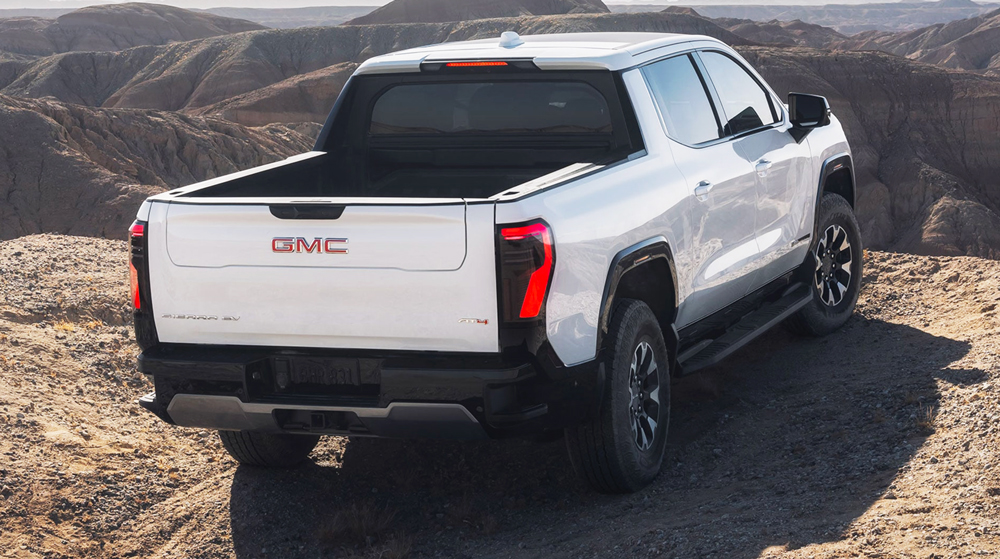
The Sierra EV AT4’s greatest advantage is also its biggest limitation. Its large battery helps provide exceptional driving range, but it contributes to an estimated curb weight of roughly 8,800 pounds.
The battery’s low position gives the truck a low centre of gravity, helping it feel stable on slopes and planted over uneven surfaces. Its mass can also produce useful traction on firm ground. But once that weight begins sliding through mud, sinking into soft sand or pushing down a steep descent, physics takes over with all the subtlety of a falling piano.
The long wheelbase also affects the truck’s breakover angle, despite its extra ground clearance. Drivers must remain conscious of ridges and sharp changes in elevation that a shorter off-roader could cross more easily.
Recovering a vehicle this heavy is another serious consideration. The Sierra EV AT4 has front recovery hooks, but anyone travelling far beyond maintained trails will need correctly rated recovery equipment and another vehicle capable of handling its mass.
Range Is Excellent—Until Conditions Change
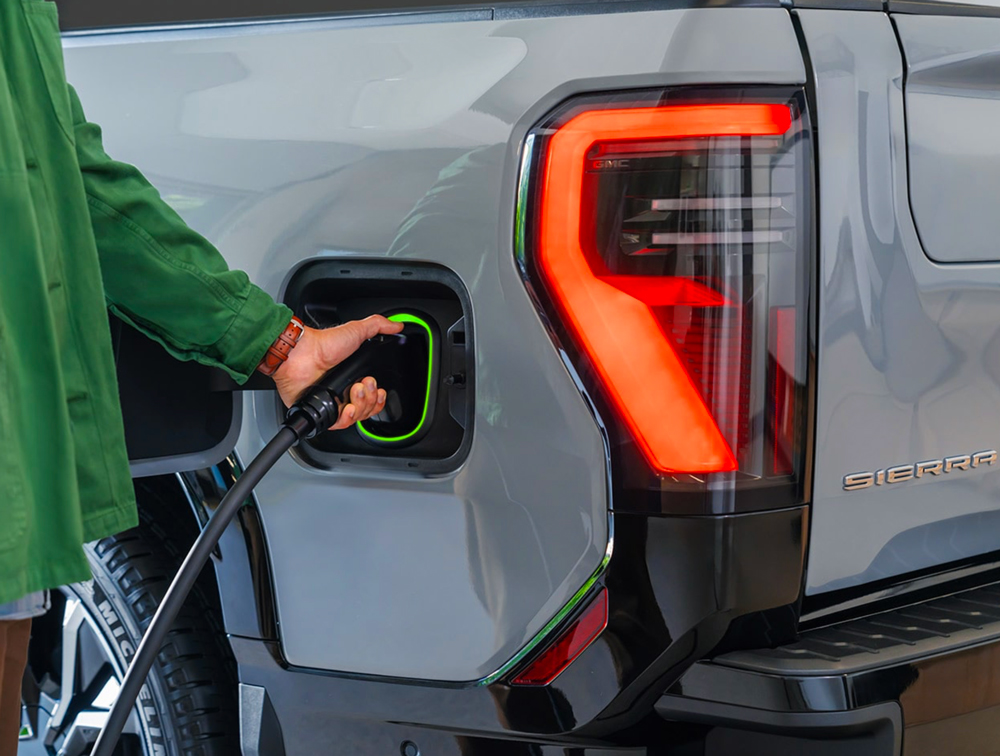
The Extended Range Sierra EV AT4 offers up to a GM-estimated 390 miles of range, while the Max Range battery raises that figure to as much as 478 miles. Those numbers give the GMC an important advantage for reaching remote areas where charging infrastructure is limited.
Real-world range will still decline with cold temperatures, steep climbs, deep sand, low tire pressures, heavy cargo or trailer towing. Slow off-road driving may use less energy than highway travel, but difficult terrain can demand substantial power.
Available 800-volt DC fast charging supports rates of up to 350 kW under suitable conditions. That is valuable during long highway journeys, but it matters considerably less when the nearest compatible charger is hours away. Successful electric exploration still requires route planning, a comfortable energy reserve and an honest understanding of how the truck is being used.
The available 10.2-kW Energy Transfer Pro system adds another layer of usefulness by supplying electricity to tools, camping equipment or other accessories through 120- and 240-volt outlets.
Still a Working Pickup
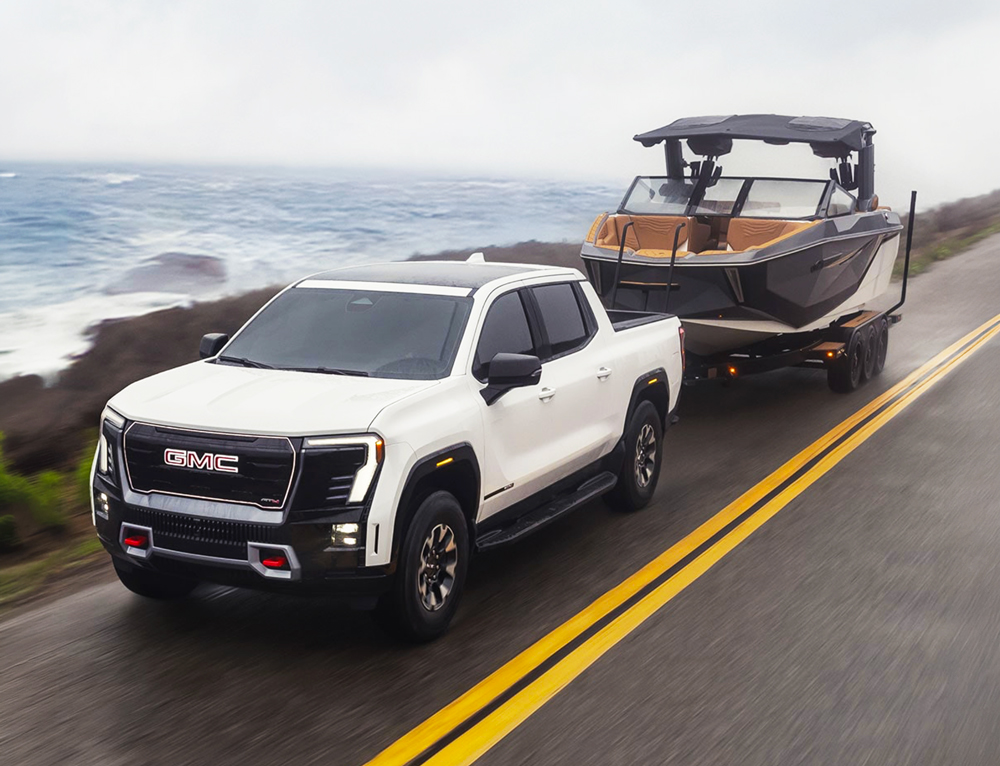
The Sierra EV AT4 has not abandoned ordinary truck duties in pursuit of adventure. When properly configured, it can tow up to 12,300 pounds. Its available MultiPro Midgate opens the rear of the cabin and extends usable cargo length to as much as 10 feet 10 inches, while the weatherproof 11-cubic-foot eTrunk provides secure storage beneath the power-operated hood.
Inside, the AT4 combines its Forest Storm colour scheme with a 16.8-inch central touchscreen, an 11-inch driver display, a head-up display and multiple camera views. Those cameras are particularly valuable when the truck’s large hood or surrounding terrain makes it difficult to see obstacles from the driver’s seat.
Super Cruise is standard for compatible-road highway driving, although its role begins after the trail ends. The Sierra EV also relies on Google-based infotainment and does not offer Apple CarPlay or Android Auto.
The Verdict
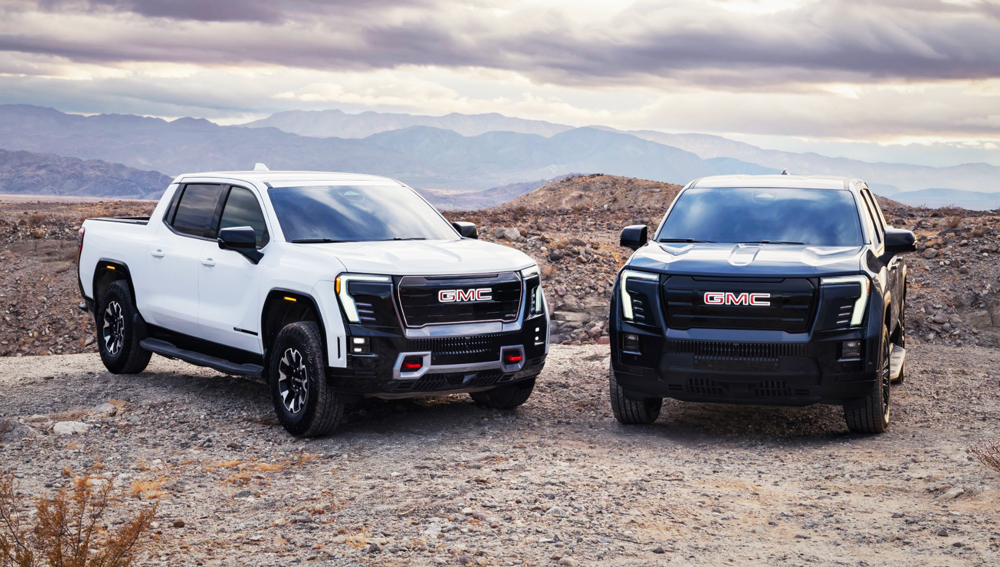
Yes, the GMC Sierra EV AT4 is a real off-roader—but it is important to define the mission correctly.
It is well equipped for muddy access roads, snow-covered routes, forest trails, loose inclines, sand and remote campsites. Its electric powertrain provides outstanding low-speed control, while four-wheel steering gives it agility that seems almost impossible for a pickup of this size.
It is not a dedicated rock crawler, a high-speed desert runner or an electric replacement for the Sierra AT4X. Its weight, wheelbase and lack of extreme off-road hardware establish clear limits when the terrain becomes truly technical.
MaxTake
The Sierra EV AT4 proves that an electric pickup does not need an exhaust note or a low-range gearbox to be credible beyond the pavement. Its quiet torque, precise Terrain mode and remarkably effective rear steering make it a capable adventure truck with enormous range and genuine utility.
The cleverest part is that GMC has not tried to turn it into an electric monster truck. The Sierra EV AT4 is built to carry its passengers, equipment and considerable mass into the wilderness—and, more importantly, bring everything back again.